




What is New Orleans Mainly Known For?
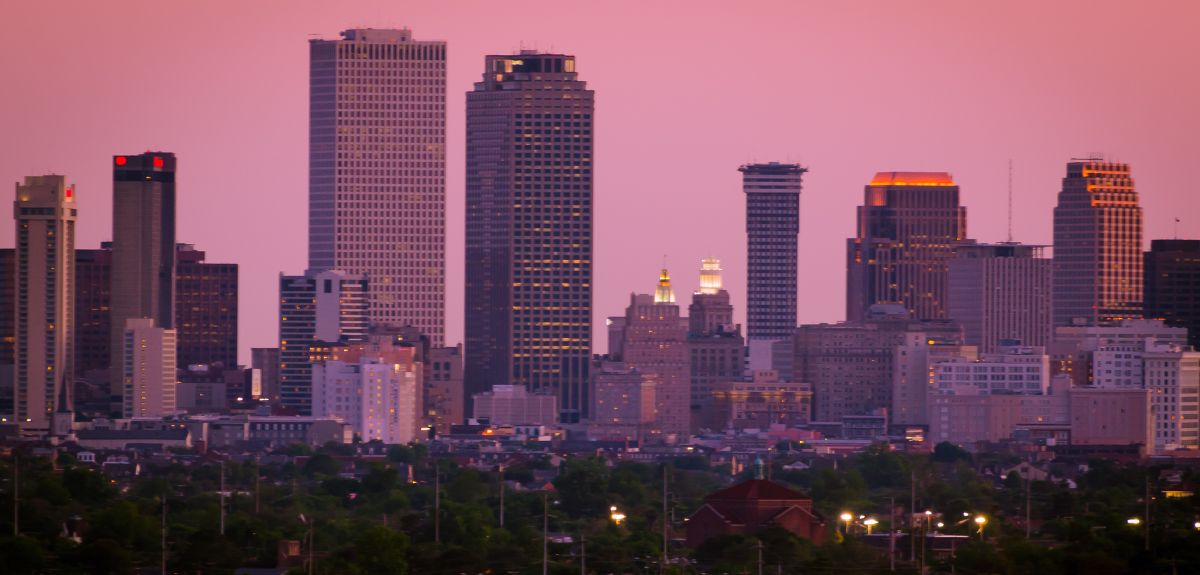
New Orleans is known first for being the birthplace of jazz, and for a food culture — Creole and Cajun cooking, po’boys, gumbo, beignets — that draws people from well outside Louisiana. It’s also known for its French Quarter architecture (much of it actually Spanish colonial, rebuilt after fires in the 1780s and 1790s), and for Mardi Gras, the citywide celebration that turns entire neighborhoods into parade routes each winter.
Is New Orleans a Walkable City?
Yes, within the French Quarter and Garden District. Both neighborhoods are compact, flat, and dense with things to see, so walking is genuinely the best way to experience them — a car is more hassle than it’s worth in either one. Getting between neighborhoods (say, from the Quarter to Uptown) is better handled by streetcar, rideshare, or bike than on foot, since the distances add up quickly in humid heat.
Is it safe to walk around New Orleans at night? Bourbon Street and the Quarter’s main tourist blocks stay busy and reasonably well-lit late into the night. Like any major U.S. city, petty crime rises the farther you get from crowded tourist areas, so stick to well-traveled streets after dark and take a rideshare rather than walking long distances alone.
What Is the Best Neighborhood to Walk Around?
The French Quarter is the obvious answer — its grid of narrow streets, wrought-iron balconies, and courtyard entrances rewards aimless wandering more than almost any other American neighborhood. For a quieter, more residential pace, the Garden District’s tree-lined blocks of 19th-century mansions are just as walkable and far less crowded.
What Are the Best Things to Do in New Orleans? (For Your First Visit)
Most first-time visitors plant themselves on Bourbon Street and never see the rest of the city — don’t make that mistake. Here’s what’s worth building a trip around:
Jackson Square
The historic heart of the French Quarter, anchored by St. Louis Cathedral and framed by the Cabildo and Presbytère, two former Spanish colonial government buildings that now house state museums. Street artists set up along the surrounding fence daily, and brass bands play at the square’s edges most afternoons and evenings. Price: Free to walk through; museum entry costs extra. Pro tip: Visit early morning before the crowds and heat build up, or in the evening when the cathedral is lit and street performers take over. Check availability and explore popular experiences.

Bourbon Street
The French Quarter’s best-known and busiest street, lined with bars, jazz clubs, souvenir shops, and, after dark, a steady flow of foot traffic carrying drinks in plastic go-cups (legal in New Orleans). It’s touristy and loud, but it’s also genuinely part of the city’s identity. Price: Free to walk; drinks and cover charges vary widely by bar. Pro tip: The street is a different experience by time of day — daytime is family-friendly and low-key, while nightfall brings the crowds and the neon. Check availability and explore popular experiences.

Café du Monde
An open-air coffee stand at the edge of the French Market, open nearly 24 hours a day since 1862 and serving exactly two things: café au lait made with chicory, and beignets, square French-style doughnuts buried in powdered sugar. Price: A few dollars for coffee and an order of three beignets. Pro tip: Lines can stretch out the door on weekends; the walk-up window around the side often moves faster than waiting for a table. Check availability and explore popular experiences.

Frenchmen Street
A three-block stretch in the Faubourg Marigny, just past the Quarter’s edge, packed with live-music clubs like the Spotted Cat, Snug Harbor, and d.b.a. — the strip locals actually go to for jazz, brass, and funk. Price: Many clubs have no cover or a small one; a one-drink minimum is common. Pro tip: Clubs here are small, so arrive by 9 or 10 p.m. if you want a seat for a specific act. Check availability and explore popular experiences.

The Garden District
A National Historic Landmark district of antebellum and Victorian mansions built between the 1830s and 1900s, when wealthy American newcomers settled just upriver from the French Creole city. Buckner Mansion, a pink Italianate house from 1869, is one of the district’s most photographed. Price: Free to walk the streets; some houses offer paid tours. Pro tip: Take the St. Charles streetcar to the Garden District and walk it as a loop, since most of the notable homes are private residences best viewed from the sidewalk. Check availability and explore popular experiences.

The National WWII Museum
A Smithsonian-affiliated museum in the Central Business District, built on the site where Higgins Industries designed and manufactured the amphibious landing craft used at D-Day. Exhibits cover the Home Front, the Pacific and European theaters, and include a 4D theater and a submarine experience. Price: General admission runs in the $30s for adults, with add-ons for the theater and special exhibits. Pro tip: Plan for at least three to four hours — the campus spans several connected pavilions, and rushing through undersells it. Check availability and explore popular experiences.

St. Charles Streetcar
The oldest continuously operating streetcar line in the world, running since 1835 along St. Charles Avenue past Garden District mansions, Audubon Park, and Tulane and Loyola universities. It’s both a real commuter line and one of the best low-cost sightseeing rides in the city. Price: A single fare is a few dollars; a Jazzy Pass covers unlimited rides. Pro tip: Ride it end to end at least once, ideally in the late afternoon when the light comes through the oak canopy along the avenue. Check availability and explore popular experiences.

St. Louis Cemetery No. 1
The oldest cemetery still in use in New Orleans, established in 1789, filled with above-ground tombs built that way because of the city’s high water table. Voodoo priestess Marie Laveau and civil rights figure Homer Plessy are both buried here. Price: Entry is only permitted with a licensed guided tour, generally $25-40 per person. Pro tip: Book a tour in advance — the Archdiocese closed the cemetery to unaccompanied visitors after a rise in vandalism, so a guide is now the only way in. Check availability and explore popular experiences.

City Park
A 1,300-acre park holding the largest collection of mature live oak trees in the world, some estimated at more than 500 years old, along with the New Orleans Museum of Art, the Besthoff Sculpture Garden, and miles of walking and biking paths under Spanish moss. Price: Free to enter; individual attractions inside the park charge separately. Pro tip: Seek out the McDonogh Oak and the Dueling Oak, two of the park’s oldest and most storied trees, both within easy walking distance of the art museum. Check availability and explore popular experiences.