


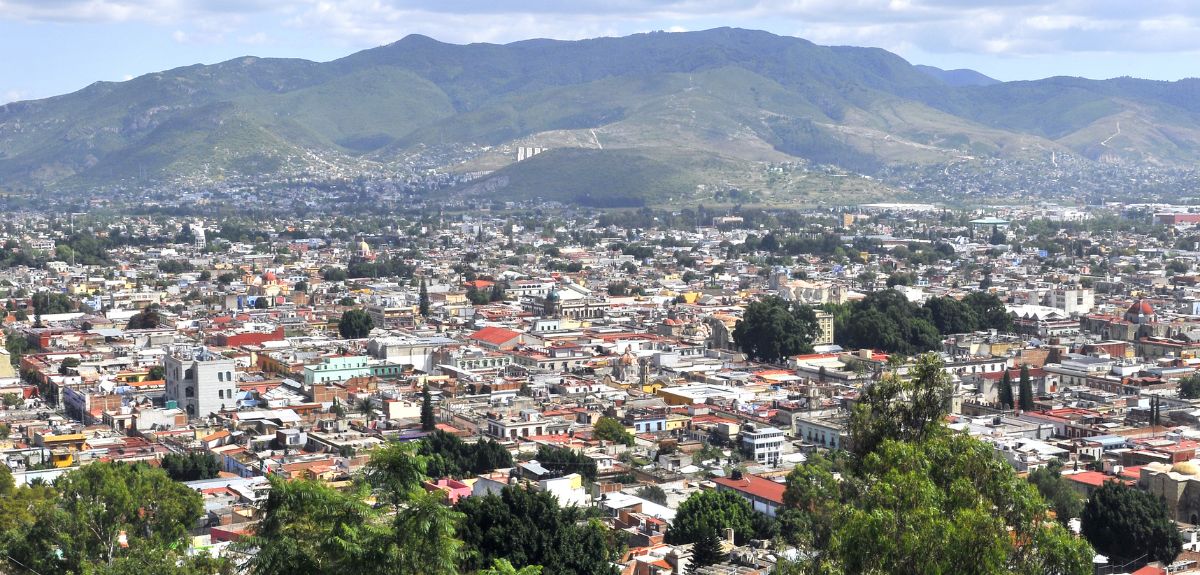
Oaxaca is where Mexico’s culinary and artistic reputation comes from firsthand experience rather than secondhand praise. Zapotec ruins sit on hilltops above a colonial city built from green volcanic stone, mezcal is distilled in the surrounding valleys the same way it has been for generations, and the state’s Indigenous weaving and pottery traditions are still practiced in villages a short drive from the historic center. It’s a place built for slow travel: long markets, longer meals, and day trips that reward an early start.
Why Visit Oaxaca?
Whether you’ve come for the ruins, the food, or the craft traditions, Oaxaca offers one of the deepest cultural experiences in Mexico:
- Monte Albán: Climb to a Zapotec city built on a deliberately flattened mountaintop over 2,500 years ago, with sweeping views across the entire Oaxaca Valley.
- Templo de Santo Domingo de Guzmán: Step inside one of Mexico’s most ornate churches, its gilded interior covering every surface in gold leaf and religious imagery.
- Hierve el Agua: Swim in mineral pools perched at the edge of petrified “waterfalls,” rock formations that took thousands of years to form.
- Mitla: See the finest stone mosaic work in ancient Mexico, geometric fretwork cut and fitted without mortar across an entire archaeological site.
- Teotitlán del Valle: Watch Zapotec weavers work natural-dyed wool into rugs on traditional looms, using techniques passed down for over 2,500 years.
Oaxaca doesn’t reveal itself all at once. Between the city’s markets and cathedrals and the surrounding valley’s ruins and craft villages, it takes a genuinely unhurried trip to appreciate everything this region has built and preserved.
OAXACA KEY INFO
Everything you need to hit the ground running.
WHEN TO VISIT
October to April for dry, mild weather; late October for the Day of the Dead, one of the most significant celebrations in the country
HOW TO GET THERE
Fly into Xoxocotlán International Airport (OAX). It’s a 20-25 minute taxi ride to the historic center (~MXN 150-250).
HOW TO GET AROUND
Walk within the historic center, and use colectivos (shared vans) or a rental car for day trips to Monte Albán, Hierve el Agua, Mitla, and the surrounding craft villages.
IDEAL TRIP LENGTH
4-5 days for the city and its closest sites, but 6-7 days if you want to add Hierve el Agua and multiple craft villages without rushing.
What is Oaxaca Mainly Known For?
Oaxaca is known as one of Mexico’s culinary capitals, home to mole in seven distinct varieties, Oaxacan cheese, and some of the country’s best mezcal, distilled from agave grown throughout the surrounding valleys. It’s also famous for its Zapotec and Mixtec heritage, visible in the ruins at Monte Albán and Mitla and in the living craft traditions of nearby villages. Beyond food and history, Oaxaca hosts some of Mexico’s most significant Day of the Dead celebrations, drawing visitors specifically for the altars, parades, and cemetery vigils held each late October and early November.
Is Oaxaca a Walkable City?
Yes, the historic center is compact, flat, and genuinely enjoyable on foot, with most major sights within a 20-minute walk of the Zócalo. The surrounding valley attractions, however, require a colectivo, taxi, or rental car, since Monte Albán, Hierve el Agua, and the craft villages sit well outside the city itself.
Is it safe to walk in Oaxaca? Yes, generally, both in the historic center and most surrounding neighborhoods, day or night. As anywhere, keep an eye on belongings in crowded markets and use standard caution after dark in less busy areas.
What Is the Best Neighborhood to Walk Around?
The historic center around the Zócalo is the obvious choice, with pedestrian streets like Alcalá connecting the main plaza to the Santo Domingo church through a corridor of galleries, cafes, and colonial buildings. For something quieter, the Xochimilco neighborhood offers cobblestone streets and colorful facades with a more residential, local feel.
What Are the Best Things to Do in Oaxaca? (For Your First Visit)
I treated each day trip as its own outing rather than trying to combine too many valley sites at once, since travel times between them add up quickly. Here’s what stood out:
Monte Albán
This Zapotec capital, built atop a mountain that was deliberately leveled to create a massive plaza, dates back more than 2,500 years and was one of the earliest cities in the Americas. Its ball court, observatory, and tombs are spread across a site with commanding views over the entire Oaxaca Valley. Price: ~MXN 100. Pro tip: Go early to beat both the heat and the tour groups, and bring a hat; there’s almost no shade across the main plaza. Check availability and explore popular experiences.

Templo de Santo Domingo de Guzmán
Construction on this Dominican church and former monastery began in the 16th century, and its interior is one of the most elaborately decorated in Mexico, covered floor to ceiling in gold leaf, painted stucco reliefs, and a family tree of the Dominican order stretched across the ceiling. Price: Free to enter the church; the adjoining Museum of Oaxacan Cultures charges admission. Pro tip: Visit in the late afternoon when light through the windows catches the gold leaf at its best angle. Check availability and explore popular experiences.

Hierve el Agua
These calcified rock formations, resembling frozen waterfalls, formed over thousands of years as mineral-rich spring water flowed over the cliff edge. Two natural infinity pools sit right at the top, offering swimming with a genuinely dramatic backdrop over the valley below. Price: ~MXN 50 community entry fee, plus transport. Pro tip: Visit on a weekday if possible; the pools get crowded on weekends, and the site is about 90 minutes from the city, best combined with a stop in Mitla or Teotitlán along the way. Check availability and explore popular experiences.

Mitla
Once the main religious center of the Zapotec civilization, Mitla is unmatched in Mesoamerica for its geometric stone mosaics, thousands of individually cut stones fitted together across entire walls without any mortar. The Columns Group holds the best-preserved examples, including a hall lined with massive monolithic pillars. Price: ~MXN 85. Pro tip: Hire a local guide at the entrance; the symbolic meaning behind the mosaic patterns is easy to miss without context. Check availability and explore popular experiences.
.jpg)
Teotitlán del Valle
This Zapotec weaving village has produced wool rugs and textiles for over 2,500 years, with families still using natural dyes from cochineal insects, indigo, and pomegranate to color hand-spun wool on traditional looms. Visiting a family workshop offers a firsthand look at a craft passed down for generations. Price: Free to visit workshops; rugs range widely in price depending on size and dye process. Pro tip: Buy directly from a weaving family’s workshop rather than a middleman shop in the city; the money goes further and you’ll often get a live demonstration. Check availability and explore popular experiences.

Árbol del Tule
Standing in a churchyard in the town of Santa María del Tule, this Montezuma cypress has the widest trunk of any tree on earth, at over 137 feet in circumference, and is estimated to be well over 1,000 years old. It’s an easy, quick stop on the way to or from Mitla and Teotitlán. Price: ~MXN 20. Pro tip: Local guides at the site can point out shapes said to be visible in the tree’s gnarled bark, from animals to human faces. Check availability and explore popular experiences.

Oaxaca Cathedral and the Zócalo
The Zócalo is the social heart of the city, a shaded plaza ringed by restaurants and government buildings, with the Baroque Oaxaca Cathedral anchoring its north side. Construction on the cathedral began in the 16th century and continued for nearly two centuries before its consecration in 1733. Price: Free. Pro tip: Grab a seat at one of the plaza’s outdoor cafes in the evening; the Zócalo comes alive with street musicians and vendors after dark. Check availability and explore popular experiences.

Credit: Wikimedia Commons
Mercado Benito Juárez and Mercado 20 de Noviembre
These two adjoining markets form the beating heart of Oaxacan food culture, with Benito Juárez focused on produce, chocolate, and household goods, while 20 de Noviembre is famous for its “Pasillo de Humo,” a smoky corridor of grills serving fresh-cut beef and pork by weight. Price: Free to browse; meals typically run MXN 80-150 per person. Pro tip: Pick your own cut of meat at a butcher stall in the Pasillo de Humo, then have a nearby grill cook it to order, a genuinely local way to eat here. Check availability and explore popular experiences.

Mezcal Tasting
Oaxaca produces the vast majority of Mexico’s mezcal, distilled from various agave species grown throughout the surrounding hills, often at small family-run palenques still using traditional stone ovens and wooden fermentation vats. Tastings in the city or on a valley day trip offer a much deeper introduction than a bottle at a bar back home. Price: Tastings range from free at some producers to ~MXN 200-400 for a guided flight. Pro tip: Visit a palenque outside the city rather than only a downtown tasting room for a genuine look at the full production process, from roasting the agave to distillation. Check availability and explore popular experiences.

Coyoacán-Style Craft Villages of the Central Valleys
Beyond Teotitlán, the villages of San Bartolo Coyotepec (famous for black clay pottery) and San Martín Tilcajete (known for brightly painted alebrije wood carvings) round out a full picture of Oaxaca’s living craft economy. Each is a manageable day-trip stop, often combined with Monte Albán or the Mitla road. Price: Free to visit; prices for pottery and carvings vary by size and detail. Pro tip: Watch a black clay demonstration in San Bartolo Coyotepec; the technique that gives the pottery its signature sheen without glaze is genuinely unique to the region. Check availability and explore popular experiences.

Must-Do Activities in Oaxaca
To really get the most out of your trip, I recommend checking out these experiences:
No products were found!
What Part of Oaxaca is Best for Tourists?
Stay in the historic center near the Zócalo, within walking distance of the cathedral, Santo Domingo, and the main markets. Travelers looking for a quieter base with easy access to boutique hotels and galleries sometimes choose the Xochimilco or Jalatlaco neighborhoods instead, both a short walk from the center but with a more residential feel.
What to Know Before Going to Oaxaca
- Stick to Bottled Water: Tap water isn’t recommended for visitors; stick to bottled water throughout your stay.
- Altitude is Noticeable: Oaxaca City sits over 5,000 feet above sea level; take it easy on your first day if you’re not used to elevation.
- Cash is King for Day Trips: Colectivos, village entry fees, and craft purchases are almost entirely cash-based; carry small pesos when heading out of the city.
- Book Day of the Dead Trips Early: If visiting in late October or early November, hotels and tours fill up well in advance for the holiday’s events.
- Tipping is Expected: Tipping 10-15% at restaurants and for guided tours is standard and appreciated.
How Many Days Do I Need in Oaxaca?
4 to 5 days covers the city and its closest sites comfortably, with extra time well spent on further valley exploring.
- Day 1: The Zócalo, Oaxaca Cathedral, and Templo de Santo Domingo, with an afternoon at Mercado Benito Juárez and 20 de Noviembre.
- Day 2: Monte Albán in the morning, a mezcal tasting in the city in the afternoon.
- Day 3: Mitla and the Árbol del Tule on the way, ending at Teotitlán del Valle for a weaving workshop visit.
- Day 4: Full-day trip to Hierve el Agua, often combined with a stop at a mezcal palenque along the road.
- Day 5 (optional): San Bartolo Coyotepec and San Martín Tilcajete for pottery and alebrije carvings.
Suggested daily budget – 45-75 EUR / 50-85 USD (Note: This covers a mid-range hotel, a mix of market and restaurant meals, and colectivo or shared-tour transport for day trips. Private drivers for valley excursions add meaningfully to the cost).
MONEY SAVING TIPS
- Use Colectivos: Shared vans to Mitla, Teotitlán, and other valley towns cost a fraction of a private taxi or tour and run frequently from set pickup points.
- Eat at the Markets: Mercado 20 de Noviembre and Benito Juárez offer some of the best food in the city at a fraction of restaurant prices.
- Buy Crafts Directly from Artisans: Purchasing rugs, pottery, or alebrijes straight from the workshop cuts out the markup found in downtown souvenir shops.
- Combine Valley Stops: Grouping Mitla, the Árbol del Tule, and Teotitlán into a single day trip, either self-driven or via a shared tour, saves significantly on repeat transport costs.
What’s the Best Month to Visit Oaxaca?
October through April brings dry, mild weather that’s ideal for both city exploring and valley day trips. Late October into early November is a particularly special, if busier, time to visit thanks to Day of the Dead celebrations, among the most significant in the country. Rainy season, from roughly May through September, brings dependable afternoon showers that are usually easy to plan around, though July’s Guelaguetza festival is worth timing a visit around if cultural festivals interest you.
How to Get to Oaxaca
Most travelers fly into Xoxocotlán International Airport (OAX), with regular domestic connections from Mexico City and a handful of other Mexican cities. Overland buses from Mexico City and Puebla are a scenic, if longer, alternative.
- From the airport: The historic center is roughly a 20-25 minute taxi ride away, costing approximately MXN 150-250.
- Regional connections: Oaxaca is a natural stop for travelers combining Mexico City with the southern Pacific coast, including the beach towns of Puerto Escondido and Huatulco.
How to Get Around Oaxaca
Walking covers the historic center, while colectivos and rental cars handle the surrounding valley.
- Walking: The most practical way to see the historic center itself, which is compact, flat, and well-suited to foot traffic.
- Colectivos: Shared vans departing from set points in the city are the cheapest way to reach Mitla, Teotitlán, and other valley towns.
- Rental Car: Offers the most flexibility for combining multiple valley stops, like Hierve el Agua, Mitla, and Teotitlán, into a single day.
- Organized Tours: A convenient, if pricier, option for Hierve el Agua and mezcal-focused day trips that bundle transport, guiding, and tastings together.
Tips for first-timers: Pace your day trips realistically; distances in the valley add up, and trying to combine too many stops in a single day often means rushing through each one. Book Day of the Dead accommodations and tours well ahead if visiting in late October, since this is consistently the city’s busiest period.
Oaxaca rewards travelers willing to slow down and let a market meal, a mezcal tasting, or a weaving demonstration run long. Between ancient hilltop ruins, a colonial core built from green stone, and craft traditions still very much alive in the surrounding villages, it’s a region that gives back in direct proportion to the time you’re willing to give it.
Note: This article contains affiliate links. If you purchase something I’ve recommended, I’ll earn a small commission at no extra cost to you. I really appreciate your support and I hope this guide helps you ♡