




What is Toronto Mainly Known For?
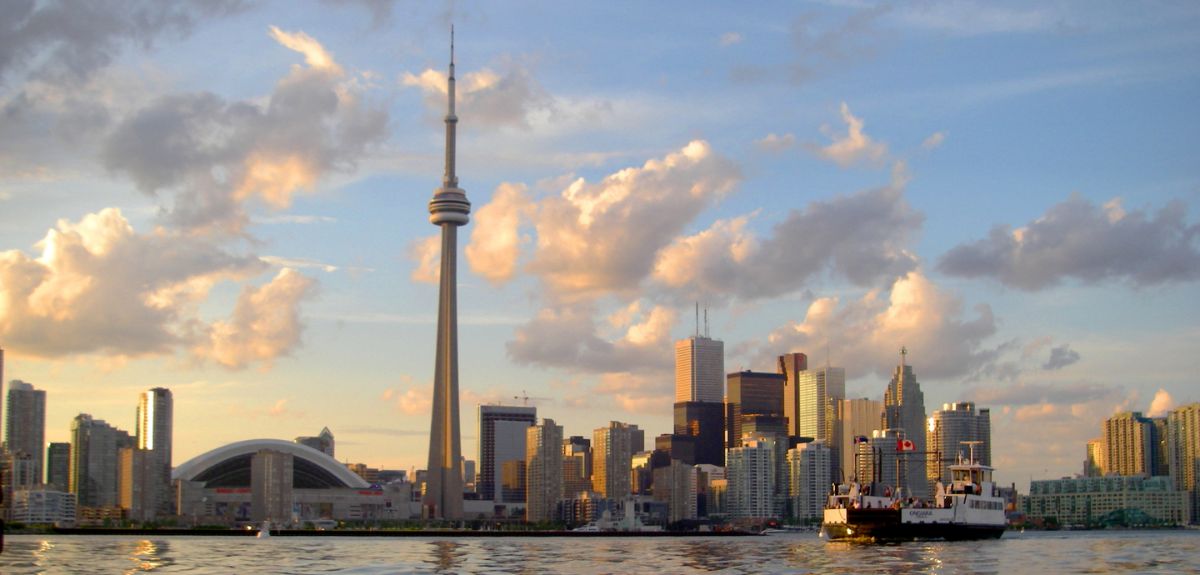
Toronto is famous for the CN Tower, one of the most recognizable structures on the North American skyline, and for being one of the most ethnically diverse cities on earth, with neighborhoods like Chinatown, Little Italy, Greektown, and Kensington Market reflecting waves of immigration going back over a century. It’s also home to a fierce hockey culture centered on the Maple Leafs, a booming film and TV production industry that’s earned it the nickname “Hollywood North,” and a downtown skyline that’s grown taller and glossier every year since the 2010s condo boom.
Is Toronto a Walkable City?
Yes, especially downtown. The core, from the waterfront up to Bloor Street, is dense and pedestrian-friendly, with the PATH — an underground network of tunnels connecting office towers, shops, and subway stations — making winter walking painless too.
Is it safe to walk in Toronto at night? Downtown and most central neighborhoods feel safe well into the evening, though as in any big city it’s worth sticking to well-lit main streets and using normal caution in less familiar areas.
What Is the Best Neighborhood to Walk Around?
The Distillery District is the standout. Restored 19th-century industrial buildings, closed to cars, wrap around cobblestone pedestrian lanes lined with galleries, chocolate shops, and cafés. For a livelier, grittier contrast, Kensington Market is a rambling, colorful jumble of vintage shops, spice stores, and street murals just west of Chinatown.
What Are the Best Things to Do in Toronto? (For Your First Visit)
I gave myself a loose framework and let the neighborhoods pull me around rather than following a strict checklist. Here’s what earned a spot on the list:
CN Tower
Completed in 1976, this 553-meter concrete tower was built by the Canadian National Railway to solve a very practical problem: skyscrapers going up around it were interfering with the city’s television and radio signals, so engineers decided to simply build something taller than everything else. It held the record for the world’s tallest freestanding structure for over 30 years and is still one of the most photographed skylines in North America. Inside, glass-fronted elevators glide up to the LookOut level in under a minute, and from there you can step onto the famous glass floor, suspended 342 meters above the ground, or continue up to the SkyPod for an even higher vantage point. The truly adventurous can book the EdgeWalk, a hands-free walk around a ledge that circles the outside of the main pod. Price: from ~CAD 50 for LookOut access; EdgeWalk runs separately at around CAD 250. Pro tip: Go around sunset — you’ll catch daylight views over Lake Ontario on the way up and watch the entire city light up as you descend. Check availability and explore popular experiences.

Casa Loma
Canada’s only full-sized castle sits improbably in the middle of midtown Toronto, built between 1911 and 1914 for financier Sir Henry Pellatt, who wanted a medieval-style home to rival anything in Europe. The Gothic Revival mansion cost roughly $3.5 million to build at the time and took a team of nearly 300 workers three years to finish — only for Pellatt to lose the property to unpaid taxes barely a decade after moving in. Today you can wander the Great Hall, the hand-carved Oak Room, a conservatory, and an 800-foot underground tunnel that once connected the main house to the stables, where secret sonar research was carried out during the Second World War. Price: ~CAD 40 for general admission, with self-guided audio tours included. Pro tip: The five acres of gardens surrounding the estate are worth a slow lap in spring or early fall, when they’re in full bloom and far less crowded than the interior. Check availability and explore popular experiences.

St. Lawrence Market
This two-century-old public market traces its roots back to 1803, when the site was first designated for trade, and it’s been feeding Torontonians in one form or another ever since. The market is really two buildings: St. Lawrence Market South, a cavernous hall packed with butchers, bakers, fishmongers, and cheesemongers, and St. Lawrence Market North, which hosts a farmers’ market on Saturdays and an antiques market on Sundays. National Geographic once ranked it the best food market in the world, and locals still treat it as a weekly ritual rather than a tourist stop. The single dish you shouldn’t skip is the peameal bacon sandwich at Carousel Bakery, a Toronto institution built around thick, cornmeal-crusted pork loin on a kaiser roll. Price: Free to browse; a peameal bacon sandwich runs about CAD 10-12. Pro tip: Arrive before 10am on a Saturday to beat the crowds at the farmers’ market next door, then grab your sandwich once the lines die down. Check availability and explore popular experiences.

Distillery District
Once the site of the Gooderham and Worts Distillery, which by the mid-1800s had grown into the largest distillery in the British Empire, this 13-acre pocket of downtown now holds the largest and best-preserved collection of Victorian-era industrial architecture in North America. The distillery closed for good in 1990, and after sitting derelict for over a decade, the more than 40 red-brick buildings were restored and reopened in 2003 as a car-free village of galleries, boutiques, and cafés. Cobblestone lanes wind between old fermenting cellars and warehouses, several of which have appeared in films like Chicago and X-Men, and you’ll find everything from small-batch chocolate at SOMA to live theatre at the Young Centre for the Performing Arts. Price: Free to walk through; individual shops, tastings, and shows vary. Pro tip: Visit in December for the Distillery Winter Village, when the district fills with string lights, mulled wine stalls, and a genuinely festive Christmas market atmosphere. Check availability and explore popular experiences.

Credit: Wikimedia Commons
Toronto Islands
A short ferry ride from the downtown waterfront lands you on a chain of 15 small islands, connected by footbridges and completely closed to cars, that together form one of the most peaceful escapes in the city. The islands were originally a peninsula until a major storm in 1858 cut them off from the mainland, and today they hold sandy beaches, quiet bike paths, a small amusement park on Centre Island, and — most famously — the single best vantage point for photographing the downtown skyline across the water. Ward’s Island and Hanlan’s Point tend to be quieter than the busier Centre Island dock, with Hanlan’s also home to Toronto’s only clothing-optional beach. Price: ~CAD 10 round-trip ferry from the Jack Layton Ferry Terminal. Pro tip: Rent a bike right at the ferry dock and ride out to Ward’s Island for the quietest beaches and the most unobstructed skyline views, especially near sunset. Check availability and explore popular experiences.

Royal Ontario Museum (ROM)

Canada’s largest museum holds more than 13 million objects spanning natural history, world culture, and art, from a dinosaur gallery with real Burgess Shale fossils to extensive collections of Chinese, Egyptian, and Indigenous artifacts. What draws just as much attention as what’s inside is the building itself: the Michael Lee-Chin Crystal, a jagged, angular glass-and-aluminum extension designed by architect Daniel Libeskind and opened in 2007. Libeskind reportedly sketched the first concept for the crystalline addition on a napkin at a family wedding held at the museum, and the finished structure — five interlocking prismatic volumes that seem to erupt out of the original heritage building — has become one of Toronto’s most debated pieces of architecture. Price: ~CAD 30 for general admission. Pro tip: The crystal’s angular galleries can be genuinely disorienting to navigate, so grab a floor map at the entrance before you start exploring. Check availability and explore popular experiences.
Credit: Wikimedia Commons
Kensington Market
Designated a National Historic Site in 2006, this dense, chaotic, and deeply loved neighborhood grew out of successive waves of immigration starting in the late 19th century, first Scottish and Irish, then a major Jewish community in the early 1900s that earned it the nickname “the Jewish Market,” and later Portuguese, Caribbean, and Latin American communities who each left their mark on the shopfronts and street life. Today the narrow lanes around Augusta Avenue, Baldwin Street, and Kensington Avenue hold vintage clothing shops, spice merchants, Caribbean fruit stands, and some of the city’s most photographed murals, all packed into Victorian houses painted in the bright colors Portuguese immigrants brought to the area in the 1950s. Price: Free to wander. Pro tip: Come hungry and skip the sit-down restaurants in favor of the taco stands and empanada counters tucked into the market’s side streets — they’re where the neighborhood’s food reputation actually comes from. Check availability and explore popular experiences.

Credit: Wikimedia Commons
Nathan Phillips Square & Toronto City Hall
Toronto’s City Hall was the product of the largest architecture competition any city had held up to that point, with an international jury sorting through 520 submissions from 42 countries before choosing Finnish architect Viljo Revell’s design in 1958. The finished building, opened in 1965, is instantly recognizable: two curved towers of unequal height wrap around a low, saucer-shaped council chamber, an arrangement some Torontonians compare to an eye with the chamber as its pupil. In front of it, Nathan Phillips Square hosts a reflecting pool that becomes a public ice rink every winter, a Peace Garden commemorating the victims of Hiroshima and Nagasaki, and the giant three-dimensional “TORONTO” sign that’s become one of the most photographed spots in the entire city. Price: Free. Pro tip: Go early in the morning if you want a photo with the TORONTO sign without a line of other visitors waiting their turn. Check availability and explore popular experiences.

High Park
Toronto’s largest public park sprawls across 161 hectares on the city’s west side, the legacy of a gift from architect and surveyor John George Howard, who deeded his estate to the city in 1873 on the condition it remain a public park forever. The land is genuinely wild in places, with roughly a third of the park preserved as a rare black oak savannah ecosystem, alongside two deep ravines, a large pond stocked with wild ducks and geese, hiking and cycling trails, sports fields, and a small free zoo. The park’s best-known spectacle is its cherry blossom grove near Bloor Street, a gift from the city of Tokyo, which draws large crowds for a short window each spring when the trees are in full bloom. Price: Free. Pro tip: Check the Toronto Parks cherry blossom tracker online before visiting in spring — the bloom typically lasts less than two weeks and its timing shifts from year to year. Check availability and explore popular experiences.

Credit: Wikimedia Commons
Art Gallery of Ontario (AGO)
One of the largest art museums in North America, the AGO holds around 90,000 works spanning European Old Masters, Group of Seven landscapes, and the largest public collection of Henry Moore sculptures anywhere in the world, a gift from the artist himself after the gallery built a dedicated space to house it. The building’s current look comes from a 2008 renovation led by architect Frank Gehry, who grew up on a street a few blocks away and designed a sweeping glass-and-Douglas-fir façade that curves the length of Dundas Street, along with a spiral staircase that’s become one of the gallery’s signature photo spots. Price: ~CAD 30 for general admission. Pro tip: Admission to the permanent collection is free every Wednesday evening after 6pm, making it one of the best free things to do downtown. Check availability and explore popular experiences.