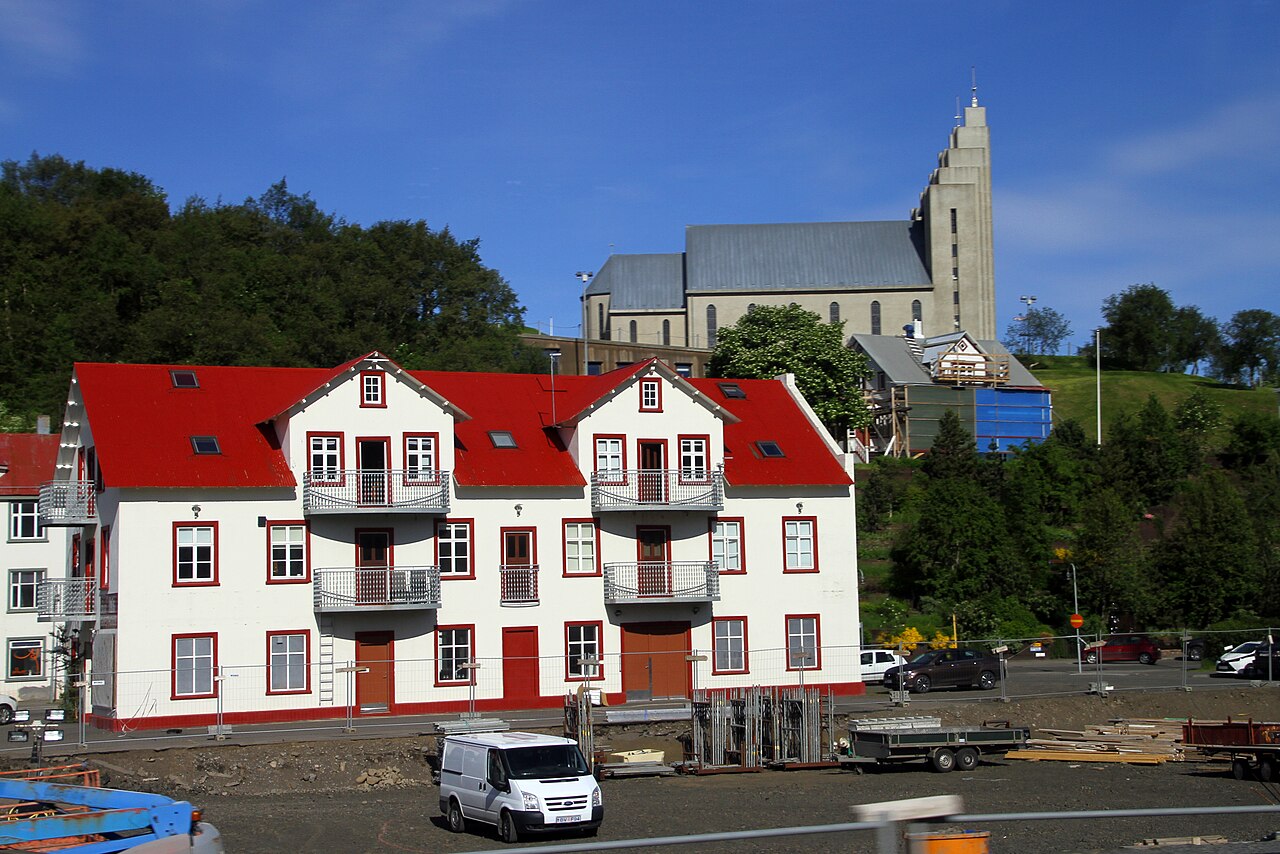




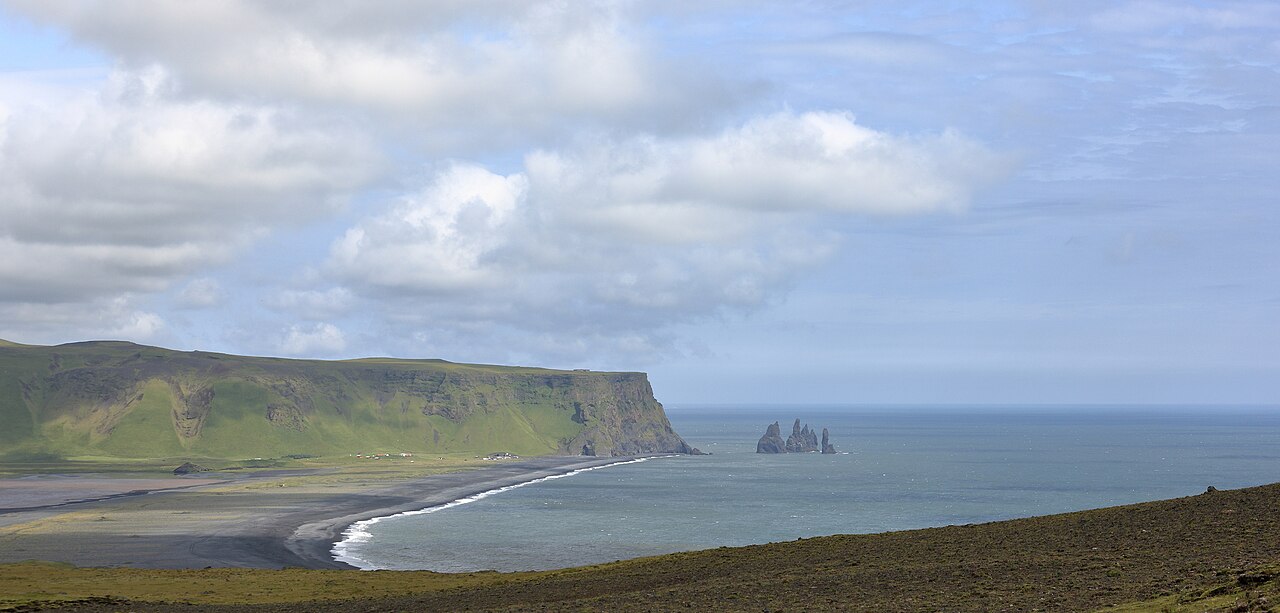
Vík í Mýrdal is a tiny village on Iceland’s South Coast, about 2.5 hours from Reykjavík, and the best base for the black-sand beaches, waterfalls and glaciers around it. Most visitors need 1 to 2 days: one to drive the coast from Seljalandsfoss to Vík, and one more for an ice cave, a glacier hike or Fjaðrárgljúfur canyon. This guide covers the 10 best places, what they cost in 2026, how the Reynisfjara warning lights work and what a South Coast day really costs by car.
This guide contains affiliate links. If you book through them, we may earn a small commission at no extra cost to you.
Why Visit Vík í Mýrdal?
Vík is the southernmost village in Iceland, home to only a few hundred people, yet it sits in one of the most dramatic landscapes in the country. Black-sand beaches, sea stacks, green cliffs and the Mýrdalsjökull ice cap are all within a few minutes’ drive, and the volcano Katla sleeps under the ice just north of town. The area is known for:
- Black-sand beaches: Reynisfjara, with its basalt columns and the Reynisdrangar sea stacks, is one of the most photographed beaches in the world.
- Waterfalls on the way: Seljalandsfoss, which you can walk behind, and the giant curtain of Skógafoss are right on the Ring Road.
- Glaciers and ice caves: walk on Sólheimajökull or enter a natural ice cave under the Katla volcano.
- Puffins and seabirds: from May to August, puffins nest on the cliffs of Dyrhólaey and Reynisfjara.
- Northern lights: with almost no light pollution, winter nights can be spectacular.
Is Vík Right for You?
| Type of trip | How Vík fits |
|---|---|
| Nature and road trips | Excellent: the classic South Coast stops are all within an hour of the village. |
| Couples and romantic trips | Very good: dramatic beaches, quiet countryside hotels and northern lights away from city lights. |
| Families with kids | Good: short walks to waterfalls and puffins, but Reynisfjara’s waves are dangerous, so keep children well back from the water. |
| Budget travelers | Fair: the sights are free apart from parking, but hotels and restaurants are limited and expensive. |
| Adventure seekers | Excellent: ice caves, glacier hikes, the Fimmvörðuháls trail and ATV rides on black sand. |
| Travelers with limited mobility | Fair: Skógafoss, Seljalandsfoss and the upper viewpoints are close to the parking lots, but paths are uneven and often wet or icy. |
Vík Quick Facts
| Best time to visit | May–August for puffins and long days; September–March for the northern lights and ice caves. |
|---|---|
| How many days | 1–2 days; stay overnight in or near Vík to avoid a 5-hour round trip in one day. |
| Distance from Reykjavík | About 187 km on the Ring Road (Route 1), roughly 2.5 hours without stops. |
| Entry fees | The beaches and waterfalls are free; you pay for parking, usually ISK 750–1,000 per car, mostly through the Parka app. |
| Road charge | ISK 6.95 per km for cars since January 2026, usually billed by your rental company. |
| Currency | Icelandic króna (ISK); about ISK 125 to $1. Cards are accepted almost everywhere. |
Know Before You Go
Is Vík walkable?
The village itself is: the church, the beach, the Icewear store, the supermarket and the restaurants are all within a 15-minute walk. Everything else in this guide is a drive away, from 10 minutes (Reynisfjara) to about an hour (Seljalandsfoss and Fjaðrárgljúfur). Wind is the real challenge: Vík is one of the windiest spots on the coast, so bring a windproof jacket even in summer.
Is Vík safe?
The village is very safe, and Iceland ranked as the most peaceful country in the world in the 2026 Global Peace Index. The danger here is nature. Reynisfjara’s sneaker waves have killed several visitors, so always follow the warning lights (see below). In winter, storms can close the Ring Road around Vík, so check road and weather conditions every morning. The emergency number is 112.
Is there Uber in Vík?
No. Uber and similar apps do not operate in Iceland, and there are no regular taxis in Vík. You need a rental car, a tour or the long-distance bus.
How do you get around Vík?
By car. The Ring Road runs through the village and links almost every stop in this guide; Dyrhólaey, Reynisfjara and Sólheimajökull are on short paved side roads. Public buses only follow the Ring Road and are infrequent, so they are not practical for sightseeing. If you do not want to drive, a South Coast day tour from Reykjavík covers the main stops, and ice cave tours pick you up in Vík itself.
Map of the Best Places to Visit Around Vík
The numbers on the map match the list below. Places 1 to 3 and 9 are within 15 minutes of Vík. The waterfalls (4 and 5) and Sólheimajökull (6) are west of the village on the way from Reykjavík, and Fjaðrárgljúfur (10) is about an hour east.
10 Best Places to Visit Around Vík
1. Reynisfjara Black Sand Beach

Reynisfjara is the beach that made Vík famous. Its sand is jet black, made of volcanic basalt ground down by the Atlantic, and at its eastern end a wall of hexagonal basalt columns rises like a giant organ next to a sea cave. Offshore, the Reynisdrangar sea stacks stand in the surf. Icelandic folklore says they are trolls who were dragging a ship to land and turned to stone when the sun rose.
The beach is also dangerous. Sneaker waves can rush tens of meters up the sand without warning and drag people into very cold, very strong water. Since 2022, a warning-light system at the entrance tells you how far you can go, and the rules were tightened after a fatal accident in August 2025. Strong storms in February 2026 also eroded parts of the beach, so its shape can look different from older photos.
Why we recommend it: it is one of the most striking coastlines in Europe, and from May to August you can often see puffins on the cliffs above the columns.
Area: 10 minutes west of Vík, Route 215 · Price: free; parking ISK 1,000 (lower lot) or ISK 750 (upper lot) for up to 3 hours, paid through Parka · Time needed: 45–60 minutes
Tip: Never turn your back on the sea, and stay on the upper beach when the light is yellow or red. The Black Beach Restaurant next to the parking lot is a good place to warm up.
How the Reynisfjara warning lights work: check the light at the entrance before you step onto the sand. Green means normal conditions, but you should still stay alert. Yellow means waves can reach far up the beach: stay well back from the waterline and out of the marked yellow zone. Red means the lower beach, the basalt columns and the cave are closed, and you should watch from the viewing area by the parking lot. Guides report that visitors still ignore red lights. Do not be one of them: the waves are the reason people die here.
2. Víkurkirkja and Vík Village

The red-roofed church of Vík, built in 1934, sits on a hill above the village, and the view from its steps is the postcard image of the South Coast: a few houses, purple lupine fields in early summer, the black beach and the Reynisdrangar stacks offshore. The church is small and simple inside, and it stands on high ground for a reason: locals say it is the only building in Vík expected to escape a glacial flood if Katla erupts.
Below the church, the village has a supermarket, a gas station, a handful of restaurants and the big Icewear wool store. Víkurfjara, the beach right in front of the village, is calmer than Reynisfjara and is the best place to see the sea stacks from the east. Walk along it in the evening, when the tour buses have gone.
Why we recommend it: it gives you the classic view of Vík in five minutes, and the village beach is a quieter alternative to Reynisfjara.
Area: Vík village center · Price: free; a small parking fee (about ISK 500) applies at the church · Time needed: 30–60 minutes
Tip: Visit in mid to late June for the lupines around the church. On winter nights, the church against the northern lights is one of the best photos on the coast.
3. Dyrhólaey

A few minutes west of Reynisfjara, Dyrhólaey is a 120-meter-high promontory with a huge natural arch that the sea has carved through the rock. From the top, by the white lighthouse built in 1927, you look east over Reynisfjara and the sea stacks and west along an endless black beach. On a calm day you can see the Mýrdalsjökull glacier behind you.
The promontory has two parking areas: the lower one, close to the arch views and the beach, and the upper one, reached by a steep, rough road up to the lighthouse. Dyrhólaey is a nature reserve and an important nesting site for puffins, Arctic terns and eider ducks. Parts of it close every spring during the nesting season, usually from about mid-May to late June, and during that time access is limited to 9 a.m.–7 p.m.
Why we recommend it: it has the best panoramic view of the whole Vík coastline, and it is one of the easiest places in Iceland to see puffins in summer.
Area: Route 218, about 15 minutes west of Vík · Price: free entry; parking about ISK 750 (check the signs, payment via Parka) · Closed: partly, during the spring nesting season · Time needed: 45–60 minutes
Tip: The wind on top is fierce, so hold on to your phone and keep away from the cliff edges, which are unfenced.
4. Skógafoss

Skógafoss is one of Iceland’s biggest waterfalls: a 60-meter-high, 25-meter-wide curtain of water falling from the old sea cliffs onto a flat gravel plain. You can walk right up to the base, where the spray creates rainbows on sunny days. A steep metal staircase of several hundred steps on the right side climbs to a viewing platform above the falls.
From the top, a trail follows the Skógá river upstream past more than 20 smaller waterfalls. It is the start of the Fimmvörðuháls trail, a demanding 25-km hike over the pass between two glaciers to Þórsmörk, but even the first 30 minutes are worth it. Next to the falls, the Skógar Museum has turf houses, an old church and a large collection about rural life on the South Coast.
Why we recommend it: it is easy to reach, impressive in every season, and the climb gives you a view you will not get from the parking lot.
Area: Skógar, Ring Road, about 30 minutes west of Vík · Price: free; parking ISK 1,000 (Parka); Skógar Museum ISK 3,000 adults, free under 12 · Time needed: 45 minutes, 2 hours with the museum
Tip: Bring a rain jacket: you will get wet at the base. Kvernufoss, a quieter waterfall you can also walk behind, is a 15-minute walk from the museum (separate parking, ISK 750).
Compare South Coast tours from Reykjavík
5. Seljalandsfoss and Gljúfrabúi

Seljalandsfoss is the first big waterfall you meet on the drive from Reykjavík, and the one everyone wants to see: a slender 60-meter fall with a path that leads all the way behind the water. Walking around the back of the falls, through the mist and with the light coming through the curtain of water, is one of the classic experiences of an Iceland trip.
Most visitors stop there, but do not miss Gljúfrabúi, a few minutes’ walk north along the cliffs. This smaller waterfall is hidden inside a narrow canyon. You enter by walking through a stream on stepping stones, and inside you stand in a mossy chamber with the water falling right in front of you. A short climb on the outside gives you a view from above.
Why we recommend it: two very different waterfalls in one stop, and both let you get much closer than at most falls in the country.
Area: Route 249, just off the Ring Road, about 1 hour west of Vík · Price: free; parking from ISK 900–1,000 (payment machines or Checkit.is) · Time needed: 45–60 minutes
Tip: Wear waterproof clothes and shoes with grip. In winter, the path behind Seljalandsfoss is often closed because of ice; if it is open, ice cleats help a lot.
6. Sólheimajökull Glacier

Sólheimajökull is an outlet glacier flowing down from the Mýrdalsjökull ice cap, and it is the most accessible glacier on the South Coast. From the parking lot, a 20-minute walk leads to a lagoon at its edge, where you can see the layers of white and blue ice streaked with black ash from past eruptions. Signs along the path show how far the glacier has retreated in recent decades.
To go onto the ice itself, you must join a guided glacier hike. Guides provide crampons, helmets and ice axes, and lead you past crevasses, ridges and sinkholes (moulins) for about three hours. No previous experience is needed for the standard walks, which are some of the most popular activities in South Iceland.
Why we recommend it: it is the easiest way to stand on a real glacier, and the walk to the edge is free.
Area: Route 221, about 30 minutes west of Vík · Price: free to walk to the edge; parking ISK 750 (Parka); guided glacier hikes from about $90–150 per person · Time needed: 1 hour on your own, 3–4 hours with a hike
Tip: Never walk onto the ice without a guide: crevasses are often hidden under snow. Wear sturdy hiking boots; most operators rent them if you do not have any.
Compare Sólheimajökull glacier hikes
7. Sólheimasandur Plane Wreck

On November 21, 1973, a US Navy Douglas Super DC-3 made an emergency landing on the black sand plain of Sólheimasandur. Everyone on board survived, but the plane was never removed, and its bare silver fuselage still lies alone on the sand. Against the flat black desert and a stormy sky, it has become one of the most photographed sights in Iceland.
Cars are not allowed on the sand. From the parking lot on the Ring Road, a marked path runs about 4 km in a straight line to the wreck, which takes around an hour each way on foot over very flat, very open ground. If you would rather save time and energy, a shuttle bus runs from the parking lot to the wreck and back several times a day.
Why we recommend it: it is a surreal, unforgettable sight, especially at sunrise or in snow.
Area: Ring Road, between Skógafoss and Sólheimajökull · Price: free; parking ISK 750 (Parka); shuttle about $23–28 return · Time needed: 2–2.5 hours on foot, about 1 hour with the shuttle
Tip: Do not attempt the walk in a storm or poor visibility: the plain is featureless and the wind can be brutal. Please do not climb on the wreck.
8. Katla Ice Cave

Under the Kötlujökull glacier, on the slopes of the Katla volcano, meltwater carves natural ice caves where blue ice meets layers of black volcanic ash. Unlike the famous crystal caves of Vatnajökull, which can only be visited in winter, the Katla ice cave is usually accessible all year, which makes it the most practical ice cave for most visitors.
Tours start in Vík. A super jeep drives you about 30 minutes across volcanic terrain to the glacier, where guides fit you with crampons and a helmet before a short walk into the cave. The cave changes shape every season as the glacier moves and melts, so no two visits look the same. Tours last about three hours, and groups are usually small.
Why we recommend it: it is one of the few ice caves you can visit in summer, and the black-and-blue ice is completely different from the photos you know.
Area: Mýrdalsjökull, tours from Vík · Price: about $180–260 per person, depending on operator and group size · Time needed: about 3 hours
Tip: Book a few weeks ahead in high season and wear warm, waterproof layers and hiking boots. Tours can be canceled at short notice if conditions are unsafe.
Check Katla ice cave tours from Vík
9. Hjörleifshöfði

About 15 minutes east of Vík, Hjörleifshöfði is a lonely, 220-meter-high rock rising out of the flat black sands of Mýrdalssandur. It was once an island, but floods from the Katla volcano filled the sea around it with sand. According to the sagas, Hjörleifur, foster brother of Iceland’s first settler Ingólfur Arnarson, settled here in the 870s and was killed by his slaves; his grave is said to lie on the summit.
Most visitors come for Gígjagjá, a cave at the foot of the rock nicknamed the “Yoda Cave” because its opening, seen from inside, looks like the face of the Star Wars character. A hiking trail also climbs to the top of the headland, with views across the sands to the sea and the glacier.
Why we recommend it: it feels wild and empty compared with Reynisfjara, and the cave is a fun, quick stop.
Area: Mýrdalssandur, off the Ring Road east of Vík · Price: parking about ISK 1,000 (EasyPark) · Time needed: 30 minutes for the cave, 1.5–2 hours with the summit walk
Tip: The access road is gravel and can be rough after rain; drive slowly in a small car.
10. Fjaðrárgljúfur Canyon

About an hour east of Vík, near the village of Kirkjubæjarklaustur, Fjaðrárgljúfur is a serpentine canyon about 100 meters deep and 2 km long, carved by a small river through soft palagonite rock. Moss covers its walls in bright green, and a trail along the eastern rim leads to several viewing platforms over the twisting gorge.
The canyon became so popular after appearing in a music video in 2015 that it had to close several times to protect the fragile vegetation. Today, new paths and platforms keep visitors off the moss. The walk to the upper viewpoint takes about 20–30 minutes each way and climbs gently the whole time.
Why we recommend it: it is one of the most beautiful canyons in Iceland and a good reason to continue east of Vík on a two-day trip.
Area: Route 206, near Kirkjubæjarklaustur · Price: free; parking ISK 1,000 at the lower lot (Parka) · Time needed: 1–1.5 hours
Tip: Stay on the marked trail and behind the ropes. In spring the path can close for a few weeks when the ground thaws, so check before you drive there.
Must-Do Experiences Around Vík
Some of the best moments around Vík are not attractions with a ticket. These are the experiences we would not skip:
- Walk behind a waterfall. Seljalandsfoss, Gljúfrabúi and Kvernufoss all let you step behind or inside the falling water.
- See the puffins. From May to August, look for them on the cliffs at Dyrhólaey and above the columns at Reynisfjara.
- Step into an ice cave. The Katla ice cave is open most of the year and starts right in Vík.
- Chase the northern lights. From September to March, the dark skies around Vík are ideal; the church and the sea stacks make great foregrounds.
- Warm up with lamb soup. After a cold, windy beach walk, a bowl of Icelandic meat soup is the local cure.
See South Coast tours with Vík and Reynisfjara
Where to Eat in Vík
| Place | Area | What to order | Good to know |
|---|---|---|---|
| Smiðjan Brugghús | Vík village | Burgers and local craft beer | Lively and popular in the evening; expect a wait in summer |
| Black Beach Restaurant | Reynisfjara parking lot | Fish soup, lamb soup, coffee and cakes | Big windows facing the basalt columns |
| Village restaurants and cafés | Vík village | Fish of the day, Arctic char, lamb | Few options and early closing in winter, so book dinner |
| Skógafoss and Seljalandsfoss food stands | Parking lots | Soup, hot dogs, coffee | Quick lunch on the road |
| Krónan supermarket | Vík village | Skyr, sandwiches, picnic food | The cheapest way to eat on the South Coast |
Tip: restaurants in Vík fill up quickly in the evening because almost every South Coast traveler sleeps here. Book a table in the afternoon, or buy dinner supplies at the supermarket if your hotel has a kitchen.
Car vs Tour: What Does a South Coast Day Really Cost in 2026?
There is no city card for the South Coast, and the waterfalls and beaches charge no entry fee. What you do pay for is parking, almost everywhere, plus the per-kilometer road charge introduced in January 2026. We added up the extras for one car on the classic Reykjavík–Vík–Reykjavík day, using November 2026 prices:
| Cost (self-drive, one car) | Price | Notes |
|---|---|---|
| Road charge (about 375 km round trip) | About ISK 2,600 | ISK 6.95 per km; your rental company bills it |
| Parking at Seljalandsfoss | ISK 900–1,000 | Machines or Checkit.is |
| Parking at Skógafoss | ISK 1,000 | Parka app |
| Parking at Sólheimajökull | ISK 750 | Parka app |
| Parking at Dyrhólaey | About ISK 750 | Parka app; check signs |
| Parking at Reynisfjara | ISK 750–1,000 | Upper or lower lot, up to 3 hours |
| Total extras | About ISK 7,000 ($56) | Plus the car rental and fuel (about ISK 210–225 per liter) |
Our verdict: for two or more people, a rental car is usually better value than a tour and lets you stay overnight in Vík, which we strongly recommend: a Reykjavík–Vík return in one day means about 5 hours of driving. From November to March, when days are short and the Ring Road can close in storms, a guided South Coast tour is the safer and simpler choice. Either way, pay parking as soon as you arrive: unpaid fees come back with a late-payment charge of about ISK 1,960, plus your rental company’s handling fee.
Compare car rental prices in Reykjavík
Where to Stay Around Vík
| Area | Best for | Pros | Cons |
|---|---|---|---|
| Vík village | First-time visitors, couples | Restaurants, supermarket, ice cave tours start here | Books out early in summer; prices are high |
| Skógar and Hvolsvöllur | Families and waterfall lovers | Close to Skógafoss and Seljalandsfoss; slightly cheaper | 30–60 minutes from Reynisfjara |
| Farm stays around Mýrdalur | Northern lights and quiet nights | Dark skies, countryside views | You need a car; few dining options |
| Kirkjubæjarklaustur | Road trippers heading east | Near Fjaðrárgljúfur, on the way to Jökulsárlón | About an hour from Vík |
Use the map below to compare hotels and apartments across these areas. Prices update live for your dates, so set your check-in and check-out first.
Vík Itinerary: 1, 2 or 3 Days
- 1 day – South Coast from Reykjavík: Seljalandsfoss and Gljúfrabúi (5), Skógafoss (4), a short walk to Sólheimajökull (6), Dyrhólaey (3), Reynisfjara (1) and the church in Vík (2), then sleep in Vík.
- 2 days – Ice and canyons: Day 1 as above. Day 2: a morning Katla ice cave tour (8), the Yoda Cave at Hjörleifshöfði (9) and Fjaðrárgljúfur (10), then continue east or drive back west.
- 3 days – Add a glacier hike: spend the third day on a guided hike on Sólheimajökull (6) and walk to the plane wreck (7), or continue to the Jökulsárlón glacier lagoon.
In December, daylight in South Iceland lasts only about four to five hours, so plan the waterfalls and beaches around midday and leave the drive back for the dark.
Compare ice cave tours on the South Coast
Day Trips from Vík
- Jökulsárlón and Diamond Beach: icebergs floating in a glacier lagoon and on a black beach, about 2.5 hours east. Parking ISK 1,000 covers both.
- Skaftafell: hiking trails to Svartifoss waterfall and glacier viewpoints in Vatnajökull National Park, about 2 hours east.
- Þórsmörk: a highland valley between three glaciers, reached only by 4×4 bus or super jeep across rivers.
- The Golden Circle: about 2.5 hours back west; combine it with the South Coast on a 3-day loop. Read our Golden Circle guide.
Getting There and Around
| Option | Price | Notes |
|---|---|---|
| Rental car from Reykjavík or Keflavík | Varies by season | About 2.5 hours to Vík; add the ISK 6.95/km road charge and parking |
| South Coast day tour from Reykjavík | Varies by tour size | 10–11 hours with hotel pickup; covers the main stops but little time at each |
| Strætó long-distance bus | Check current fares | Route 52 runs Reykjavík–Vík–Höfn along the Ring Road; few departures, especially in winter |
| Ice cave and glacier tours | About $90–260 | Meet on location in Vík or at Sólheimajökull; no car needed for the tour itself |
Money-Saving Tips
- The beaches, waterfalls and canyon charge no entry fee: you only pay for parking.
- Pay parking by app as soon as you arrive to avoid late-payment fees passed on by your rental company.
- Walk to the plane wreck instead of taking the shuttle if the weather is good.
- Visit the edge of Sólheimajökull for free, and book a guided hike only if you want to go onto the ice.
- Stock up at the supermarket in Vík or Hvolsvöllur: restaurant meals on the South Coast are expensive.
Best Time to Visit Vík
| Season | Weather | Crowds | Good to know |
|---|---|---|---|
| Spring (Apr–May) | Cool, windy, changeable | Medium | Puffins return in May; parts of Dyrhólaey close for nesting |
| Summer (Jun–Aug) | Mild, around 10–14°C (50–57°F) | High | Lupines, puffins, midnight sun; book hotels months ahead |
| Autumn (Sep–Oct) | Cool, wet and stormy | Medium | Northern lights return; fewer buses at the beaches |
| Winter (Nov–Mar) | Cold, stormy, short days | Low to medium | Aurora and ice caves; the Ring Road can close in storms |
Vík FAQ
How many days do you need in Vík?
One to two days. One day covers the waterfalls and beaches between Seljalandsfoss and Vík; a second day lets you add an ice cave, Hjörleifshöfði and Fjaðrárgljúfur without rushing.
Is Reynisfjara safe?
Only if you respect the waves. Follow the green, yellow and red warning lights at the entrance, never turn your back on the sea and keep well away from the waterline. People have died here after being swept away by sneaker waves.
Can you do Vík as a day trip from Reykjavík?
Yes, but it is a long day of about 5 hours of driving plus stops. Staying one night in or near Vík makes the trip far more relaxed and lets you see the beaches in the evening light.
When can you see puffins near Vík?
From about May to mid-August, on the cliffs of Dyrhólaey and at Reynisfjara. Parts of Dyrhólaey are closed during the spring nesting season, so check the opening hours before you go.
Can you visit an ice cave near Vík in summer?
Yes. The Katla ice cave under Kötlujökull is usually accessible all year with a guided tour from Vík, unlike the Vatnajökull crystal caves, which only open in winter.
Extending Your Trip?
Most South Coast trips start in Reykjavík, and many travelers add a day on the Golden Circle before heading east to Vík. On your last day, soak at the Blue Lagoon, only 20 minutes from Keflavík Airport. If you are driving the whole Ring Road, continue north to Akureyri, the capital of North Iceland. For an overview of the whole country, start with the best places to visit in Iceland.
Sources (prices and opening hours checked in November 2026)
- Iceland Tours – parking fees in Iceland (late 2026)
- Parka – Reynisfjara parking terms
- Iceland Highlights – Reynisfjara warning-light system and 2026 erosion
- Reykjavík Grapevine – Reynisfjara red-light threshold lowered (2025)
- Visit South Iceland – Dyrhólaey nesting season and access
- Skógar Museum – 2026 ticket prices
- Skógar Museum – opening hours
- Guide to Iceland – Fjaðrárgljúfur access and parking
- Icelandic Mountain Guides – plane wreck shuttle
- Guide to Iceland – Katla ice cave tours from Vík (prices November 2026)
- Strætó – new countryside routes (route 52 Reykjavík–Höfn)
- Locationscout – 2026 per-kilometer road charge
- Vision of Humanity – Global Peace Index 2026