



The Golden Circle is Iceland’s classic day trip: a loop of roughly 250 to 300 km from Reykjavík that links Þingvellir National Park, the Geysir geothermal area and Gullfoss waterfall. You can drive it in one long day, but 1 to 2 days let you add a lagoon, a crater and a greenhouse lunch. This guide covers the 10 best stops, what each costs in 2026, and whether a car or a tour makes more sense.
This guide contains affiliate links. If you book through them, we may earn a small commission at no extra cost to you.
Why Visit the Golden Circle?
No other route in Iceland packs so much variety into so few hours. Within about two hours of Reykjavík you walk through a rift between two tectonic plates, watch a geyser erupt every few minutes and stand above one of Europe’s most powerful waterfalls. The Golden Circle is known for:
- Plate tectonics you can see: at Þingvellir, the North American and Eurasian plates pull apart, opening cliffs, fissures and the crystal-clear Silfra.
- Iceland’s history: the Alþingi, one of the world’s oldest parliaments, met at Þingvellir from 930 AD.
- Geothermal power: geysers, hot springs, greenhouses heated by the earth and some of the country’s oldest bathing pools.
- Waterfalls: Gullfoss, plus quieter falls like Faxi and the bright blue Brúarfoss.
- Easy access: paved roads all the way, open year-round, and close enough to Reykjavík for a day trip.
Is the Golden Circle Right for You?
| Type of trip | How the Golden Circle fits |
|---|---|
| First trip to Iceland | Excellent: the easiest introduction to Iceland’s geology and history, and close to Reykjavík. |
| Couples and romantic trips | Very good: lagoon evenings, countryside hotels and northern lights away from city lights. |
| Families with kids | Very good: short walks, a geyser that erupts on schedule, the Secret Lagoon (children 14 and under pay a token price) and horses everywhere. |
| Budget travelers | Good: Þingvellir, Geysir and Gullfoss charge no entry; you mostly pay for parking, fuel or a tour. |
| Adventure seekers | Very good: snorkeling in Silfra, snowmobiling and glacier tours on the Langjökull side. |
| Travelers with limited mobility | Good: the main viewpoints at Þingvellir, Geysir and Gullfoss have paved or boardwalk paths near the parking lots. Kerið and Brúarfoss are harder. |
Golden Circle Quick Facts
| Best time to visit | June–August for long days; September–March for the northern lights and fewer crowds. |
|---|---|
| How many days | 1 full day for the main three sights; 2 days to add lagoons, Kerið and Brúarfoss. |
| Distance | Roughly 250–300 km round trip from Reykjavík; about 3.5–4 hours of pure driving. |
| Entry fees | Þingvellir, Geysir and Gullfoss charge no entry fee. Parking at Þingvellir costs ISK 1,000 per car per day. |
| Road tax | Since January 2026, a per-kilometer road charge of ISK 6.95/km applies to cars, usually billed by your rental company. |
| Currency | Icelandic króna (ISK); about ISK 125 to $1. Parking is paid by app (Parka, EasyPark) or machine. |
Know Before You Go
Can you do the Golden Circle without a car?
Not by public transport: buses do not link the main sights, and there is no public bus to Gullfoss. Your options are a rental car or an organized tour. Tours range from big-bus day trips to small-group trips that add Kerið, Friðheimar or a lagoon. If you drive, the loop is easy: paved roads, good signage and plenty of places to stop.
Is the Golden Circle safe?
Yes, but nature sets the rules. Stay behind the ropes at Geysir (the water is near boiling), keep to the paths at Gullfoss, where the lower trail can be icy or closed in winter, and check the weather and road conditions before you leave. In winter, daylight is short and roads can be icy, so many first-time visitors prefer a tour from November to March. The emergency number is 112.
Is there Uber on the Golden Circle?
No. Uber and similar apps do not operate in Iceland, and taxis outside the capital area are rare and expensive. Plan your transport in advance: a rental car, a tour or a transfer that includes the stops you want.
How do you get around the Golden Circle?
The usual loop runs clockwise from Reykjavík: Route 36 to Þingvellir, then Route 365 to Laugarvatn, Route 37 and 35 to Geysir and Gullfoss, and back south on Route 35 past Faxi and Kerið to the Ring Road (Route 1). Fuel up before you leave the city, download a parking app, and allow a full day: the driving is only half of it.
Map of the Best Places to Visit on the Golden Circle
The numbers on the map match the list below, roughly in the order of the classic clockwise loop from Reykjavík.
10 Best Places to Visit on the Golden Circle
1. Þingvellir National Park

Þingvellir is where Iceland’s story and its geology meet. In 930 AD, chieftains from across the country gathered here for the first Alþingi, an open-air assembly that made laws and settled disputes for centuries. The site was declared a national park in 1930 and is now a UNESCO World Heritage Site.
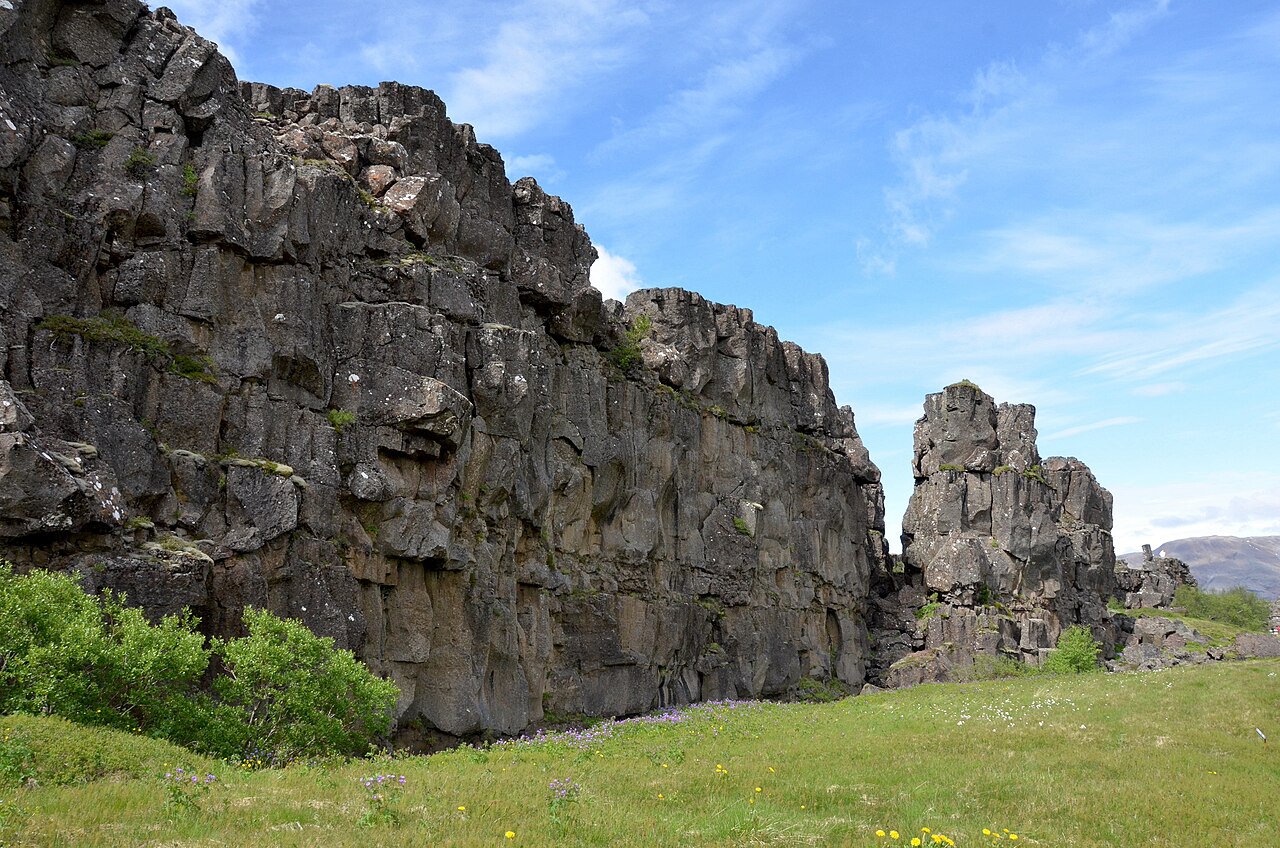
The setting explains why it matters to geologists too. Þingvellir sits in a rift valley where the North American and Eurasian plates are slowly pulling apart. The main path runs through Almannagjá, a gorge between high lava cliffs, past the Law Rock where the lawspeaker once recited the law, to the small Öxarárfoss waterfall. In autumn the lava fields turn red and gold.
Why we recommend it: it is the most meaningful place in Iceland and an easy, beautiful walk. Start at the Hakið visitor center for the view over the valley and Lake Þingvallavatn.
Area: about 45 minutes from Reykjavík · Price: free entry; parking ISK 1,000 per car per day, valid at all the park’s lots · Time needed: 1.5–2 hours
Tip: Park at P1 (Hakið), walk down through Almannagjá to Öxarárfoss and back. One parking payment covers every lot in the park for the whole day.
2. Silfra Fissure

Inside Þingvellir, Silfra is a water-filled crack in the rift valley, fed by glacial meltwater that has filtered for decades through porous lava rock. The result is some of the clearest water on Earth: on a good day you can see more than 100 meters ahead, in shades of blue you will not forget.
Visitors can only enter the water with a licensed operator. Most people snorkel in a drysuit worn over thermal layers, floating gently with the current through the narrow fissure, the “Big Crack” and the wide Silfra Lagoon. Certified divers can also dive with a guide. The water stays at about 2–4°C all year, so the face and hands feel the cold, but the drysuit keeps the rest of you dry.
Why we recommend it: it is a once-in-a-lifetime experience and one of the few places in the world where you can swim between two continental plates.
Area: Þingvellir National Park · Price: guided snorkeling from about $105–225 per person, depending on season and whether transport from Reykjavík is included · Minimum age: 12 · Time needed: about 3 hours
Tip: You must be able to swim, and operators set health, height and weight requirements (older guests may need a doctor’s note). Book early in summer: groups are small.
Compare Silfra snorkeling tours
3. Geysir and Strokkur

In the Haukadalur valley, a field of bubbling pools, steaming vents and colorful clay gives its name to every geyser on the planet. The Great Geysir itself, recorded erupting since the Middle Ages, is mostly quiet today. Its neighbor Strokkur does the work: every 5 to 10 minutes, the water bulges into a blue dome and then bursts up to 20 meters or more into the air.
A short loop of paths leads past smaller hot springs such as the clear blue Blesi. Across the road, the Geysir Center has a large shop, restaurants and a café, which makes this the natural lunch stop of the day.
Why we recommend it: watching Strokkur erupt never gets old, and you can see it three or four times in half an hour.
Area: Haukadalur · Price: free entry; parking about ISK 1,000 per car (paid by app) · Time needed: 45–60 minutes
Tip: Stand upwind of Strokkur, or the spray will soak you. For the best photo, keep your camera on burst mode as the blue dome starts to rise.
Compare Golden Circle tours from Reykjavík
4. Gullfoss
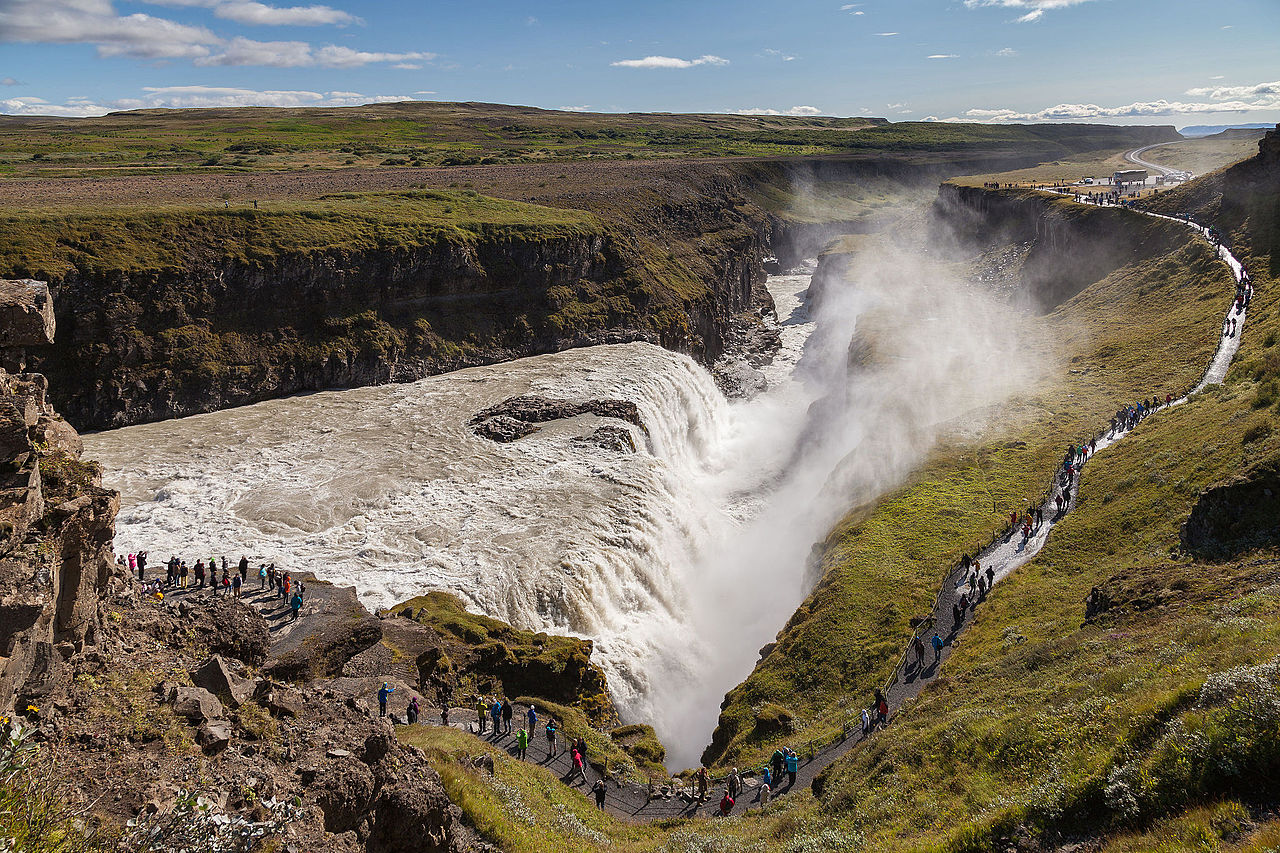
Ten minutes from Geysir, the glacial river Hvítá drops in two stages into a deep, narrow canyon. Gullfoss, the “Golden Falls”, is one of the most powerful waterfalls in Europe, especially in early summer when the glacier melt is at its peak. On sunny days, the spray often throws a rainbow across the gorge.
There are two viewpoints: an upper one by the visitor center and café, with a wide view of the falls and the canyon, and a lower path that leads to a rocky ledge just above the first cascade. In winter, the falls are partly frozen and the lower path may be closed for ice.
Why we recommend it: it is the most dramatic sight on the loop, and the scale is hard to believe until you feel the spray.
Area: Hvítá river canyon · Price: free entry; check the signs at the café parking lot, where parking charges were introduced in October 2026 · Time needed: 45 minutes
Tip: Bring a waterproof jacket for the lower path. Look for the memorial to Sigríður Tómasdóttir, a farmer’s daughter remembered for fighting plans to dam the falls in the early 20th century.
Coming in 2027 – the nature pass: Iceland’s government has published draft legislation for a nature and infrastructure fee at Geysir, Gullfoss and Þingvellir. Non-resident adults would pay ISK 4,500 for a pass valid for one year (ISK 3,000 from November to May), and state parking fees at these sites would be dropped. It is still a proposal, so check before your trip.
5. Faxi Waterfall

Faxi (also called Faxafoss or Vatnsleysufoss) is a wide, low waterfall on the Tungufljót river, just off Route 35 between Geysir and the south. It is only about 7 meters high, but it is broad and powerful, and the setting of grassy banks and open farmland is peaceful after the crowds at Gullfoss.
A short path leads from the parking area to the viewpoint and down toward the river. On one side, a salmon ladder helps fish swim upstream in summer. In winter, the edges of the falls often freeze into ice sculptures.
Why we recommend it: most tour buses skip it, so you often have the falls almost to yourself. It is a quick and easy stop on the way south.
Area: Route 35, about 11 km from Geysir · Price: parking about ISK 900 per car · Time needed: 20–30 minutes
Tip: Combine Faxi with Friðheimar or the Secret Lagoon, both within 20 minutes.
6. Friðheimar

In the village of Reykholt, Friðheimar is a family farm that grows tomatoes all year in greenhouses heated with geothermal water and lit with artificial light through the long winter. The farm opened its greenhouse to visitors, and the restaurant sits right among the tomato plants.
The famous dish is an all-you-can-eat tomato soup buffet with freshly baked bread, sour cream and cucumber salsa, with fresh basil growing at your table. The menu also includes tomato ravioli, mussels in tomato sauce, tomato ice cream and even tomato beer. The farm also breeds Icelandic horses, and groups can book horse shows.
Why we recommend it: it is the most memorable lunch on the Golden Circle, and it shows how Iceland uses geothermal energy to grow food in the Arctic.
Area: Reykholt · Price: tomato soup buffet around $22 per person · Hours: restaurant daily 12 p.m.–4 p.m. · Time needed: 1 hour
Tip: Book a table in advance, especially in summer. Without a booking you can usually still order a limited menu at the bar.
See Golden Circle tours with lunch at Friðheimar
7. Secret Lagoon (Flúðir)

In the farming village of Flúðir, the Secret Lagoon (Gamla Laugin, “the old pool”) is the oldest swimming pool in Iceland, built in 1891 at the Hverahólmi hot spring area. After decades of neglect it was restored and reopened in 2014, keeping its simple, natural character.
The pool is fed by hot springs that keep the water at about 38–40°C all year. Steam rises from the ground around it, and a small geyser next to the pool erupts every few minutes. There are no fancy rituals or swim-up bars: just warm water, rocks, moss and, on winter nights, a good chance of seeing the northern lights from the pool.
Why we recommend it: it is the most authentic and affordable bathing stop on the route, and a great choice for families.
Area: Flúðir · Price: ISK 4,500 adults (about $36); children 14 and under ISK 260, up to three per adult · Hours: October–May 10 a.m.–7 p.m. · Time needed: 1–2 hours
Tip: Like all Icelandic pools, you must shower without a swimsuit before going in. Towels and swimsuits can be rented on site.
8. Kerið Crater

Kerið is a volcanic crater lake on Route 35, near the southern end of the loop. Its steep walls are made of red volcanic rock with patches of green moss, and at the bottom lies a small, intensely blue-green lake. The crater formed around 6,500 years ago.
A path runs all the way around the rim (about 25–30 minutes on foot), with views down into the bowl and across the lava fields of Grímsnes. A staircase leads down to the water’s edge. The site is on private land, and the small entrance fee pays for the paths, the stairs, the toilets and the parking.
Why we recommend it: the colors are spectacular, the walk is short, and it is right on the way back to Reykjavík.
Area: Grímsnes, Route 35 · Price: ISK 700 per person (about $6), free parking · Time needed: 30–45 minutes
Tip: Walk the full rim before going down to the lake: the colors look best from above, especially in late afternoon light.
9. Laugarvatn Fontana

On the shore of Lake Laugarvatn, between Þingvellir and Geysir, Laugarvatn Fontana is a geothermal spa built over natural steam vents. Locals have bathed here for generations, and the steam rooms sit directly over the hot springs, so you can hear the earth bubbling beneath the wooden floor.
Fontana reopened in June 2026 after a full rebuild, with larger pools and new saunas. The bakery tour is unique: staff dig up rye bread that has been slow-baked in the hot black sand for about 24 hours, and you taste it warm with butter. Brave visitors can run from the hot pools straight into the cold lake.
Why we recommend it: it fits perfectly in the middle of the loop, and the geothermal bread is something you will not find anywhere else.
Area: Laugarvatn · Price: check current prices online after the 2026 reopening · Time needed: 1.5–2 hours
Tip: There are no direct buses from Reykjavík, so come by car or on a tour that includes Fontana. Book the bread tour in advance.
10. Brúarfoss

Brúarfoss is a small waterfall with an unforgettable color. The Brúará river splits into many little channels that pour into a central crack, and the glacial water turns an almost electric shade of blue. A wooden footbridge crosses right over the falls, giving the classic view.
Until recently, reaching Brúarfoss meant a long hike along the river. A newer parking area now brings you much closer, and the walk from there takes only a few minutes. In summer, you can also hike the riverside trail past two smaller waterfalls, Miðfoss and Hlauptungufoss.
Why we recommend it: it is one of the most photogenic waterfalls in the south and still feels like a hidden gem.
Area: off Route 37, between Laugarvatn and Geysir · Price: parking about ISK 750 per car · Time needed: 30 minutes
Tip: The color is most vivid on sunny days. The path can be muddy or icy, so wear proper shoes.
Must-Do Experiences on the Golden Circle
Some of the best moments on the Golden Circle are not attractions with a ticket. These are the experiences we would not skip:
- Walk between two continents. Stroll through Almannagjá at Þingvellir, with the North American plate wall on one side.
- Watch Strokkur erupt three times. Each eruption is different: some single, some double. Wait for a big one.
- Have tomato soup in a greenhouse. Friðheimar’s soup buffet is a Golden Circle ritual.
- Soak in a hot spring. The Secret Lagoon for history and value, or Fontana for steam baths by the lake.
- Chase the northern lights. From September to March, the countryside is dark enough for a good show. Stay overnight or join an evening tour.
See Golden Circle and northern lights tours
Where to Eat on the Golden Circle
| Place | Area | What to order | Good to know |
|---|---|---|---|
| Friðheimar | Reykholt | Tomato soup buffet with fresh bread | Open daily 12–4 p.m.; book ahead |
| Geysir Center | Haukadalur | Lamb soup, sandwiches, coffee | The easiest lunch stop on the loop |
| Gullfoss café | Gullfoss | Icelandic meat soup | Warm up after the viewpoints |
| Laugarvatn Fontana | Laugarvatn | Geothermal rye bread | Bread tour is extra; book in advance |
| Supermarkets in Selfoss | Selfoss | Picnic supplies | Stock up here or in Reykjavík; options are limited on the loop |
Tip: food on the Golden Circle is expensive and options are spread out. Pack snacks and water before you leave Reykjavík, and plan one sit-down meal at Friðheimar or the Geysir Center.
Car vs Tour: What Does the Golden Circle Really Cost in 2026?
There is no city card for the Golden Circle, so the real choice is between driving yourself and joining a tour. The main sights are free, but a self-drive day has costs that many visitors forget. We added up the fixed extras for a car with two adults, using 2026 prices:
| Cost (self-drive, 2 adults) | Price | Notes |
|---|---|---|
| Road charge (about 280 km) | About ISK 1,950 | ISK 6.95 per km since January 2026; your rental company bills it |
| Parking at Þingvellir | ISK 1,000 | Valid all day in the park |
| Parking at Geysir | About ISK 1,000 | Paid by app |
| Parking at Faxi and Brúarfoss | About ISK 1,650 | About ISK 900 + ISK 750 |
| Kerið entrance | ISK 1,400 | ISK 700 per person |
| Total extras | About ISK 7,000 ($56) | Plus the car rental and fuel (about ISK 210–225 per liter) |
Our verdict: for two or more people from spring to autumn, a rental car is usually better value and lets you add Kerið, Brúarfoss and a lagoon at your own pace. For solo travelers, or from November to March, when days are short and roads can be icy, a tour is the safer and simpler choice. Either way, the big three sights cost nothing to enter.
Compare car rental prices in Reykjavík
Where to Stay on the Golden Circle
| Area | Best for | Pros | Cons |
|---|---|---|---|
| Reykjavík | Day trippers and first-time visitors | Most choice, tours pick up here, restaurants | Long day; city lights hide the aurora |
| Laugarvatn | Couples and lagoon lovers | Middle of the loop, lake views, Fontana on the doorstep | Few restaurants |
| Flúðir and Reykholt | Families and northern lights | Countryside cabins, Secret Lagoon, dark skies | Need a car |
| Selfoss | Budget travelers and South Coast trips | Lower prices, supermarkets, on the Ring Road | Less scenic; 30–40 minutes from Kerið and Geysir |
Use the map below to compare hotels and apartments across these areas. Prices update live for your dates, so set your check-in and check-out first.
See hotels near the Golden Circle
Golden Circle Itinerary: 1, 2 or 3 Days
- 1 day – The classic loop: Þingvellir (1) in the morning, lunch at Friðheimar (6), Geysir (3) and Gullfoss (4) in the afternoon, Kerið (8) on the way back to Reykjavík.
- 2 days – Slow loop with a lagoon: Day 1: Þingvellir (1), Silfra (2) if you snorkel, Laugarvatn Fontana (9), overnight near Laugarvatn. Day 2: Brúarfoss (10), Geysir (3), Gullfoss (4), Faxi (5), Friðheimar (6) and an evening soak at the Secret Lagoon (7).
- 3 days – Golden Circle and South Coast: add a third day along the South Coast to Seljalandsfoss, Skógafoss and Vík.
In winter, daylight lasts only about four to five hours in December, so start early and plan the waterfalls around midday.
Compare Golden Circle day tours
Day Trips from the Golden Circle
- South Coast and Vík: from Selfoss, it is about two hours to Vík, past Seljalandsfoss and Skógafoss. See our guide to Vík í Mýrdal.
- Reykjavík: about an hour from Þingvellir; read our Reykjavík guide.
- Langjökull glacier: snowmobile and ice tunnel tours leave from the Gullfoss area.
Getting There and Around
| Option | Price | Notes |
|---|---|---|
| Rental car | Varies by season | Most flexible; add the ISK 6.95/km road charge and parking fees |
| Guided day tour from Reykjavík | Varies by tour size | Hotel pickup; small-group tours add more stops |
| Public bus | Not available | No public transport links the main sights |
| Parking at Þingvellir | ISK 1,000 | Per car, valid all day in the park |
Money-Saving Tips
- Þingvellir, Geysir and Gullfoss charge no entry fee: you only pay for parking.
- Pay parking by app as soon as you arrive: unpaid parking leads to fines that rental companies pass on with a handling fee.
- Choose the Secret Lagoon (ISK 4,500) over the bigger, pricier spas if you want a soak on a budget.
- Bring a picnic from a Reykjavík or Selfoss supermarket and save your restaurant budget for Friðheimar.
- Share a rental car: the fixed costs stay the same whether one or four people ride.
Best Time to Visit the Golden Circle
| Season | Weather | Crowds | Good to know |
|---|---|---|---|
| Spring (Apr–May) | Cool, changeable | Medium | Waterfalls swell with snowmelt |
| Summer (Jun–Aug) | Mild, long days | High | Midnight sun; arrive early or late to beat the buses |
| Autumn (Sep–Oct) | Cool, windy | Medium | Fall colors at Þingvellir; northern lights return |
| Winter (Nov–Mar) | Cold, icy, short days | Low | Frozen waterfalls and aurora; consider a tour instead of driving |
Golden Circle FAQ
How long does the Golden Circle take?
A full day of 7 to 9 hours from Reykjavík, including about 3.5–4 hours of driving. Stay overnight if you want to add a lagoon, Kerið and Brúarfoss without rushing.
Is the Golden Circle free?
The three main sights charge no entry fee. You pay for parking at Þingvellir (ISK 1,000) and Geysir, and for extras like Kerið (ISK 700 per person) and the lagoons.
Can you do the Golden Circle in winter?
Yes. The roads are kept open, but they can be icy and days are short. If you are not used to winter driving, take a tour.
Should I do the Golden Circle by car or tour?
A car is cheaper for two or more people and more flexible; a tour is better for solo travelers and winter visits. See our cost table above.
What is the best order to visit the Golden Circle?
Clockwise from Reykjavík: Þingvellir, Geysir, Gullfoss, then south past Faxi, Friðheimar and Kerið. Go counterclockwise if you want to reach Þingvellir after the tour buses leave.
Extending Your Trip?
The Golden Circle starts and ends in Reykjavík, where you can easily spend two or three days. From the southern end of the loop, continue along the South Coast to Vík í Mýrdal for black-sand beaches and glaciers, or head to the Reykjanes Peninsula and the Blue Lagoon near the airport. For North Iceland, fly or drive to Akureyri. For an overview of the whole country, start with the best places to visit in Iceland.
Sources (prices and opening hours checked in November 2026)
- Þingvellir National Park – parking service
- Iceland Tours – parking in Iceland (late 2026)
- Iceland Review – proposed nature and infrastructure fee
- Which? – Iceland per-kilometer road charge
- Golden Circle Day Tours – Secret Lagoon 2026 prices
- Guide to Iceland – Secret Lagoon opening hours
- Golden Circle Day Tours – Kerið entrance fee
- Friðheimar – visitor services
- Reykjavik Attractions – Friðheimar opening hours
- Go Car Rental – Faxi waterfall
- Go Campers – parking fees in Iceland 2026
- Iceland Highlights – Fontana reopening (2026)
- Troll Expeditions – Silfra snorkeling requirements
- Stuck in Iceland – fuel prices 2026