


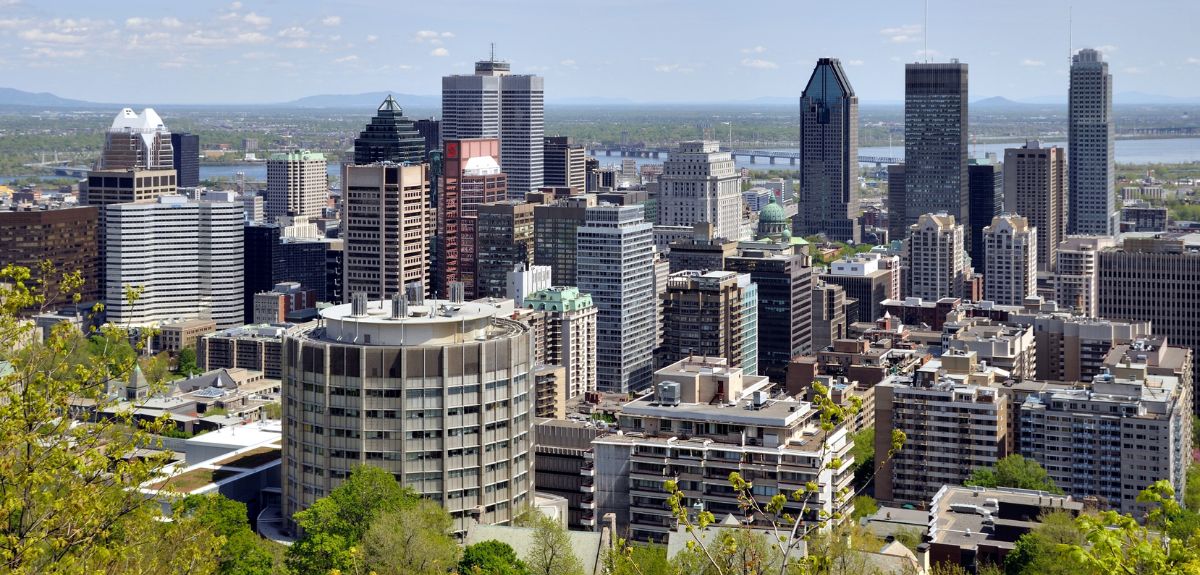
Montreal doesn’t feel quite like the rest of Canada, and that’s the point. French is the first language on the street signs and in most conversations, the architecture leans toward stone row houses and wrought-iron staircases, and the food scene draws as much from Lyon and Casablanca as it does from anywhere else in North America. Layer in a genuinely walkable downtown, a mountain at its center, and four distinct seasons that each change how the city feels, and you get a place that rewards repeat visits as much as a first one.
Why Visit Montreal?
Whether you’ve come for the history, the food, or the particular mix of European pace and North American scale, Montreal offers a city built for wandering:
- Old Montreal: Walk cobblestone streets dating to the 17th century, framed by stone warehouses, horse-drawn calèches, and the St. Lawrence River at the Old Port.
- Notre-Dame Basilica: Step inside one of Canada’s most striking church interiors, with a deep blue vaulted ceiling studded with gold stars.
- Mount Royal Park: Climb (or drive) to the lookout at the city’s namesake mountain for the classic postcard view of the skyline and the St. Lawrence beyond it.
- Jean-Talon Market: Browse Montreal’s largest open-air market for maple products, Quebec cheeses, and produce piled high by local farmers.
- Plateau Mont-Royal: Wander past colorful row houses with their signature outdoor spiral staircases, a neighborhood defined as much by its architecture as its cafes.
Montreal moves at its own pace, somewhere between a European city center and a North American grid. Give it a few days and you’ll notice how much of the city’s character comes from that in-between feeling, neither entirely one thing nor the other.
MONTREAL KEY INFO
Everything you need to hit the ground running.
WHEN TO VISIT
June to September for warm weather, festivals, and outdoor dining; late September to early October for fall foliage on Mount Royal
HOW TO GET THERE
Fly into Montreal-Trudeau International Airport (YUL). The 747 Express Bus runs downtown in about 45-60 minutes (~CAD 11).
HOW TO GET AROUND
The Metro (STM) covers most of the city efficiently, and Montreal is highly walkable and bike-friendly, with an extensive BIXI bike-share network available for much of the year.
IDEAL TRIP LENGTH
4-5 days to cover the city’s full range of sights, but 6-7 days if you want to add a day trip to Quebec City or the Laurentians.
What is Montreal Mainly Known For?
Montreal is known as Canada’s cultural and culinary capital, with a French-speaking majority, a European-influenced downtown, and a food scene shaped by waves of immigration from France, Italy, North Africa, and beyond. It’s also known for Old Montreal, one of the best-preserved historic districts in North America, and for Mount Royal, the forested hill that gives the city both its name and its most iconic skyline views. Beyond the sights, Montreal has a reputation as a festival city, hosting major events like the Montreal International Jazz Festival and Just for Laughs throughout the summer.
Is Montreal a Walkable City?
Yes, genuinely so. Downtown, Old Montreal, the Plateau, and the Village are all dense, pedestrian-friendly neighborhoods connected by a reliable Metro system when the distances get longer.
Is it safe to walk in Montreal? Yes, generally, and Montreal is considered one of the safer major North American cities to walk around, including at night in most central neighborhoods. As anywhere, use standard caution in less-trafficked areas after dark.
What Is the Best Neighborhood to Walk Around?
The Plateau Mont-Royal is the standout, with its brightly painted row houses, outdoor spiral staircases, and a steady stream of cafes and boutiques along Rue Saint-Denis and Avenue du Mont-Royal. For a completely different pace, Old Montreal’s cobblestone streets and stone architecture offer a compact, historic core that feels transported from centuries earlier.
What Are the Best Things to Do in Montreal? (For Your First Visit)
I split my time between the historic core and the residential neighborhoods further out, treating each day as a different side of the city’s personality. Here are the spots that stood out:
Old Montreal (Vieux-Montréal)
This is the city’s founding neighborhood, with cobblestone streets, 17th- and 18th-century stone buildings, and the Old Port stretching along the St. Lawrence River. Rue Saint-Paul is the main artery, lined with galleries, restaurants, and shops. Price: Free to wander. Pro tip: Walk down to the Old Port itself in the evening, when the crowds thin out and the clock tower and waterfront light up. Check availability and explore popular experiences.
Notre-Dame Basilica
Built between 1824 and 1829, this Gothic Revival church holds one of the most dramatic interiors in Canada: a deep blue vaulted ceiling dotted with gold stars, elaborate wood carvings, and stained glass depicting scenes from Montreal’s own history rather than biblical ones. Price: ~CAD 15 for basilica entry. Pro tip: Check the schedule for the evening sound-and-light show “AURA,” which projects animated visuals onto the interior architecture. Check availability and explore popular experiences.

Mount Royal Park
Designed by Frederick Law Olmsted, the same landscape architect behind New York’s Central Park, this 500-acre park sits atop the hill for which the city is named. The Kondiaronk Belvedere lookout offers the definitive skyline view, best reached via a walking trail or a short drive. Price: Free. Pro tip: Climb up in the late afternoon and stay through sunset, when the skyline view turns from daylight to city lights. Check availability and explore popular experiences.

Jean-Talon Market
Opened in 1933 and now one of the largest open-air markets in North America, Jean-Talon Market sits in Little Italy and overflows with Quebec produce, maple syrup in every form imaginable, artisan cheese, and prepared foods from the surrounding stalls. Price: Free to browse; food costs vary. Pro tip: Go on a weekday morning to avoid the weekend crowds, and bring cash, since many smaller vendors don’t take cards. Check availability and explore popular experiences.

Montreal Botanical Garden
One of the largest botanical gardens in the world, with thematic sections including a Japanese garden, a Chinese garden built by artisans from Shanghai, and a First Nations garden. The greenhouses are worth a visit even in winter, when the outdoor gardens are dormant. Price: ~CAD 24. Pro tip: Visit in September during the Magic of Lanterns festival in the Chinese garden, when the space is filled with illuminated silk lantern sculptures after dark. Check availability and explore popular experiences.

Plateau Mont-Royal
This dense residential neighborhood is defined by its brightly painted row houses and their distinctive outdoor spiral staircases, a design quirk that maximized interior space when the buildings went up in the early 20th century. It’s also one of Montreal’s best neighborhoods for cafes, bookstores, and independent boutiques. Price: Free to wander. Pro tip: Walk along Avenue Duluth or Rue Rachel for the best concentration of colorful facades and staircases. Check availability and explore popular experiences.

Saint Joseph’s Oratory
Perched on the north slope of Mount Royal, this is the largest church in Canada and one of the most-visited pilgrimage sites in the world, drawing more than two million visitors a year. Its copper dome is among the largest of its kind anywhere, and the 283 steps leading up to the entrance are still climbed on their knees by some pilgrims each year. Price: Free; museum and dome access ~CAD 5. Pro tip: Take the elevator or funicular up if you’re short on time or energy, then walk down through the meditation gardens on the way out. Check availability and explore popular experiences.

Habitat 67
This striking cluster of 354 stacked concrete cubes was built for Expo 67 as an experiment in affordable, private, garden-filled urban housing, designed by a young architect named Moshe Safdie while he was still a student. It remains one of the most photographed buildings in Canada and is best appreciated from across the water rather than up close, since it’s still a private residence. Price: Free to view from the Old Port or a passing boat. Pro tip: The clearest view is from the Clock Tower Beach in the Old Port, especially at golden hour when the concrete blocks catch the light. Check availability and explore popular experiences.

Olympic Park and Tower
Built for the 1976 Summer Olympics, this stadium complex is dominated by the world’s tallest inclined tower, leaning at a dramatic angle over the field below. A cable car ride to the observation deck gives one of the widest views in the city, stretching from downtown to the Laurentian foothills on a clear day. Price: ~CAD 24 for the observatory. Pro tip: Combine the visit with the adjacent Biodome and Botanical Garden, both a short walk away and bundled into some combination tickets. Check availability and explore popular experiences.

Atwater Market
This Art Deco market hall, opened in 1933 in the Saint-Henri neighborhood, is a favorite among locals for its high-quality produce, butchers, cheesemongers, and flower stalls, all set beneath a distinctive green-and-white clock tower. It draws fewer tourists than Jean-Talon Market, giving it a slightly more neighborhood feel. Price: Free to browse; food costs vary. Pro tip: Walk over via the Lachine Canal bike path for a scenic approach, then pick up picnic supplies to eat canal-side afterward. Check availability and explore popular experiences.

Must-Do Activities in Montreal
To really get the most out of your trip, I recommend checking out these experiences:
No products were found!
What Part of Montreal is Best for Tourists?
Stay in Old Montreal or Downtown for easy access to the Basilica, the Old Port, and major museums, all within walking distance of each other. The Plateau offers a more residential, local feel with excellent food and cafe options, at the cost of a slightly longer commute to the historic core.
What to Know Before Going to Montreal
- Tap Water is Safe: Montreal’s tap water is clean and safe to drink straight from the tap.
- French is the Primary Language: While most people in tourist areas speak English, learning a few basic French phrases goes a long way and is appreciated.
- Tipping is Standard: Tipping 15-20% at restaurants and for services is expected, in line with the rest of Canada.
- Winters are Serious: If visiting between December and March, prepare for genuinely cold temperatures and pack accordingly; the city has an extensive Underground City to help you get around indoors.
- Sales Tax is Added at the Register: Combined provincial and federal sales tax (about 15%) is added to the listed price at checkout, not included upfront.
How Many Days Do I Need in Montreal?
4 to 5 days covers the city’s core sights comfortably, with extra time well spent on nearby day trips.
- Day 1: Old Montreal and the Old Port, Notre-Dame Basilica in the afternoon, a view of Habitat 67 from the waterfront in the evening.
- Day 2: Mount Royal Park and Saint Joseph’s Oratory in the morning, Plateau Mont-Royal in the afternoon and evening.
- Day 3: Jean-Talon Market and Little Italy in the morning, Montreal Botanical Garden in the afternoon.
- Day 4: Olympic Park and Tower in the morning, Atwater Market and a walk along the Lachine Canal in the afternoon.
- Day 5 (optional): Day trip to Quebec City, about a 3-hour drive or train ride northeast.
Suggested daily budget – 110-160 CAD / 80-115 USD (Note: This covers a mid-range hotel, a mix of restaurant and casual meals, and Metro fares or occasional rideshares. Costs can run higher during peak summer festival season).
MONEY SAVING TIPS
- Use the Metro: Montreal’s Metro system is clean, efficient, and far cheaper than rideshares for covering longer distances across the city.
- Eat at Markets: Jean-Talon Market and Atwater Market offer high-quality, affordable meals and produce compared to sit-down restaurants.
- Visit Museums on Free Days: Several major museums, including the Montreal Museum of Fine Arts, offer free admission on specific evenings or Sundays; check schedules ahead of time.
- Walk the Free Sights: Old Montreal, Mount Royal Park, and the Plateau’s colorful streets cost nothing to enjoy and can easily fill a full day.
What’s the Best Month to Visit Montreal?
June through September offer the warmest, most reliable weather, along with the bulk of the city’s festival calendar, including jazz, comedy, and fireworks events. Late September into early October brings vivid fall foliage, especially visible from Mount Royal’s lookouts. Winter months, from December through March, turn Montreal into a genuinely cold destination, but one that leans into it with ice skating, winter festivals, and a well-developed Underground City for getting around indoors.
How to Get to Montreal
Most travelers fly into Montreal-Trudeau International Airport (YUL), with regular connections across North America and direct flights from many European cities. VIA Rail also connects Montreal to Toronto, Ottawa, and Quebec City, and Amtrak runs a direct train from New York City.
- From the airport: The 747 Express Bus reaches downtown in 45-60 minutes for about CAD 11; taxis and rideshares take a similar amount of time and cost roughly CAD 40-50.
- Regional connections: Montreal makes a natural base for day or overnight trips to Quebec City (about 3 hours by car or train) or the Laurentian Mountains (about 1 hour north) for hiking or skiing.
How to Get Around Montreal
Public transit and walking cover nearly everything a first-time visitor needs.
- Metro (STM): Montreal’s subway system is fast, clean, and covers downtown, Old Montreal, and most surrounding neighborhoods; buy an OPUS card for multiple rides.
- Walking: Downtown, Old Montreal, and the Plateau are all easily walkable and connected by pedestrian-friendly streets.
- BIXI Bike Share: Montreal’s bike-share network is extensive and a practical way to cover longer distances between neighborhoods from spring through fall.
- Underground City (RÉSO): An extensive network of tunnels connects Metro stations, shopping centers, and buildings downtown, especially useful in winter.
Tips for first-timers: Pack for genuine seasonal extremes; summer can be humid and hot, while winter is reliably cold with snow. If you’re set on visiting during a major festival like Jazz Fest, book accommodation well ahead, since prices and availability shift quickly during peak events.
Montreal rewards travelers who let the city’s dual identity, part European, part North American, set the pace rather than trying to reconcile it. Between the stone streets of Old Montreal, the view from Mount Royal, and a market table piled with maple syrup and fresh cheese, it’s a city that makes a strong case for itself in just a few days, and an even stronger one if you stay longer.
Note: This article contains affiliate links. If you purchase something I’ve recommended, I’ll earn a small commission at no extra cost to you. I really appreciate your support and I hope this guide helps you ♡