




What is Munich Mainly Known For?
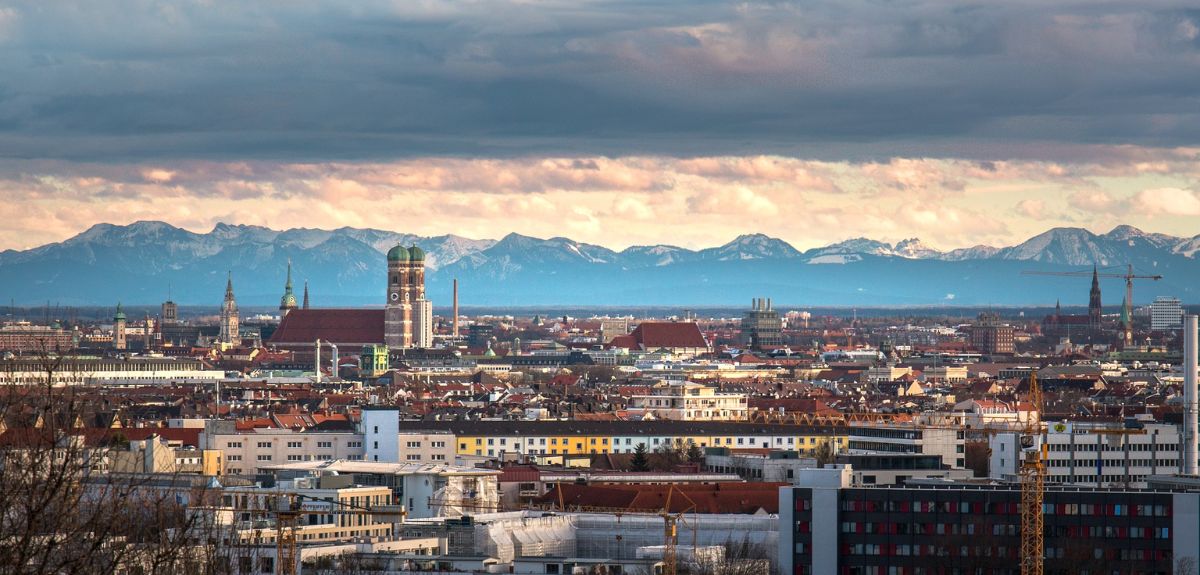
Munich is best known for Oktoberfest, the world’s largest folk festival, and for its beer culture, from the Hofbräuhaus to its leafy beer gardens. It is also famous as the former royal capital of Bavaria, with grand palaces like the Residenz and Nymphenburg, as the headquarters of BMW, and as the gateway to the Bavarian Alps and Neuschwanstein Castle.
Is Munich a Walkable City?
Yes, very. The historic Altstadt (Old Town) is compact and largely pedestrianized, and you can walk from Karlsplatz to Marienplatz, the Residenz, and the English Garden in under 30 minutes. Sights farther out, like Nymphenburg Palace, BMW Welt, and the Olympic Park, are a quick U-Bahn or tram ride away.
Is it safe to walk in Munich at night? Yes. Munich is consistently ranked among the safest big cities in Europe, and central areas stay lively and well lit in the evening. Just keep an eye on your belongings around the Hauptbahnhof and in crowded spots, especially during Oktoberfest.
What Is the Best Neighborhood to Walk Around?
The Altstadt is the winner for first-timers. Marienplatz, the Frauenkirche, Viktualienmarkt, and the Residenz are all within a few minutes of each other, linked by pedestrian streets and quiet courtyards. For something completely different, head to the Glockenbachviertel, a relaxed neighborhood along the Isar with independent cafés, wine bars, and boutiques, or to Maxvorstadt, the university district packed with museums and student hangouts.
What Are the Best Things to Do in Munich? (For Your First Visit)
I visited Munich without a strict day-by-day plan. I wanted to take my time, enjoy the beer gardens and royal palaces, and see where the streets led me. I wrote down a few highlights and hit the ground running. Here are the spots I definitely recommend checking out:
Marienplatz and the New Town Hall
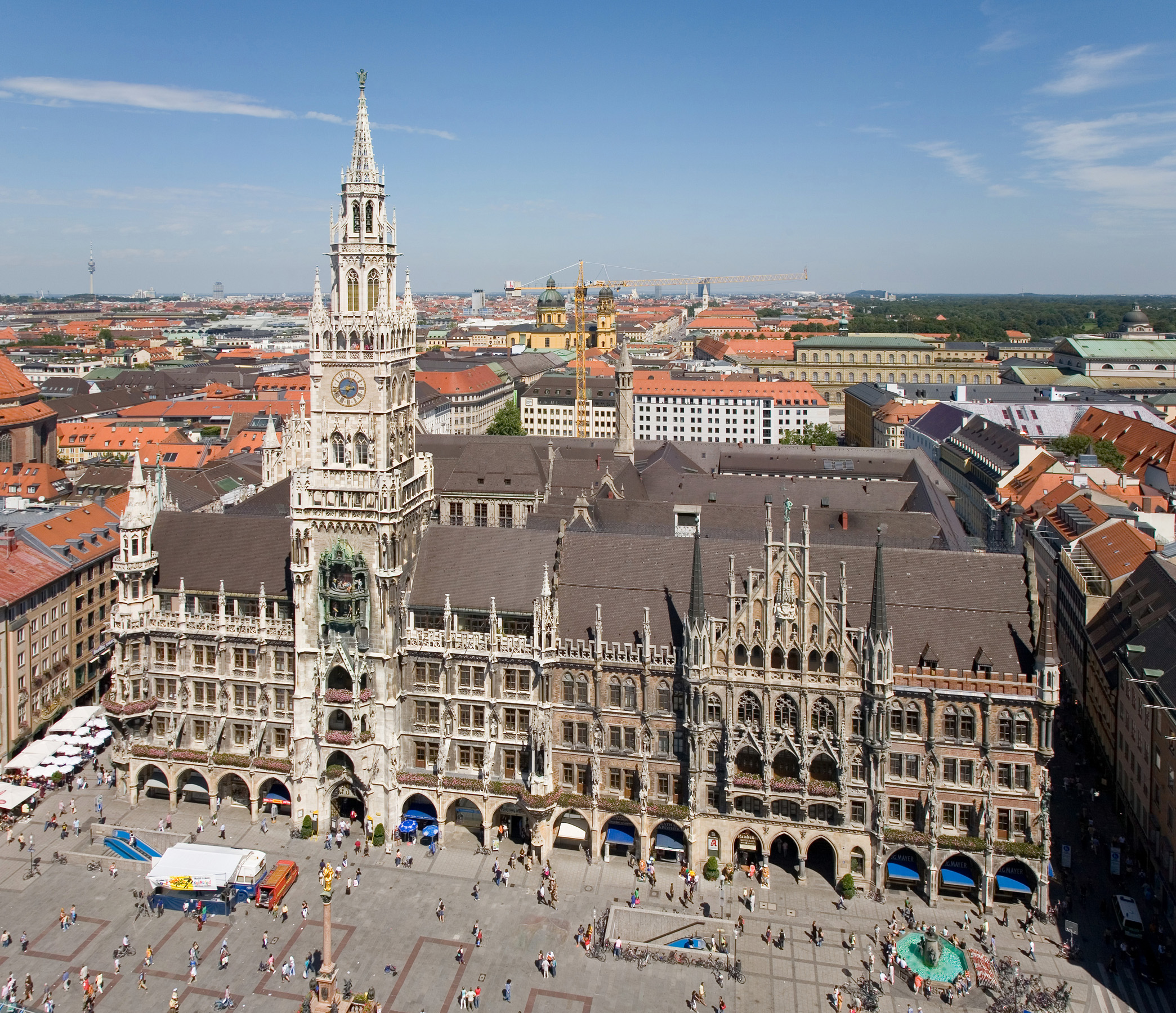
Munich’s main square has been the city’s marketplace, meeting point, and stage since the 12th century. It takes its name from the golden Virgin Mary on top of the Mariensäule, a column erected in 1638 to give thanks that the city had survived the Swedish occupation during the Thirty Years’ War. The square is dominated by the New Town Hall, a neo-Gothic giant built between 1867 and 1908 whose facade is crowded with gargoyles, dukes, and saints. The real crowd-pleaser is the Glockenspiel in its tower: 43 bells and 32 life-size figures reenact two stories from Munich’s history, the royal wedding of Duke Wilhelm V in 1568, complete with a jousting knight, and the coopers’ dance performed after a plague outbreak in the 16th century. Entry: Free; the New Town Hall tower elevator costs about €6. Pro tip: The Glockenspiel plays daily at 11 AM and noon (plus 5 PM from March to October). Instead of fighting the crowd below, climb the 306 steps of the nearby Alter Peter church tower for the best view over the square and, on clear days, all the way to the Alps. Check availability and explore popular experiences.
Frauenkirche
The twin onion-domed towers of the Cathedral of Our Dear Lady are Munich’s most recognizable silhouette, and they are protected by law: after a 2004 referendum, the city decided that no new building in the center may rise higher than the church’s roughly 99-meter towers. Built in brick between 1468 and 1488, the late Gothic cathedral was finished in just 20 years, and its distinctive domes were added in 1525. Heavily damaged by bombing in World War II, it has been carefully restored, and the bright, white interior feels surprisingly airy for its size. Look for the ornate black marble tomb of Holy Roman Emperor Louis IV near the entrance, and don’t miss the “Devil’s Footstep,” a dark footprint in the entrance hall. Legend says the devil stamped it in triumph when he thought the builder had forgotten the windows, only to discover he’d been tricked. Entry: Free. Pro tip: Stand on the Devil’s Footstep and look ahead: from that exact spot, the columns hide the side windows, which is how the legend was born. Check availability and explore popular experiences.

Viktualienmarkt
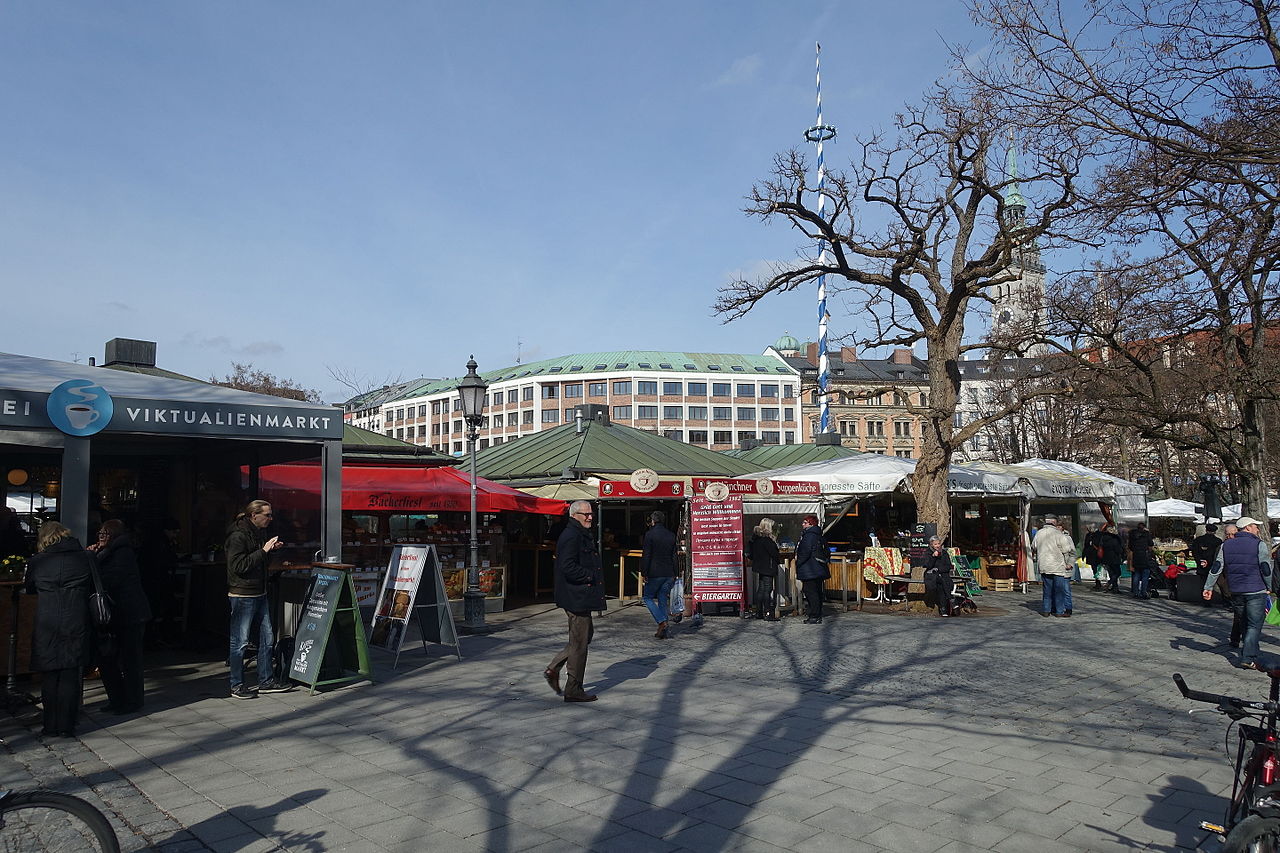
When Marienplatz became too cramped for the farmers’ market in 1807, King Max I Joseph moved it a few steps south, and it has grown into Munich’s favorite place to eat and shop ever since. Today more than 100 stalls and small shops sell Bavarian cheeses, cured meats, fresh fish, honey, spices, and fruit, alongside butchers and bakers who have held their spots for generations. At the center stands a traditional painted maypole decorated with figures of the city’s trades, and around it spreads a beer garden with a Munich twist: the beer on tap rotates between the city’s six big breweries. Look out for the fountains honoring Munich’s beloved folk comedians, including Karl Valentin, which locals often decorate with fresh flowers. The classic order here is a pair of Weisswurst, veal sausages with sweet mustard and a pretzel, which by tradition you eat before noon. Price: Free to browse; a Weisswurst breakfast runs about €8-10. Pro tip: Come on a weekday morning for Weisswurst and a coffee, and remember that the market is closed on Sundays and public holidays. Check availability and explore popular experiences.
Munich Residenz
From 1508 until the end of the monarchy in 1918, the Wittelsbach dukes, electors, and kings of Bavaria ruled from this sprawling palace, adding wings, courtyards, and styles for four centuries. The result is the largest city palace in Germany, with more than 130 rooms open in the Residenz Museum. The showstopper is the Antiquarium, a barrel-vaulted Renaissance hall built in the 1560s to display the dukes’ collection of ancient sculpture and considered the largest of its kind north of the Alps. The Treasury holds crowns, jeweled swords, and royal insignia, while the tiny Cuvilliés Theatre is a Rococo jewel box of red velvet and gilded carvings where Mozart’s opera Idomeneo premiered in 1781. Behind the palace, the Hofgarten’s formal flowerbeds and Renaissance pavilion make a peaceful break. Price: ~€10 for the Residenz Museum, with combination tickets that add the Treasury and Cuvilliés Theatre. Pro tip: On your way in on Residenzstraße, rub the shields held by the bronze lions at the entrance; locals do it for good luck, which is why they shine. Check availability and explore popular experiences.

Hofbräuhaus
Duke Wilhelm V founded the royal Hofbräu brewery in 1589 because he didn’t want to keep importing expensive beer for his court, and the brewery’s famous beer hall at Platzl has welcomed the public in one form or another ever since. The current building dates from 1897, and inside it’s exactly what you imagine: long wooden tables under a painted, vaulted ceiling, waitresses carrying armfuls of one-liter steins, and an oompah band playing in the middle of the hall. Look for the Stammtisch tables reserved for regulars, and the rows of locked cubbyholes along the wall, where longtime patrons keep their personal beer mugs. The hall also has a darker chapter: in 1920, the Nazi Party presented its founding program in the upstairs Festsaal. Today it is mainly a celebration of Bavarian food and beer, from roast pork knuckle to giant pretzels. Price: Free to enter; a one-liter Mass of beer costs about €12. Pro tip: Visit at lunchtime on a weekday for a table without the evening crush, and if you want a quieter, more local experience, try the courtyard beer garden or head to Augustiner-Keller afterward. Check availability and explore popular experiences.

English Garden
Laid out in 1789 by the American-born Benjamin Thompson for Elector Karl Theodor, the Englischer Garten stretches for about five kilometers along the Isar and is larger than New York’s Central Park. It was designed in the naturalistic English landscape style, with winding streams, open meadows, and carefully placed follies. The Monopteros, a small Greek-style temple on a hill, frames one of the best views of the Old Town’s towers, and the five-story Chinese Tower anchors one of the city’s biggest beer gardens, with thousands of seats under the chestnut trees. At the park’s southern edge, the Eisbach wave has drawn river surfers since the 1970s; after being closed following a fatal accident in 2025 and briefly disappearing, it officially reopened in May 2026 under new safety rules. Farther north, the Kleinhesseloher See lake offers rowboat rentals and a lakeside beer garden. Entry: Free. Pro tip: Rent a bike to cover the park properly, stop at the Eisbach bridge on Prinzregentenstraße to watch the surfers, and end at the Chinese Tower beer garden for a Mass and a pretzel. Check availability and explore popular experiences.

Deutsches Museum
Founded in 1903 by engineer Oskar von Miller, the Deutsches Museum occupies its own island in the Isar and is one of the largest museums of science and technology in the world. It is in the middle of a huge modernization: the first half of the building reopened in 2022 with around 20 new permanent exhibitions, while renovation continues in the second half, so plan for a museum that is superb but not yet complete. You can still see some of its most famous pieces, including the world’s first diesel engine and the laboratory table where nuclear fission was discovered in 1938, alongside galleries on aviation, space travel, robotics, and health. Hands-on stations and demonstrations make it a great stop for families and rainy days. Visitors now enter through a new entrance building near the Corneliusbrücke rather than the historic main courtyard. Price: ~€15. Pro tip: Finish with a drink at Frau im Mond, the restaurant on the roof terrace of the aviation hall, which looks out over the Isar and, on clear days, the Alps. Check availability and explore popular experiences.

Nymphenburg Palace
Construction began in 1664 as a gift from Elector Ferdinand Maria to his wife Henriette Adelaide of Savoy, celebrating the birth of their long-awaited heir, and over the next century the modest villa grew into one of Europe’s grandest summer palaces, with a facade stretching for hundreds of meters. It is also where King Ludwig II, the builder of Neuschwanstein, was born in 1845. Inside, the three-story Stone Hall glows with ceiling frescoes, but most visitors linger in King Ludwig I’s Gallery of Beauties, 36 portraits of women he admired, including the scandalous dancer Lola Montez. Next door, the Marstallmuseum displays gilded royal coaches and sleighs, including Ludwig II’s fairy-tale carriages. Behind the palace, a formal garden and 180-hectare landscaped park hide small pavilions such as the Amalienburg, a Rococo hunting lodge with a dazzling hall of mirrors. Price: ~€10 for the palace, with combination tickets covering the Marstallmuseum and park pavilions. Pro tip: The park pavilions close from mid-October to March, so visit in the warmer months to see everything; the park itself is free and lovely at any time of year. Check availability and explore popular experiences.

BMW Welt and BMW Museum
BMW started out in Munich more than a century ago building aircraft engines, which is why its logo is often (and incorrectly) said to show a spinning propeller. Its headquarters still sit in the north of the city, in a 1973 tower shaped like four engine cylinders, next to the bowl-shaped BMW Museum. Across the road, BMW Welt opened in 2007 as the brand’s showroom and customer delivery center, a futuristic building of steel and glass with a twisting double cone, where you can sit in the latest models and watch new owners pick up their cars. The museum traces the company’s story from its first motorcycles and prewar sports cars to Isetta bubble cars, racing legends, and the art cars painted by artists such as Andy Warhol. Price: BMW Welt is free; the BMW Museum costs about €14. Pro tip: Factory tours of the adjacent plant sell out, so book in advance, and pair your visit with the Olympic Park, which is just across the street. Check availability and explore popular experiences.

Olympic Park
Built for the 1972 Summer Olympics, the Olympiapark was West Germany’s chance to show the world a modern, open democracy, and its architecture still looks futuristic today. The signature feature is the sweeping tent roof of steel cables and acrylic panels designed by Günter Behnisch and Frei Otto, which drapes over the stadium, arena, and swimming hall like a giant spider’s web. The Games were overshadowed by the attack on the Israeli team, and a memorial in the park commemorates the 11 athletes and one police officer who were killed. The grassy Olympiaberg hill, built from World War II rubble, offers free panoramic views of the park and city. Be aware that renovation work is underway: the 291-meter Olympic Tower and the Olympic Stadium are closed, with the tower planned to reopen in 2027, and work on the tent roof is scheduled to run through 2029. Entry: Free to walk around. Pro tip: Climb the Olympiaberg at sunset, and in summer check the program at the lakeside Theatron, which hosts free open-air concerts. Check availability and explore popular experiences.

Credit: Wikimedia Commons