


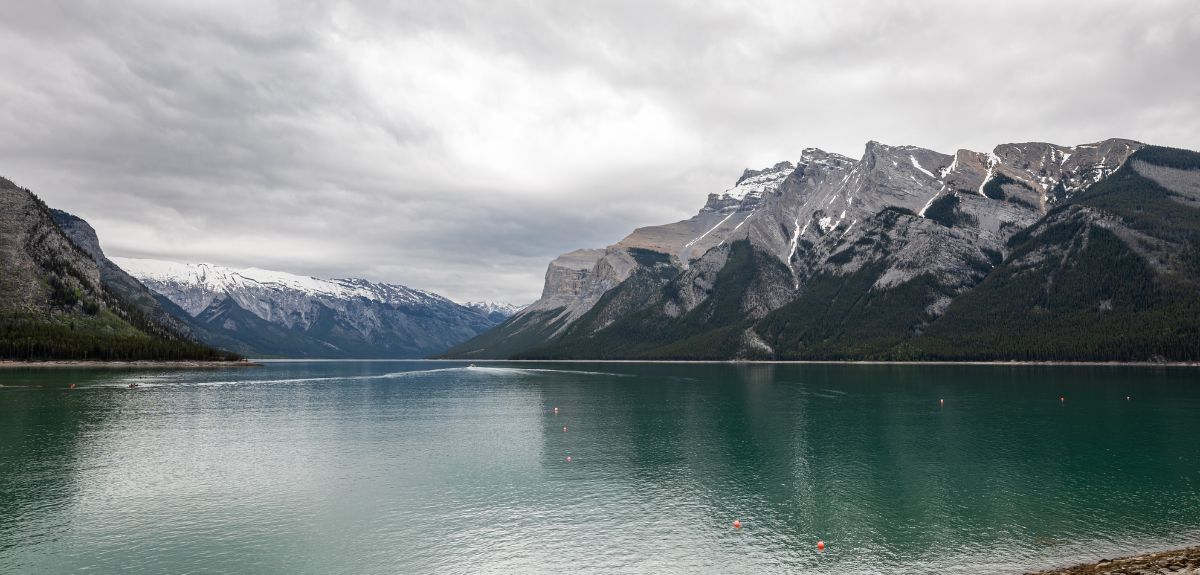
Banff is where the Canadian Rockies do their best work. Glacier-fed lakes turn an impossible turquoise, jagged peaks rise straight up from valley floors, and the small mountain town at the center of it all still feels more outpost than resort. Set inside Canada’s first national park, established in 1885, Banff has had nearly a century and a half to figure out how to share this landscape with visitors without losing what makes it worth visiting in the first place.
Why Visit Banff?
Whether you’ve come for the lakes, the hikes, or just the chance to stand somewhere genuinely awe-inspiring, Banff delivers scenery that’s hard to overstate:
- Lake Louise: See the postcard lake in person, a turquoise glacial basin framed by the Victoria Glacier and one of the most photographed views in Canada.
- Moraine Lake: Stand above the Valley of the Ten Peaks at a lake so vividly blue it looks digitally enhanced, even in a plain phone photo.
- Banff Gondola: Ride to the summit of Sulphur Mountain for a 360-degree view over six mountain ranges and the Bow Valley below.
- Johnston Canyon: Walk a catwalk bolted to a limestone canyon wall, past waterfalls, to a set of spring-fed pools called the Ink Pots.
- Banff Upper Hot Springs: Soak in Canada’s highest hot spring, with Mount Rundle rising directly in view from the outdoor pool.
Banff rewards early starts and off-season visits, since its top sights are genuinely, deservedly popular. Get there before the crowds, or come outside peak summer, and the park delivers on every bit of its reputation.
BANFF KEY INFO
Everything you need to hit the ground running.
WHEN TO VISIT
June to September for hiking, lake access, and the best weather; December to March for skiing at the area’s three resorts
HOW TO GET THERE
Fly into Calgary International Airport (YYC). It’s roughly a 1.5-hour drive west to Banff via the Trans-Canada Highway, or take a shuttle service like the Banff Airporter.
HOW TO GET AROUND
Rent a car for full flexibility reaching the lakes and trailheads, or use the free Roam Transit bus system, which connects the town of Banff to Lake Louise and other key sites seasonally.
IDEAL TRIP LENGTH
4-5 days to see the major lakes and viewpoints without rushing, or 7 days if you want to add serious hiking or a side trip to Jasper National Park along the Icefields Parkway.
What is Banff Mainly Known For?
Banff is known as the heart of the Canadian Rockies and the site of Canada’s first national park, established in 1885 around a set of natural hot springs. It’s famous above all for its glacial lakes, Lake Louise and Moraine Lake chief among them, whose striking turquoise color comes from fine rock particles, called rock flour, suspended in glacier meltwater. Beyond the lakes, Banff is known as a year-round outdoor destination, drawing hikers and campers in summer and skiers to nearby Sunshine Village, Lake Louise Ski Resort, and Mt. Norquay in winter.
Is Banff a Walkable City?
The town of Banff itself is small and walkable, with Banff Avenue’s shops and restaurants easily covered on foot. Getting to the park’s major natural attractions, however, requires a car, shuttle, or organized tour, since Lake Louise, Moraine Lake, and Johnston Canyon are all a drive from town.
Is it safe to walk in Banff? Yes, generally, both in town and on well-maintained trails. This is bear and elk country, though, so carry bear spray on trails, make noise on blind corners, and never approach wildlife, no matter how close it wanders to the road.
What Is the Best Area to Walk Around?
Banff Avenue is the town’s main strip, walkable end to end with outdoor gear shops, restaurants, and views of Cascade Mountain framed at the north end of the street. For scenery over shopping, the Bow River Trail along the river’s edge, just a few blocks from downtown, offers a quieter walk with mountain views and a good chance of spotting elk.
What Are the Best Things to Do in Banff? (For Your First Visit)
I organized my days around sunrise, since Banff’s most famous lakes get overwhelmed with cars and tour buses by mid-morning in summer. Here’s what earned the early alarm:
Lake Louise
This glacial lake, backed by the Victoria Glacier and the historic Fairmont Chateau Lake Louise, is Banff’s single most iconic view. A flat lakeside trail lets you walk the shoreline, or rent a canoe to paddle out onto the water itself. Price: Free to view; parking is extremely limited and often requires a shuttle reservation in summer. Pro tip: Arrive before 7 AM or take the seasonal shuttle from the Park and Ride, since the lakeside parking lot regularly fills before 6 AM in peak season. Check availability and explore popular experiences.

Moraine Lake
Set in the Valley of the Ten Peaks, Moraine Lake’s color is even more intense than Lake Louise’s, especially in June and July before glacial melt slows down later in the season. The Rockpile Trail, a short climb from the parking area, delivers the classic elevated view of the lake and peaks together. Price: Free to view; private vehicle access is banned in season, so you’ll need a shuttle, tour, or early-morning taxi. Pro tip: Book a Parks Canada shuttle reservation well in advance, since Moraine Lake Road closes to private cars entirely during peak summer months. Check availability and explore popular experiences.
Banff Gondola
This enclosed gondola climbs Sulphur Mountain in about eight minutes, ending at a summit complex with boardwalks, restaurants, and views over six mountain ranges. On a clear day you can see all the way down the Bow Valley to the town of Banff far below. Price: ~CAD 89 for adults. Pro tip: Go in the late afternoon for softer light and fewer crowds, and stay long enough to watch the sunset if the weather cooperates. Check availability and explore popular experiences.
Johnston Canyon
A steel catwalk bolted directly to the canyon walls leads hikers past a lower and upper waterfall before continuing to the Ink Pots, a set of blue-green spring-fed pools in a meadow above the canyon. It’s one of the most accessible dramatic hikes in the park, doable by most fitness levels. Price: Free; parking fills quickly in summer. Pro tip: Start before 8 AM or after 5 PM to avoid the worst of the crowds on the narrow catwalk sections. Check availability and explore popular experiences.

Bow Falls
A short, easy walk from downtown Banff leads to this wide, powerful waterfall on the Bow River, right below the Fairmont Banff Springs Hotel. It’s a fraction of the size of Niagara but makes up for it with a genuinely dramatic mountain backdrop. Price: Free. Pro tip: Combine this stop with a walk along the Bow River Trail and a look at the Banff Springs Hotel, since all three sit within about a 20-minute walk of each other. Check availability and explore popular experiences.
.jpg)
Lake Minnewanka
The largest lake in Banff National Park stretches 13 miles into the mountains and is one of the few in the park where motorized boats are allowed. A scenic cruise or a lakeside hike are both easy half-day additions to a Banff itinerary. Price: Free to visit; boat cruises run ~CAD 65. Pro tip: Walk the first mile or two of the lakeshore trail even if you skip the boat cruise; the views back toward the mountains are excellent and the trail is far less crowded than Lake Louise. Check availability and explore popular experiences.

Banff Upper Hot Springs
Sitting at 5,200 feet, this is the highest hot spring in Canada, with an outdoor pool kept around 100°F year-round and a clear view across the valley to Mount Rundle. It’s a genuinely relaxing way to end a long day of hiking, especially in winter when steam rises off the water into freezing air. Price: ~CAD 20.50 for adults. Pro tip: Visit in the early evening in winter for the best combination of fewer crowds and a striking contrast between the hot water and cold air. Check availability and explore popular experiences.
Peyto Lake
Reached via a short walk from a parking area along the Icefields Parkway, Peyto Lake’s wolf-shaped outline and impossibly bright blue water make it one of the most rewarding short stops in the entire park. The view from Bow Summit above the lake is one of the best returns on minimal hiking effort anywhere in the Rockies. Price: Free. Pro tip: Visit in the morning; afternoon light tends to wash out the lake’s color in photos taken from the main viewpoint. Check availability and explore popular experiences.

Fairmont Banff Springs Hotel
Built in the 1880s by the Canadian Pacific Railway and modeled after a Scottish baronial castle, this landmark hotel is worth a visit even if you’re not staying there. Wander the grand lobby, have a drink on the terrace, or walk the surrounding grounds for some of the best close-up mountain views in town. Price: Free to walk the public areas and grounds. Pro tip: Come at golden hour for photos of the castle-like exterior lit up against the surrounding peaks. Check availability and explore popular experiences.

Cave and Basin National Historic Site
This is where it all started: a natural hot spring discovered by railway workers in 1883 that led directly to the creation of Banff National Park two years later, Canada’s first. The site combines a partially submerged cave, interpretive exhibits, and boardwalks over the surrounding marshland. Price: ~CAD 8.50 for adults. Pro tip: Pair this with a stroll along the Marsh Loop boardwalk just outside, a flat, easy walk good for spotting waterfowl. Check availability and explore popular experiences.
Must-Do Activities in Banff
To really get the most out of your trip, I recommend checking out these experiences:
No products were found!
What Part of Banff is Best for Tourists?
Stay in the town of Banff itself, within walking distance of Banff Avenue’s restaurants and shops, with easy access to Bow Falls and the Banff Gondola. Travelers focused primarily on Lake Louise and Moraine Lake sometimes base themselves in the smaller Lake Louise village instead, trading Banff’s larger selection of restaurants and nightlife for a shorter drive to those two lakes.
What to Know Before Going to Banff
- Tap Water is Safe: Banff’s tap water is clean and safe to drink straight from the tap.
- You Need a Park Pass: A Parks Canada day pass or annual Discovery Pass is required for entry and should be purchased online or at the park gate before arrival.
- Reserve Popular Sites Ahead: Moraine Lake and, increasingly, Lake Louise require shuttle bookings or very early arrival in peak summer; don’t plan on simply driving up and parking.
- Carry Bear Spray on Trails: This is active bear and wildlife country; carry bear spray on hikes and know how to use it.
- Weather Shifts Fast: Mountain weather changes quickly even in summer; bring layers and rain protection regardless of the forecast.
How Many Days Do I Need in Banff?
4 to 5 days covers the park’s major sights at a reasonable pace without feeling rushed.
- Day 1: Arrive, explore Banff Avenue, Bow Falls, and the Fairmont Banff Springs Hotel grounds.
- Day 2: Early start at Lake Louise, then Moraine Lake in the same area.
- Day 3: Johnston Canyon hike in the morning, Banff Gondola in the late afternoon for sunset.
- Day 4: Lake Minnewanka and Cave and Basin National Historic Site, finishing at the Upper Hot Springs.
- Day 5 (optional): Drive the Icefields Parkway north to Peyto Lake and beyond toward Jasper.
Suggested daily budget – 140-210 CAD / 100-155 USD (Note: This covers a mid-range hotel, rental car, a mix of restaurant and grocery-store meals, and one or two paid activities like the gondola or hot springs per day. Summer accommodation prices run notably higher than shoulder season).
MONEY SAVING TIPS
- Buy an Annual Parks Pass If Visiting Multiple Parks: A Discovery Pass pays for itself quickly if you’re also visiting Jasper or other Canadian national parks on the same trip.
- Use the Free Roam Transit: Certain Roam routes around town and to nearby sites are free or low-cost, cutting down on parking headaches and rental car mileage.
- Cook Some of Your Own Meals: Banff’s restaurants are priced for a resort town; a hotel with a kitchenette and a grocery run can meaningfully cut food costs.
- Hike Instead of Booking Tours: Many of the park’s best views, including Johnston Canyon and the Bow River Trail, are free and don’t require a paid tour to access.
What’s the Best Month to Visit Banff?
July and August offer the warmest weather and full access to all hiking trails and lake activities, though they’re also the busiest and most expensive months by a wide margin. June and September are excellent shoulder-season alternatives, with thinner crowds, lower prices, and still-reliable access to most trails and viewpoints. Winter, from December through March, transforms Banff into a ski destination, with three major resorts nearby and a much quieter townsite outside of the slopes.
How to Get to Banff
Most travelers fly into Calgary International Airport (YYC), the closest major airport, then continue to Banff by car or shuttle. There’s no commercial airport within Banff National Park itself.
- From the airport: Banff is roughly a 1.5-hour drive west on the Trans-Canada Highway; shuttle services like the Banff Airporter run regularly and cost around CAD 70-90 one-way.
- Regional connections: Banff sits at the southern end of the Icefields Parkway, one of the most scenic drives in the world, making it a natural starting point for a longer trip north to Jasper National Park.
How to Get Around Banff
A rental car offers the most flexibility, though public transit covers key routes seasonally.
- Rental Car: The most practical option for reaching Lake Louise, Johnston Canyon, and other spread-out sites on your own schedule.
- Roam Transit: A public bus system connecting the town of Banff to Lake Louise, Johnston Canyon, and other key stops seasonally, with some routes free.
- Parks Canada Shuttles: Required for accessing Moraine Lake in peak season and recommended for Lake Louise; book well ahead online.
- Walking: Practical and pleasant within the town of Banff itself, though not a realistic way to reach the park’s more distant natural attractions.
Tips for first-timers: Book shuttle reservations for Moraine Lake and any peak-season Lake Louise parking well before your trip, ideally as soon as reservations open. Pack layers no matter the season, since temperatures swing considerably between valley floor and higher elevations.
Banff earns its reputation the hard way: not through hype, but through a genuinely rare concentration of turquoise lakes, jagged peaks, and wildlife-filled valleys within a single, manageable park. Time it right, start early, and it delivers exactly the postcard experience you came for, and usually a little more besides.
Note: This article contains affiliate links. If you purchase something I’ve recommended, I’ll earn a small commission at no extra cost to you. I really appreciate your support and I hope this guide helps you ♡