




What is Berlin Mainly Known For?
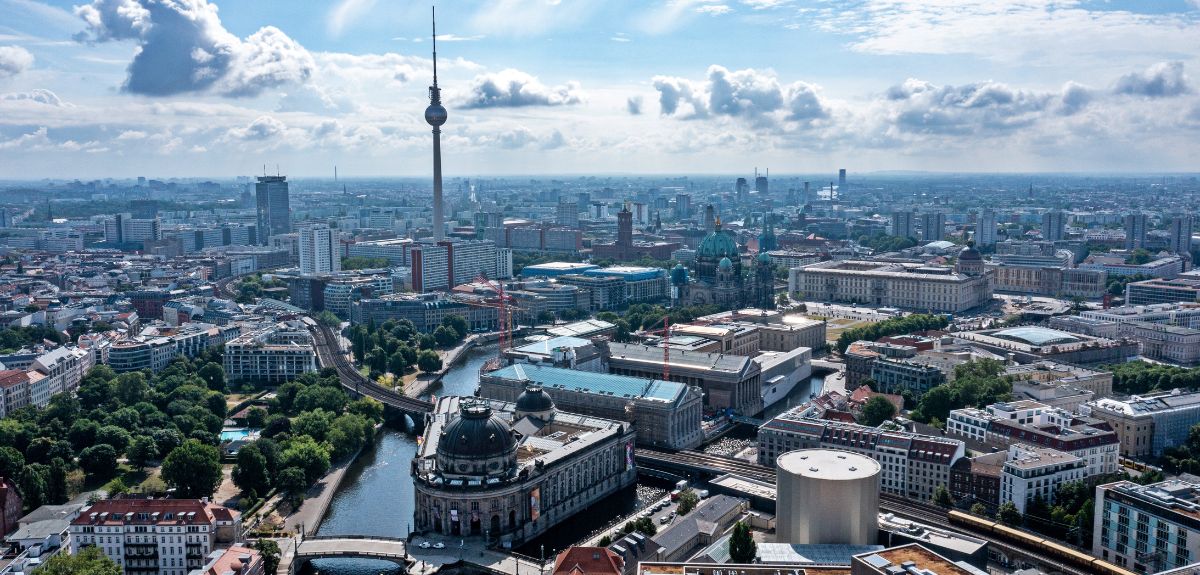
Berlin is best known for the Berlin Wall, which split the city from 1961 to 1989, and for its central role in World War II and the Cold War. It is also famous for Museum Island, the Brandenburg Gate, a thriving contemporary art scene, and a nightlife culture built around legendary techno clubs.
Is Berlin a Walkable City?
Yes, within neighborhoods. Berlin is very flat, with wide sidewalks and plenty of bike lanes, so exploring on foot is easy. The catch is scale: the city is spread out, and sights like the East Side Gallery and Charlottenburg Palace sit several kilometers apart. Walk within districts and use the U-Bahn or S-Bahn to jump between them.
Is it safe to walk in Berlin at night? Generally, yes. Central areas like Mitte and Prenzlauer Berg feel comfortable after dark. As in any big city, watch your belongings around busy stations such as Alexanderplatz and Warschauer Straße, where pickpocketing is the most common issue.
What Is the Best Neighborhood to Walk Around?
Mitte is the winner for first-timers. You can walk from the Brandenburg Gate down Unter den Linden to Museum Island and the Berlin Cathedral in about 30 minutes, passing Bebelplatz and the Humboldt Forum along the way. For something completely different, head to Kreuzberg, where the Landwehr Canal, Turkish markets, street art, and relaxed cafés show the city’s more local, alternative side.
What Are the Best Things to Do in Berlin? (For Your First Visit)
I visited Berlin without a rigid day-by-day plan. I wanted to take my time, follow the history, and see where the neighborhoods led me. I wrote down a few highlights and hit the ground running. Here are the spots I definitely recommend checking out:
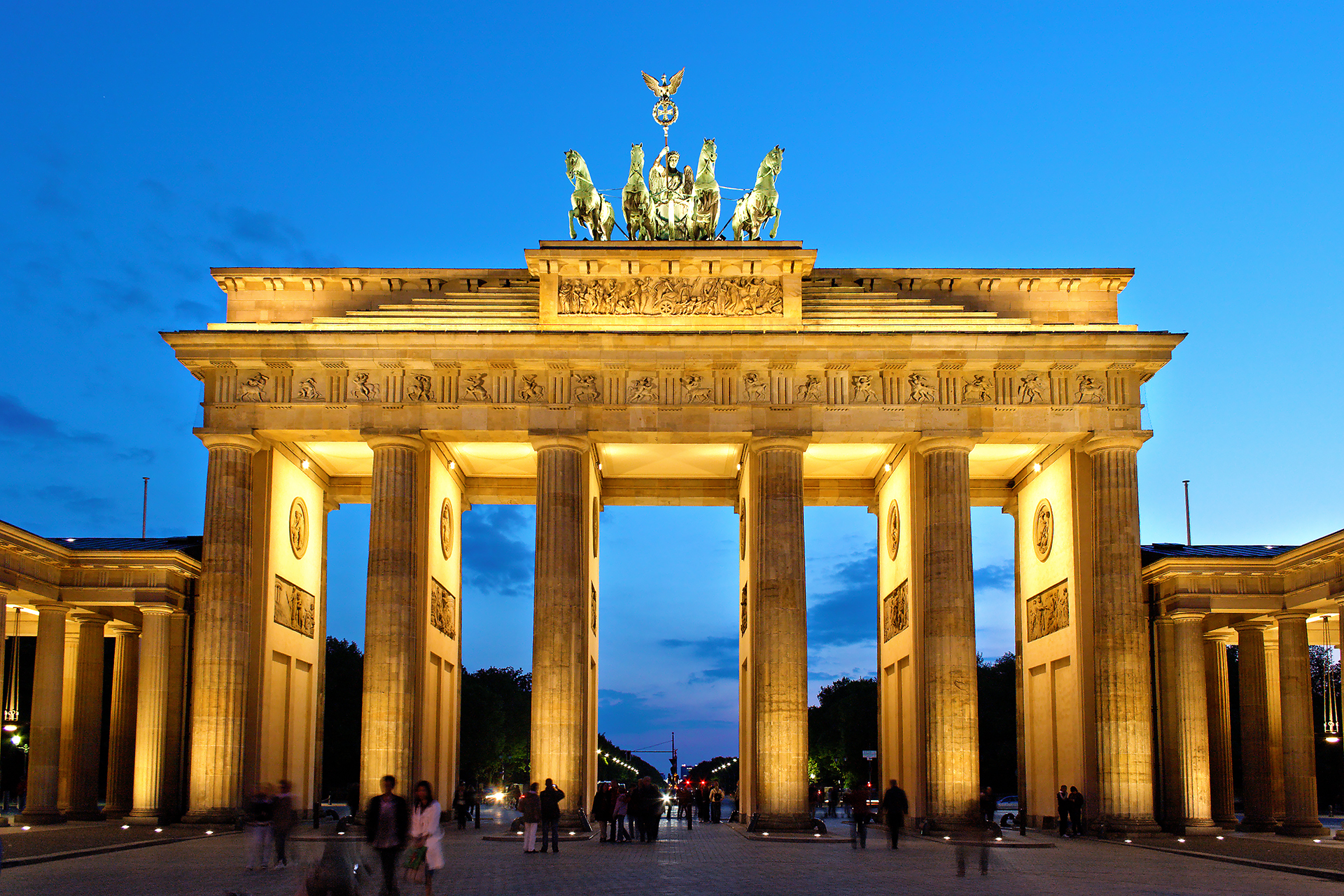
Brandenburg Gate
Built between 1788 and 1791 for King Frederick William II, Carl Gotthard Langhans modeled this sandstone gate on the Propylaea, the monumental entrance to the Acropolis in Athens. The Quadriga on top, a chariot pulled by four horses and driven by the goddess Victoria, has had its own adventures: Napoleon carted it off to Paris in 1806, and it only came home after his defeat in 1814. During the Cold War the gate stood stranded in the border zone, sealed off by the Wall from 1961 until December 1989, which is why it became the city’s defining image of reunification. Today you can walk straight through the columns from Pariser Platz, the elegant square lined with embassies and the rebuilt Hotel Adlon, to the Tiergarten side. It is also the finish line of the Berlin Marathon and the stage for the city’s giant New Year’s Eve party. Entry: Free. Pro tip: Come after dark, when the gate is floodlit and the square is far less crowded, then continue west into the Tiergarten for a quiet evening walk. Check availability and explore popular experiences.
Reichstag Building and Dome
Few buildings carry as much German history as this one. Completed in 1894 to house the parliament of the German Empire, the Reichstag was gutted by the infamous 1933 fire that the Nazis used to seize emergency powers, and in 1945 Soviet soldiers raised their flag over its ruined roof in one of World War II’s most famous photographs. After reunification, British architect Norman Foster rebuilt it, and the Bundestag moved in in 1999. His signature addition is the glass dome: a spiral ramp winds up past a mirrored central cone that bounces daylight down into the plenary chamber below, a deliberate symbol of a transparent democracy watched over by its citizens. A free audio guide points out the landmarks on the skyline as you climb, and the open roof terrace adds wide views over the Tiergarten and the government quarter. Entry: Free, but you must register online in advance and bring your passport or ID. Pro tip: Book an early-morning or late-evening slot several weeks ahead in summer; if slots are gone, a reservation at the rooftop restaurant also gets you up top. Check availability and explore popular experiences.

Memorial to the Murdered Jews of Europe
Designed by American architect Peter Eisenman and opened in 2005, Germany’s central Holocaust memorial covers an entire city block just south of the Brandenburg Gate. From the edge it looks like a neat grid of 2,711 gray concrete slabs, but as you walk in, the ground dips and the stelae rise above your head, and the city noise fades until you feel disoriented and alone. Eisenman intentionally left the meaning open, with no names, inscriptions, or single entrance. The context lives underground in the Information Center, where quiet rooms trace the persecution and murder of six million Jews through personal letters, diaries, and the family histories of individual victims. It is a sobering, powerful stop that most visitors say stays with them long after Berlin. Entry: Free. Pro tip: Visit the Information Center first (it’s closed on Mondays); it gives the field of stelae a completely different weight. Please don’t climb or sit on the slabs. Check availability and explore popular experiences.

Museum Island
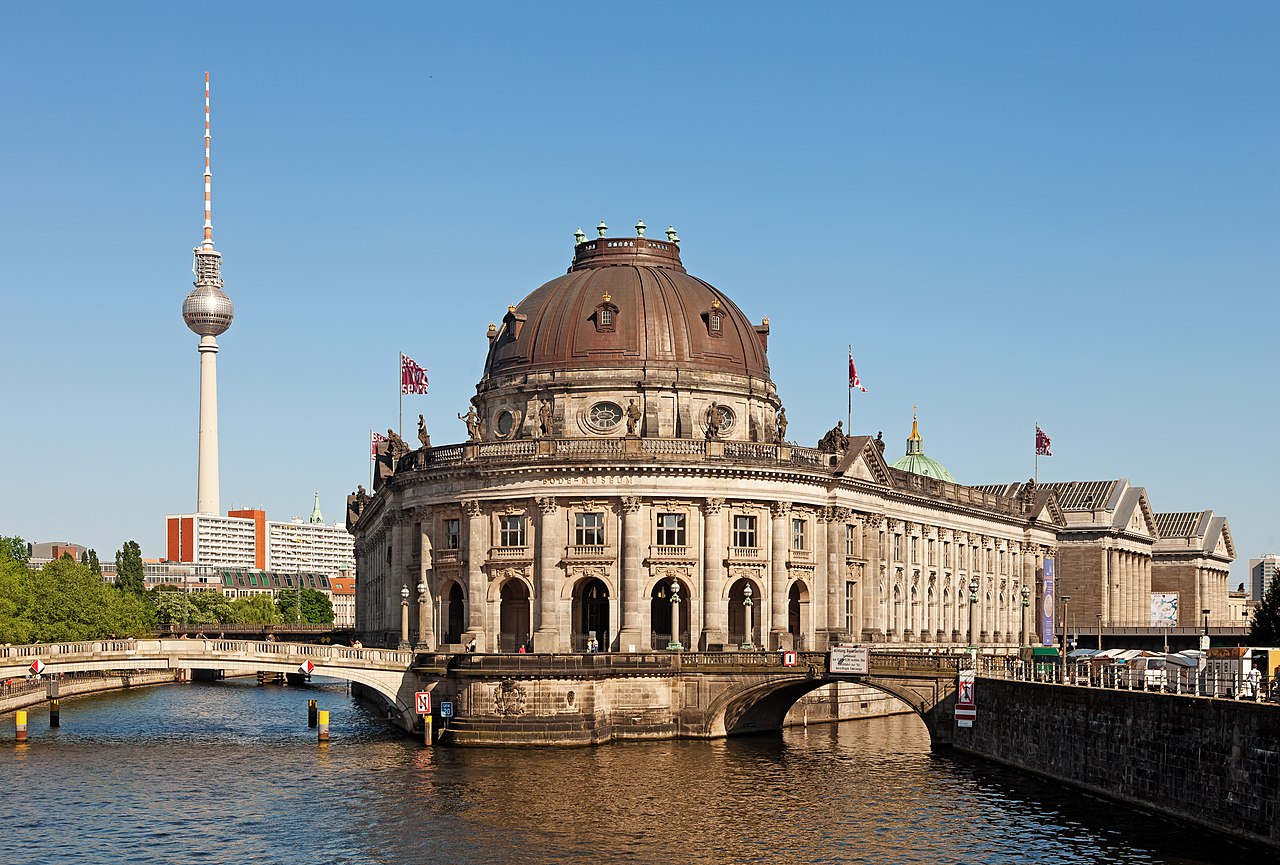
On the northern tip of an island in the Spree, five museums built between 1830 and 1930 form one of the world’s great museum complexes, recognized as a UNESCO World Heritage Site in 1999. The Altes Museum, designed by Karl Friedrich Schinkel, holds classical Greek and Roman art behind its grand colonnade. The Neues Museum, left in ruins after World War II and brilliantly rebuilt by David Chipperfield in 2009, is home to the island’s star: the roughly 3,300-year-old painted bust of Queen Nefertiti. The Alte Nationalgalerie showcases 19th-century paintings, including Caspar David Friedrich’s moody Romantic landscapes, while the domed Bode Museum at the island’s tip is packed with sculpture and Byzantine art. Start at the modern James-Simon-Galerie, the island’s visitor center, to buy tickets and get your bearings. Price: ~€14 per museum or ~€24 for a Museum Island day ticket. Pro tip: The Pergamon Museum is closed for renovation until June 4, 2027, so plan around the other four, and prioritize the Neues Museum if you only have time for one. Check availability and explore popular experiences.
Berlin Cathedral
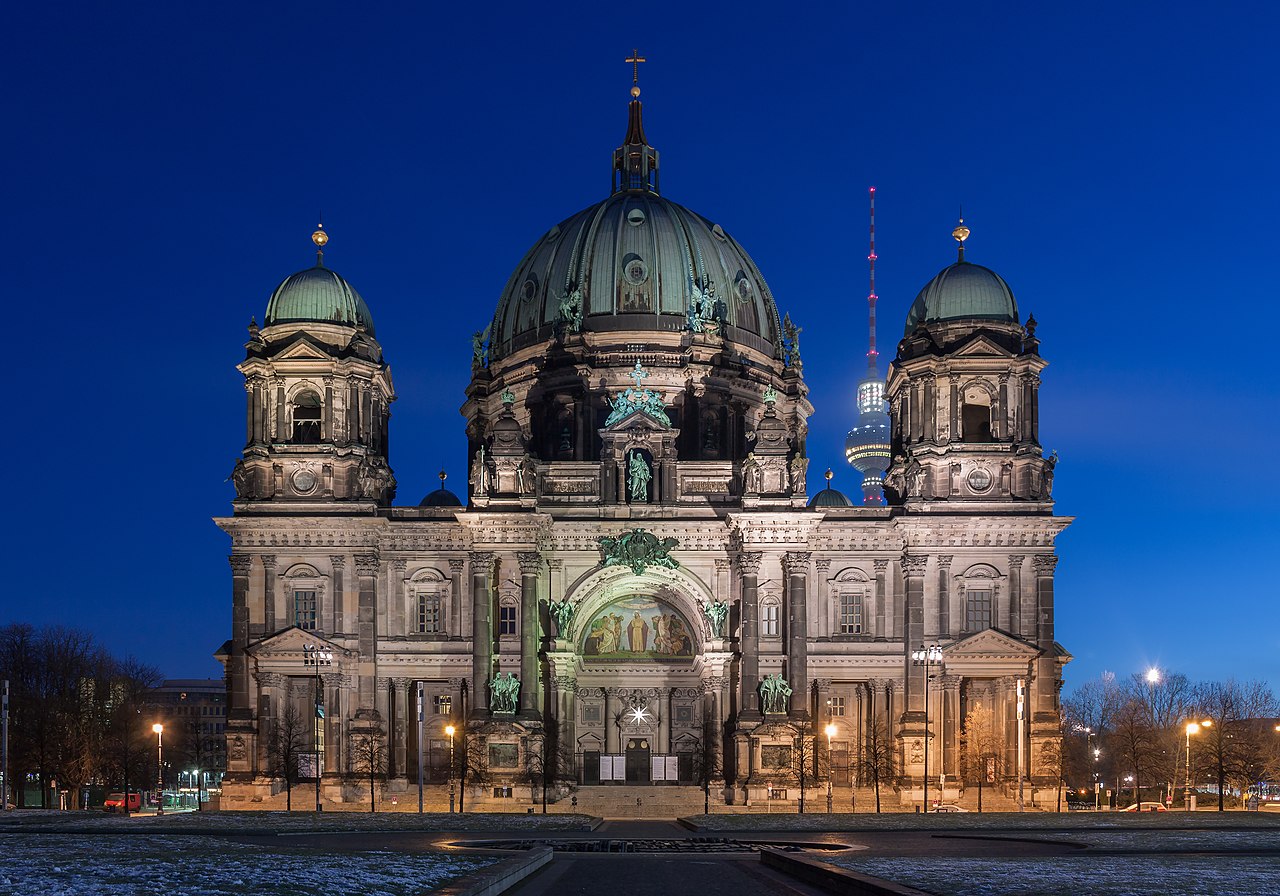
Berlin’s largest church was completed in 1905 under Kaiser Wilhelm II, who wanted a Protestant answer to St. Peter’s in Rome, and it shows in the neo-Baroque excess of gilded mosaics, marble columns, and a soaring green copper dome. Allied bombing badly damaged it in 1944, and the restoration took decades; the main sanctuary only reopened in 1993. Inside, look for the enormous Sauer organ with more than 7,000 pipes, then head down to the crypt, where around 90 members of the Hohenzollern dynasty, the family that ruled Prussia and later the German Empire, rest in ornate coffins. The cathedral faces the Lustgarten, a lawn between the church and the Altes Museum that fills with picnickers on sunny days, and the rebuilt Berlin Palace, now the Humboldt Forum, stands directly across the street. Price: ~€10. Pro tip: Climb the 270 steps to the outdoor dome walkway for one of the best views over Museum Island and the Spree, and check the schedule for evening organ concerts. Check availability and explore popular experiences.
Berlin TV Tower (Fernsehturm)
East Germany built the Fernsehturm between 1965 and 1969 as a showcase of socialist engineering, and it worked: at 368 meters, it is still the tallest structure in Germany and visible from almost anywhere in the city. Berliners have a favorite joke about it. When sunlight hits the stainless-steel sphere, the reflection forms a bright cross, which locals nicknamed “the Pope’s revenge” on the officially atheist GDR. A high-speed elevator takes you to the viewing floor at 203 meters in about 40 seconds, where floor-to-ceiling windows give you a full 360-degree panorama and help you connect the dots between everything you’ve seen on the ground. One floor up, the Sphere restaurant slowly rotates, so you can take in the whole skyline over a meal or a drink. Down below, Alexanderplatz, East Berlin’s old main square, is worth a quick look for its World Clock and GDR-era architecture. Price: from ~€27. Pro tip: Buy a timed ticket online to skip the queue, and go around sunset to see the city in daylight and at night in one visit. Check availability and explore popular experiences.

East Side Gallery
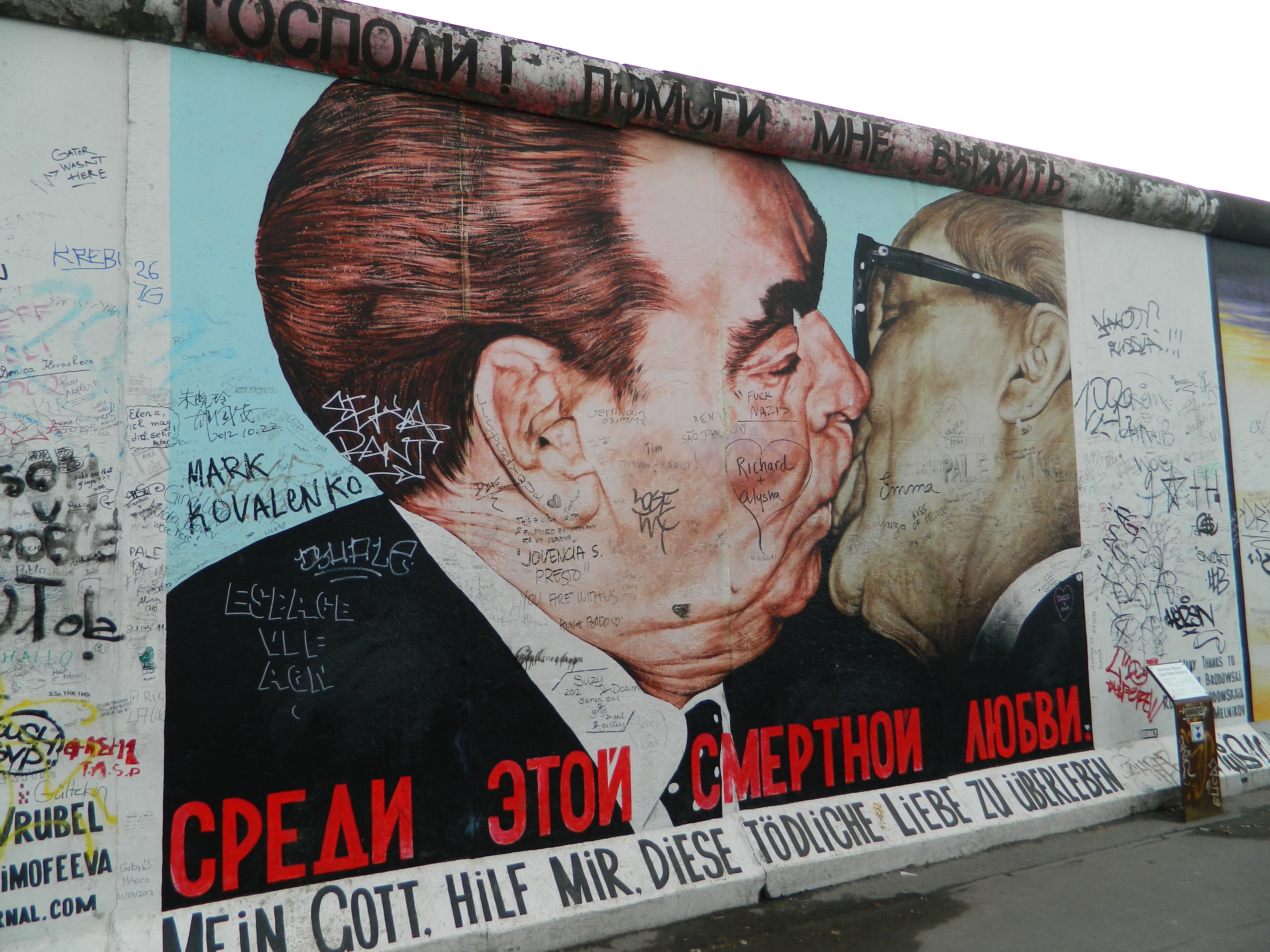
The longest surviving stretch of the Berlin Wall runs about 1.3 kilometers along the Spree in Friedrichshain, and in 1990, just months after the Wall fell, artists from around the world were invited to turn its gray concrete into the world’s largest open-air gallery. The result is more than 100 murals that range from political satire to pure celebration. The most photographed is Dmitri Vrubel’s painting of Soviet leader Leonid Brezhnev and East German leader Erich Honecker locked in a “fraternal kiss,” while Birgit Kinder’s Trabant bursting through the Wall captures the joy of 1989 in one image. Many of the works were repainted by the original artists during a restoration in 2009, so the colors are still vivid. The walk ends at the Oberbaum Bridge, a red-brick double-decker bridge with Gothic turrets that once served as a border crossing between East and West. Entry: Free. Pro tip: Start at Ostbahnhof in the morning when the light is best and the crowds are thin, then cross the Oberbaum Bridge into Kreuzberg for lunch. Check availability and explore popular experiences.
Credit: Wikimedia Commons
Berlin Wall Memorial (Bernauer Straße)
If the East Side Gallery shows the Wall as art, Bernauer Straße shows it as it really was. When the border closed in August 1961, the apartment buildings on the south side of this street were in East Berlin while the sidewalk below belonged to the West, and residents famously leapt from their windows into firefighters’ nets to escape before the buildings were sealed and later torn down. Today the memorial stretches for about 1.4 kilometers along the former border strip, with rusted steel rods tracing where the Wall stood, markers showing the routes of escape tunnels, and photos and audio stations telling individual stories. At its heart is the only preserved section of the full border system, with the inner wall, the raked “death strip,” and a guard watchtower. Nearby, the Chapel of Reconciliation stands on the site of a church the GDR blew up in 1985 because it stood in the way of the border guards. Entry: Free. Pro tip: Climb the viewing tower at the Documentation Center for an overhead look at the full border system; the indoor exhibits close on Mondays, but the outdoor area is open every day. Check availability and explore popular experiences.

Charlottenburg Palace
Berlin’s largest surviving royal residence started out in 1695 as a modest summer home for Sophie Charlotte, the art-loving wife of Elector Frederick III, who went on to crown himself the first King in Prussia. Over the following decades, the palace grew into a long Baroque showpiece crowned by a green dome, and it was named Charlottenburg in her honor after her early death. Inside the Old Palace, the highlight is the Porcelain Cabinet, a room whose walls are covered floor to ceiling with thousands of pieces of Chinese and Japanese porcelain. The New Wing, added for Frederick the Great, holds the Golden Gallery, a Rococo ballroom dripping in gilded ornament. Behind the palace, the formal French garden gives way to an English-style park with a carp pond, the Belvedere teahouse, and the mausoleum of the much-loved Queen Louise. Price: from ~€12, with combination tickets covering both wings. Pro tip: The gardens are free, so a sunny afternoon stroll is worth it even if you skip the interiors; in December, the Christmas market in front of the palace is one of the prettiest in the city. Check availability and explore popular experiences.

Tempelhofer Feld
Tempelhof was one of the world’s first commercial airports, and its history reads like a summary of the 20th century. The vast curved terminal was built in the late 1930s as a Nazi prestige project, and during the Berlin Airlift of 1948 and 1949, Allied planes landed here around the clock to supply West Berlin, with pilots dropping candy to children on small parachutes, earning the nickname “raisin bombers.” The airport closed in 2008, the airfield opened as a park in 2010, and in 2014 Berliners voted in a referendum to keep it free of development. The result is more than 300 hectares of open grassland where the two runways and taxiways are still intact. On a sunny weekend, you’ll see cyclists, skaters, and kite-surfers racing down the tarmac, families grilling in the designated barbecue areas, and locals tending the community gardens. Entry: Free. Pro tip: Rent a bike and come for sunset, when the huge open sky is unlike anywhere else in the city. The park closes at dusk, and guided tours of the terminal building are available separately. Check availability and explore popular experiences.

Credit: Wikimedia Commons