



The Blue Lagoon lies in a lava field near Grindavík, on the Reykjanes Peninsula, just 20 minutes from Keflavík Airport and about 50 minutes from Reykjavík. Most visitors spend half a day there, often on their arrival or departure day, but the peninsula around it deserves a full day: lava fields, a bridge between two continents, boiling mud pools and wild cliffs. This guide covers the lagoon and the 9 best places around it, what they cost in 2026, which ticket to buy and how to fit it around your flight.
This guide contains affiliate links. If you book through them, we may earn a small commission at no extra cost to you.
Why Visit the Blue Lagoon and Reykjanes?
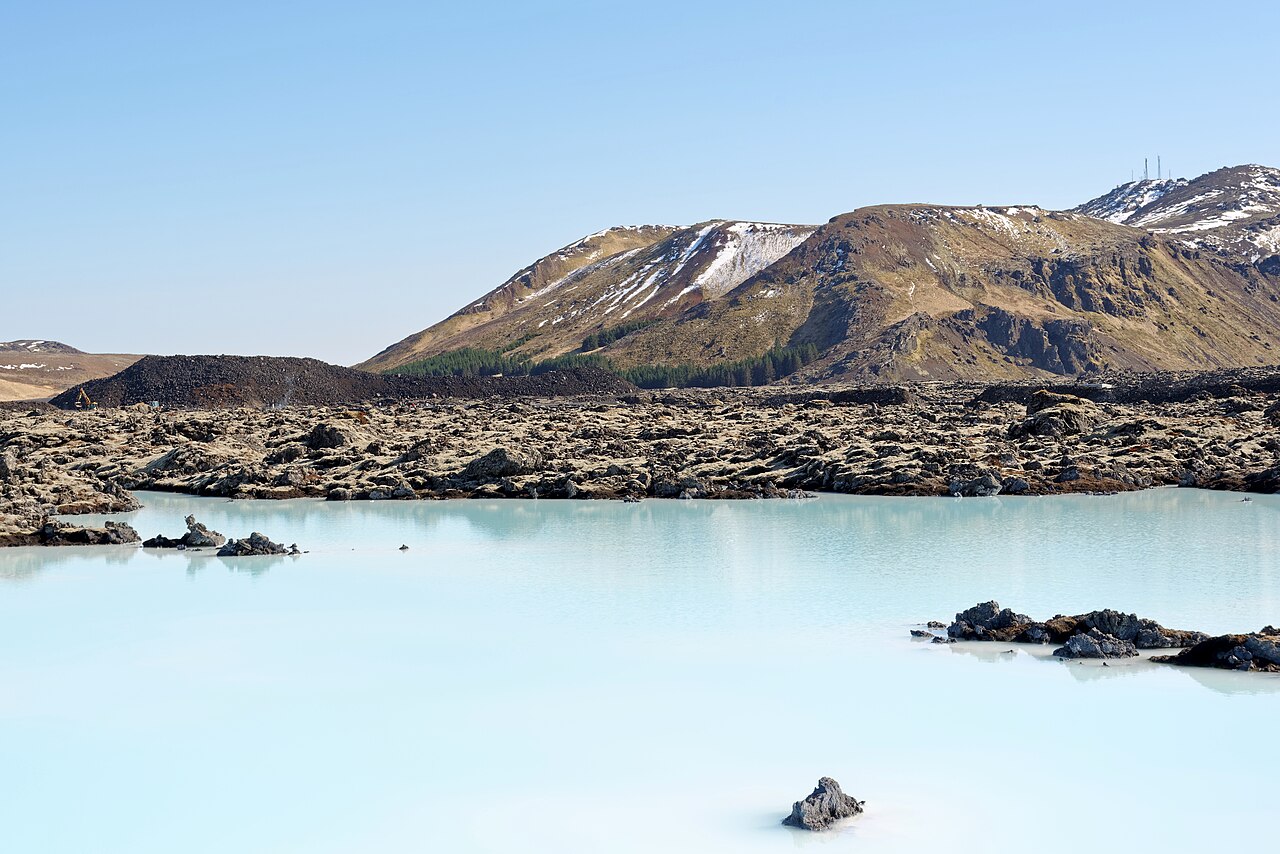
The Blue Lagoon is Iceland’s most famous geothermal spa: milky-blue seawater, rich in silica and minerals, heated deep underground and surrounded by black, moss-covered lava. The Reykjanes Peninsula around it is a UNESCO Global Geopark where the Mid-Atlantic Ridge comes ashore, and since 2021 it has seen a series of volcanic eruptions. The area is known for:
- Geothermal bathing: the Blue Lagoon is one of the most recognizable spas in the world, open every day of the year.
- Active volcanoes: the Fagradalsfjall and Sundhnúkur eruptions have created brand-new lava fields close to the lagoon.
- Plate tectonics: at the Bridge Between Continents you walk over the rift between the North American and Eurasian plates.
- Wild coastline: sea cliffs, lighthouses, lava pools and black-sand beaches, with far fewer visitors than the South Coast.
- Easy access: everything is close to Keflavík Airport, which makes it perfect for a first or last day in Iceland.
Is the Blue Lagoon Right for You?
| Type of trip | How the Blue Lagoon fits |
|---|---|
| Short stopovers | Excellent: you can visit straight from the airport, with luggage storage at the lagoon. |
| Couples and romantic trips | Excellent: in-water bars, evening visits, the Retreat Spa and two hotels on site. |
| Families with kids | Good: children aged 2–13 enter free with an adult (maximum two per adult), but under-2s cannot go in the water. |
| Budget travelers | Challenging: tickets are expensive. The Reykjanes sights around it are mostly free, and public pools are much cheaper. |
| Nature and geology lovers | Very good: lava fields, geothermal areas and the plate boundary are all within 30 minutes. |
| Travelers with limited mobility | Good: the lagoon has accessible facilities; the outdoor sights have short paths, though some are uneven. |
Blue Lagoon Quick Facts
| Best time to visit | All year; winter evenings for a chance of northern lights, early mornings in summer for fewer people. |
|---|---|
| How long | 2–3 hours in the lagoon; one full day to add the Reykjanes Peninsula. |
| Distance | About 20 minutes from Keflavík Airport and 50 minutes from Reykjavík. |
| Tickets | Comfort from ISK 12,990, Premium from ISK 15,990 and Signature from ISK 19,990 per adult. Prices change by date and time, and pre-booking is essential. |
| Opening hours | Daily; 8 a.m.–10 p.m. from late August to December, 8 a.m.–8 p.m. from January to May, and longer in summer. |
| Currency | Icelandic króna (ISK); about ISK 125 to $1. Cards are accepted everywhere. |
Know Before You Go
Is the Blue Lagoon open after the eruptions?
Yes, at the time of writing. The Sundhnúkur crater row near Grindavík erupted several times between December 2023 and August 2025, and the lagoon closed temporarily during each event. As of November 2026 there is no eruption, but magma is still accumulating under the area and scientists consider a new eruption likely. The lagoon, its hotels and Grindavík are open, but access can change at short notice. Check the Blue Lagoon website and safetravel.is before you go, and book a flexible ticket if possible.
Is the area safe?
Yes, when you follow the rules. Iceland ranked as the most peaceful country in the world in the 2026 Global Peace Index, and the authorities close roads and evacuate long before an eruption becomes a danger. Never walk onto new lava, stay out of fenced areas in Grindavík, where ground cracks can still open, and keep behind the ropes at geothermal areas, where the water is boiling. The emergency number is 112.
Is there Uber to the Blue Lagoon?
No. Uber does not operate in Iceland. Taxis from the airport are expensive, so most people take the scheduled bus transfer, join a tour or drive.
How do you get to the Blue Lagoon?
Scheduled buses run several times a day from Reykjavík’s BSÍ terminal and from Keflavík Airport, and you can travel airport–lagoon–Reykjavík in one go. A rental car is the best option if you want to explore the peninsula, as there is no public transport to the other sights in this guide. Parking at the lagoon is free for guests.
Map of the Best Places to Visit Around the Blue Lagoon
The numbers on the map match the list below. Grindavík (2) is 10 minutes from the lagoon. Places 4 to 7 are on the western tip of the peninsula, about 20–30 minutes away, Viking World (8) is next to Keflavík Airport, and Seltún (9) and Kleifarvatn (10) are on the road back to Reykjavík through Krýsuvík.
10 Best Places to Visit Around the Blue Lagoon
1. The Blue Lagoon

The Blue Lagoon was born by accident. In the 1970s, warm, mineral-rich water from the nearby Svartsengi geothermal power plant began to collect in the lava field, and locals noticed that bathing in it helped skin conditions. Today it is a large, carefully designed spa where the water stays at about 37–40°C, colored milky blue by silica that reflects sunlight.
All tickets give unlimited time in the lagoon, plus a steam bath, a sauna and a colder pool. You get a silica mud mask at the in-water mask bar and at least one drink at the swim-up bar. The Lava restaurant, built into a lava cliff, and the Retreat Spa, with its own private lagoon, offer more upscale options, and two hotels (Silica and The Retreat) let you stay overnight next to the water.
Why we recommend it: it is expensive and busy, but floating in warm blue water surrounded by black lava, especially on a snowy evening, is an experience you will remember.
Area: Svartsengi, near Grindavík · Price: Comfort from ISK 12,990 (about $104), Premium from ISK 15,990, Signature from ISK 19,990; children aged 2–13 free with an adult · Hours: from 8 a.m. daily; last entry varies by season · Time needed: 2–3 hours
Tip: The silica dries out hair badly. Soak your hair with the conditioner in the showers before you go in, and try to keep it out of the water.
2. Grindavík

Grindavík is a fishing town of a few thousand people that became world news in November 2023, when earthquakes split its streets and the whole population was evacuated. Lava from later eruptions destroyed a few houses on its northern edge, and earth walls now protect the town from new flows. Most residents moved away, and the town has reopened to visitors with clear rules.
A visit is a sobering, fascinating look at life next to an active volcano. Drive in, park by the harbor, where fishing boats still work, and see the repaired cracks, the defensive barriers and the new lava that stopped at the edge of town. A few businesses have reopened, including a pizza place that stayed open through the crisis.
Why we recommend it: nowhere else shows so clearly how Icelanders live with volcanoes, and it is only 10 minutes from the lagoon.
Area: south coast of the Reykjanes Peninsula · Price: free · Time needed: 30–60 minutes
Tip: Stay on the streets and out of fenced areas and private gardens: new cracks and sinkholes can open without warning. Respect residents’ homes and do not fly drones over the town.
3. Fagradalsfjall Lava Fields

In March 2021, after 800 years of silence, the Reykjanes Peninsula came back to life with an eruption in the Geldingadalir valley at Fagradalsfjall. Two more eruptions followed nearby in 2022 and 2023 (the last one at Litli-Hrútur), before activity moved to the Sundhnúkur crater row north of Grindavík. Together they have created kilometers of brand-new black lava.
When there is no active eruption and the area is open, marked trails from the parking lots on Route 427 lead up to viewpoints over the fresh lava fields from 2021 to 2023. The hikes are steep in places and take several hours round trip. In some sections the lava is still warm underground, and the landscape changes every year.
Why we recommend it: walking on lava younger than many of the visitors is something very few places in the world can offer.
Area: Route 427, east of Grindavík · Price: free; parking ISK 1,000 (Parka) · Time needed: 2–4 hours, depending on the trail
Tip: Check safetravel.is and visitreykjanes.is for trail status before you go: trails close during eruptions and when gas levels are high. Never step onto fresh lava, and bring water, layers and proper boots.
Compare Reykjanes volcano tours
4. Brimketill

On the rugged coast west of Grindavík, Brimketill is a round pool carved into the lava rock by the pounding Atlantic. On calm days, it looks like a natural bathtub; on stormy days, huge waves crash over the ledge and fill it with foam. A short boardwalk with a viewing platform lets you watch the show safely.
Local legend says the pool was the bathtub of Oddný, a troll woman who lived on the peninsula with her husband and bathed here while he fished. The surrounding coastline is just as dramatic, with black lava shelves and sea spray rising high into the air.
Why we recommend it: it is a quick, free stop with some of the most powerful waves you will see in Iceland.
Area: Route 425, between Grindavík and Reykjanesviti · Price: free · Time needed: 20–30 minutes
Tip: Do not climb down to the pool. Rogue waves regularly sweep across the rocks, and the sea here is extremely dangerous.
5. Gunnuhver

Gunnuhver is one of the most powerful geothermal areas in Iceland: a field of roaring steam vents and boiling mud pools at the western end of the peninsula. Its largest mud pool is about 20 meters across, and clouds of steam rise so thickly that you often walk through them on the viewing platforms.
The name comes from a ghost story. Guðrún, or Gunna, was a woman who haunted the area after her death in the 17th century, until a priest lured her into the hot spring, where she is said to remain. The area is especially atmospheric on cold days, when the steam hangs low over the yellow and red clay.
Why we recommend it: it is one of the most raw, powerful geothermal sites you can visit, with good paths and no crowds.
Area: Reykjanes, Route 425 · Price: free · Time needed: 20–30 minutes
Tip: Stay on the paths and platforms: the ground around the pools can be thin and the water is boiling. The smell of sulfur is strong, so avoid it if you are sensitive.
6. Reykjanesviti and Valahnúkamöl

Reykjanesviti, on a small hill at the southwestern tip of the peninsula, is the oldest lighthouse site in Iceland: the first light here was lit in 1878, and the current white tower dates from 1908. From the parking lot below it, you can walk to the sea cliffs of Valahnúkur and the giant boulder ridge of Valahnúkamöl, piled up by storms.
Offshore, the rock of Eldey rises from the sea about 15 km away; it is home to one of the largest gannet colonies in the world. Closer in, the cliffs are covered with nesting seabirds in summer. A small statue of a great auk, the flightless bird that was hunted to extinction near Eldey in 1844, stands on the shore.
Why we recommend it: it is the wildest coastal walk near the airport, and it combines perfectly with Gunnuhver, just 2 km away.
Area: Reykjanes, Route 425 · Price: free; parking ISK 1,000 (Parka) · Time needed: 45–60 minutes
Tip: Keep away from the cliff edges and the boulder beach in rough seas: waves can reach much further than you expect.
7. Bridge Between Continents

The Reykjanes Peninsula sits right on top of the Mid-Atlantic Ridge, where the North American and Eurasian plates are slowly moving apart. At Álfagjá, a wide rift filled with black sand, a 15-meter footbridge crosses from one side to the other, so you can say you walked between two continents in a few seconds.
Strictly speaking, the plate boundary in Iceland is a wide zone rather than a single crack, but the gorge makes the idea easy to understand. Signs explain the geology, and you can walk down into the sandy rift below the bridge for photos.
Why we recommend it: it is a fun, free and easy way to see plate tectonics in action, and it is on the way between the airport and the western sights.
Area: Route 425, near Hafnir · Price: free · Time needed: 15–20 minutes
Tip: Combine it with Gunnuhver and Reykjanesviti on a loop along Route 425 from the Blue Lagoon to Keflavík: it takes about 2 hours with stops.
8. Viking World

Viking World (Víkingaheimar), in Reykjanesbær just a few minutes from Keflavík Airport, is built around a single, spectacular object: the Íslendingur, a full-size replica of the 9th-century Gokstad Viking ship. In 2000, the ship sailed from Iceland to New York to mark 1,000 years since Leif Eriksson reached North America, and it now hangs inside the museum’s glass hall.
The exhibitions cover the Viking expansion across the North Atlantic, the settlement of Iceland and the Norse gods, with archaeological finds and clear English texts. You can step on board the ship, and the café looks out over the bay.
Why we recommend it: it is a good indoor stop on a stormy day, and the easiest museum to fit in before a flight.
Area: Njarðvík, Reykjanesbær · Price: check the current ticket price online · Hours: winter 10 a.m.–4 p.m., summer 9 a.m.–5 p.m. · Time needed: 1 hour
Tip: With an early flight, stay in Reykjanesbær: the airport is 10 minutes away, and you can visit Viking World and the Bridge Between Continents the day before.
9. Seltún Geothermal Area (Krýsuvík)

On the quiet road from Grindavík to Reykjavík via Krýsuvík, Seltún is a colorful geothermal valley of bubbling mud pots, steaming vents and hillsides stained orange, yellow and green by minerals. Wooden boardwalks loop through the area and up the slope for a view over the whole valley.
It is much smaller and quieter than Geysir on the Golden Circle, which makes it a pleasant, easy stop. In the 18th and 19th centuries, sulfur was mined here and exported to make gunpowder; today the only sounds are the hiss and gurgle of the earth.
Why we recommend it: it has some of the brightest colors of any geothermal area near Reykjavík, with a short and easy walk.
Area: Krýsuvík, Route 42 · Price: free; parking ISK 750 (Checkit.is) · Time needed: 30–45 minutes
Tip: Route 42 is partly gravel and can be closed or icy in winter. Check road conditions on umferdin.is before taking this way back to Reykjavík.
10. Kleifarvatn

Just north of Seltún, Kleifarvatn is the largest lake on the Reykjanes Peninsula, surrounded by dark volcanic hills and black-sand shores. It is a moody, empty place, especially in winter, and it has a strange history: after an earthquake in 2000 opened cracks in its bed, the lake drained by about a fifth of its area, and the water level has changed ever since.
The road runs right along the shore, with several places to stop and walk down to the beach. Local legend says a worm-like monster lives in the lake. The real attraction is the silence and the view, with steam from Seltún rising behind the hills.
Why we recommend it: it is one of the most atmospheric drives near Reykjavík and a peaceful end to a Reykjanes day.
Area: Route 42, Krýsuvík · Price: free · Time needed: 20–30 minutes
Tip: Stop at the small parking areas on the eastern shore for the best views, and drive carefully: the road is narrow with steep drops in places.
Must-Do Experiences Around the Blue Lagoon
Some of the best moments on the Reykjanes Peninsula are not attractions with a ticket. These are the experiences we would not skip:
- Try the silica mask in the water. It is included in every ticket; the in-water bar is the other ritual.
- Soak after dark. From October to March, an evening visit gives you a chance to see the northern lights from the lagoon.
- Walk on brand-new lava. The fields from the 2021–2023 eruptions are the youngest land in Europe you can easily visit.
- Cross between two continents. It takes 20 seconds on the Bridge Between Continents.
- Drive Route 425 at sunset. Lighthouses, steam vents and crashing waves along the empty coast.
See Blue Lagoon tickets with transfer
Where to Eat Around the Blue Lagoon
| Place | Area | What to order | Good to know |
|---|---|---|---|
| Lava Restaurant | Blue Lagoon | Icelandic fish, lamb, two-course menu | Book ahead; some tickets include a meal or a glass of sparkling wine |
| Blue Lagoon Café | Blue Lagoon | Sandwiches, salads, skyr, coffee | Quick and convenient, but pricey |
| Grindavík harbor area | Grindavík | Pizza, fish and chips | Only a few places have reopened; check opening days |
| Reykjanesbær restaurants | Reykjanesbær | Burgers, fish of the day, Asian food | The widest choice near the airport |
| Supermarkets (Bónus, Krónan) | Reykjanesbær | Picnic supplies | Stock up before exploring the peninsula; services are scarce |
Tip: there is almost nothing to eat between Grindavík and Reykjanesviti, or along Route 42 to Reykjavík. Bring snacks and water if you plan to explore the whole peninsula.
Which Blue Lagoon Ticket Should You Buy?
There is no discount card for the Blue Lagoon, so the real question is which ticket is worth it. All tickets include unlimited time in the water, the steam bath, sauna and colder pool, a towel, a locker and toiletries. Here is what the higher tiers add, using the official 2026 starting prices:
| Ticket | Price from | Adds | Verdict |
|---|---|---|---|
| Comfort | ISK 12,990 (about $104) | One silica mud mask, one non-alcoholic drink | Best value for most visitors |
| Premium | ISK 15,990 (about $128) | Bathrobe, two extra masks, any drink (including alcohol), a mask to take home | Worth it in winter, when a robe helps between the pools |
| Signature | ISK 19,990 (about $160) | Premium plus a second drink and Blue Lagoon skincare products to take home | Only if you want the skincare |
| Retreat Spa | ISK 79,000 per changing room (1–2 guests) | Five hours in a private spa with its own lagoon and a ritual | A splurge for special occasions |
Our verdict: the Comfort ticket is enough for most people; the money saved pays for another activity in Iceland. Choose Premium for a winter visit or if you want a cocktail in the water. Early-morning and late-evening slots are often cheaper and quieter than midday. If the price is too high, the Reykjavík public pools cost about a tenth as much, and the Secret Lagoon on the Golden Circle is a simpler, cheaper soak.
Compare Blue Lagoon ticket options
Blue Lagoon on your flight day: the lagoon is about 20 minutes from Keflavík Airport, so it fits well into an arrival or departure day. On arrival, book a slot at least 1.5–2 hours after your landing time, to allow for passport control, baggage and the transfer. On departure, plan to leave the lagoon about 3 hours before your flight. In both cases, you can leave suitcases in the luggage storage at the entrance for a small fee per bag, and buses link the airport, the lagoon and Reykjavík. Book a flexible ticket in case of flight delays or a volcanic closure.
Where to Stay Near the Blue Lagoon
| Area | Best for | Pros | Cons |
|---|---|---|---|
| Blue Lagoon hotels (Silica, The Retreat) | Couples and special occasions | Private lagoons, lagoon access included | Very expensive; can close during volcanic activity |
| Svartsengi and Grindavík area | Northern lights and quiet nights | Close to the lagoon, dark skies | Few options; check the volcano status |
| Reykjanesbær and Keflavík | Early or late flights | 10 minutes from the airport, restaurants and supermarkets | Less scenic |
| Reykjavík | First-time visitors | Most choice, buses to the lagoon | About 50 minutes away |
Use the map below to compare hotels and apartments across these areas. Prices update live for your dates, so set your check-in and check-out first.
See hotels near the Blue Lagoon and Keflavík
Blue Lagoon Itinerary: Half Day, 1 or 2 Days
- Half day – Lagoon only: 2–3 hours at the Blue Lagoon (1) on your arrival or departure day, with the bus transfer between the airport, the lagoon and Reykjavík.
- 1 day – Lagoon and Reykjanes loop: the Blue Lagoon (1) in the morning, Grindavík (2) for lunch, then Brimketill (4), Gunnuhver (5), Reykjanesviti (6) and the Bridge Between Continents (7), ending at Viking World (8) near the airport.
- 2 days – Volcanoes and the quiet east: Day 1 as above. Day 2: a hike to the Fagradalsfjall lava fields (3), then Seltún (9) and Kleifarvatn (10) on the scenic way back to Reykjavík.
In December, daylight lasts only about four to five hours, so do the outdoor sights around midday and save the lagoon for the dark hours.
Compare Blue Lagoon transfers from Reykjavík and the airport
Day Trips from the Blue Lagoon
- Reykjavík: about 50 minutes away. Read our Reykjavík guide.
- Golden Circle: Þingvellir, Geysir and Gullfoss, about 1.5 hours to the first stop. See our Golden Circle guide.
- South Coast: Seljalandsfoss is about 2 hours away along Route 427 and the Ring Road. See our guide to Vík í Mýrdal.
Getting There and Around
| Option | Price | Notes |
|---|---|---|
| Bus transfer, Reykjavík–Blue Lagoon return | About $56 | From the BSÍ terminal several times a day; about 50 minutes each way |
| Bus transfer, one way | About $36 | Airport–lagoon or lagoon–Reykjavík; combine them on arrival or departure day |
| Rental car | Varies by season | Best for the Reykjanes sights; add the ISK 6.95/km road charge |
| Taxi from Keflavík Airport | Expensive | No fixed fare; ask for the price first |
Money-Saving Tips
- Book the Comfort ticket and choose an early or late slot, which is often cheaper.
- Children aged 2–13 enter free with a paying adult, up to two children per adult.
- Bring your own swimsuit and flip-flops to avoid rental fees.
- Most Reykjanes sights (Brimketill, Gunnuhver, the Bridge Between Continents, Kleifarvatn) are free.
- Combine the lagoon with your airport transfer to save a separate trip from Reykjavík.
Best Time to Visit the Blue Lagoon
| Season | Weather | Crowds | Good to know |
|---|---|---|---|
| Spring (Apr–May) | Cool, windy | Medium | Long days return; shorter opening hours until the end of May |
| Summer (Jun–Aug) | Mild, around 10–14°C (50–57°F) | High | Longest opening hours; book well ahead |
| Autumn (Sep–Oct) | Cool, wet and windy | Medium | Northern lights return; good evening visits |
| Winter (Nov–Mar) | Cold, stormy, short days | Low to medium | Snow and steam on the water; a chance of aurora from the lagoon |
Blue Lagoon FAQ
Is the Blue Lagoon worth it?
For most first-time visitors, yes: the setting is unique and it is easy to fit around a flight. If you are on a tight budget, the Reykjavík public pools and the Secret Lagoon offer a geothermal soak for much less.
How long should you stay at the Blue Lagoon?
Two to three hours is enough for most people. Tickets have no time limit once you are inside, but you must arrive within your booked slot.
Is the Blue Lagoon open after the volcanic eruptions?
As of November 2026, yes. There is no active eruption, but the area can close at short notice if one starts. Check the Blue Lagoon website and safetravel.is before you go.
Can children go to the Blue Lagoon?
Yes, from age 2. Children aged 2–13 enter free with an adult, with a maximum of two children per adult, and children aged 8 and under must wear the free armbands.
Can you visit the Blue Lagoon on the way to or from the airport?
Yes, it is about 20 minutes from Keflavík Airport, and luggage storage is available at the entrance. Leave at least 1.5–2 hours after landing and about 3 hours before your flight.
Extending Your Trip?
Most trips continue to Reykjavík, less than an hour away, and the classic first day trip from the capital is the Golden Circle. With an extra day or two, drive the South Coast to Vík í Mýrdal for waterfalls and black-sand beaches. For North Iceland, fly or drive to Akureyri. For an overview of the whole country, start with the best places to visit in Iceland.
Sources (prices and opening hours checked in November 2026)
- Blue Lagoon – admission prices and opening hours
- Blue Lagoon – minimum age
- Blue Lagoon – children’s admission
- Icelandia – Reykjanes volcano status (November 2026)
- Iceland Review – Grindavík reopens to the public (October 2026)
- Icelandic Tourist Board – safety information for Grindavík
- Iceland Tours – parking fees in Iceland (late 2026)
- Viking World – opening hours
- Guide to Iceland – Blue Lagoon bus transfer prices (November 2026)
- Vision of Humanity – Global Peace Index 2026