

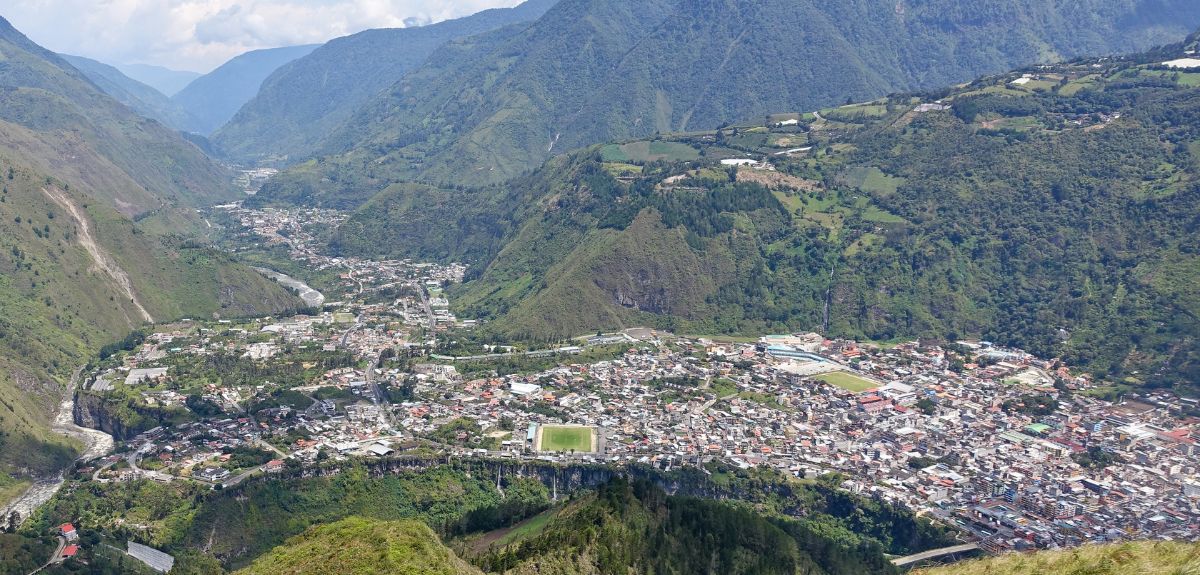
Nestled at the feet of the smoldering Tungurahua volcano, Baños de Agua Santa is a verdant sanctuary where the wild pulse of the Amazon meets the mist-shrouded peaks of the Andes. It is a place where emerald waterfalls tumble into deep canyons and the air is thick with the scent of orchids and adventure, offering a glamorous escape into the heart of Ecuador’s natural wonders.
Why Visit Baños?
Whether you are seeking the adrenaline of a high-altitude swing or the serene embrace of volcanic thermal springs, Baños captivates the soul with its unique blend of thrill and tranquility. Here is why this gateway to the jungle belongs on your itinerary:
- Pailón del Diablo: Stand in awe before the “Devil’s Cauldron,” a thundering masterpiece of nature where massive cascades carve through ancient rock with breathtaking power.
- Casa del Arbol: Feel the rush of the “Swing at the End of the World,” soaring over a deep abyss with an unparalleled view of the majestic volcano.
- Ruta de las Cascadas: Cycle through a dramatic landscape of cliffside roads and hidden tunnels, discovering a dozen different waterfalls along this legendary trail.
- Termas de la Virgen: Rejuvenate your spirit in mineral-rich thermal baths located right at the base of a soaring waterfall in the center of town.
- Basilica de Nuestra Señora de Agua Santa: Admire the beautiful volcanic stone architecture of this sacred site, adorned with murals depicting the town’s miraculous history.
From its lush cloud forests to its vibrant local culture, Baños is more than just a destination; it is an exhilarating journey into the very spirit of the Andes.
Baños KEY INFO
Everything you need to hit the ground running.
WHEN TO VISIT
June to September for dry weather and outdoor adventures; October to March for thundering waterfalls and fewer crowds
HOW TO GET THERE
Fly into Mariscal Sucre International Airport (UIO). It’s a private transfer or bus from Terminal Quitumbe to the city center (~3.5-4 hours).
HOW TO GET AROUND
Walk! The town center is compact and perfectly traversable on foot. For regional adventures, rent a mountain bike or catch a ride on a colorful Chiva bus.
IDEAL TRIP LENGTH
2-3 days for the city itself, but 4-5 days if you want to include adventure sports like rafting or a trip to the Amazon.
What is Baños Mainly Known For?
Baños is famous for its healing thermal springs, which are believed to have curative properties. It’s also known for the Basilica of the Virgin of the Holy Water, a Gothic-style church built from volcanic rock. Beyond the sights, it’s known as the Adventure Capital of Ecuador, where a high-octane energy meets the tranquility of the Amazon gateway.
Is Baños a Walkable City?
100% yes. Baños is incredibly compact and walkable, with most attractions and cafes just a short stroll away. I loved the laid-back, pedestrian-friendly vibe that lets you explore without constant traffic noise.
Is it safe to walk in Baños at night? Absolutely. It is one of Ecuador’s safest towns. I felt completely at ease walking after dark, though I always recommend using standard traveler’s common sense.
What Is the Best Neighborhood to Walk Around?
The town center is the winner, a charming core at the foot of the Tungurahua volcano. Its colorful, winding streets are filled with historical architecture, local markets, and a friendly, small-town atmosphere. For something completely different, walk over to the outskirts along the Pastaza River, a bohemian area where lush cloud forests and thundering waterfalls provide a rugged, high-adrenaline edge.
What Are the Best Things to Do in Baños? (For Your First Visit)
I visited Baños without a strict day-by-day plan. I wanted to take my time, enjoy the adventurous spirit and lush Andean scenery, and see where the streets took me. I wrote down a few highlights and hit the ground running. Here are the spots I definitely recommend checking out:
Pailon del Diablo
Experience nature’s raw power at this thunderous jungle gorge. Highlights: shaky suspension bridges, carved cliffside stairs, and the “devil’s face” rock. Price: ~$2–$5. Pro tip: Bring a rain jacket—you will get drenched behind the falls! Check availability and explore popular experiences.

Casa del Arbol
Swing into the clouds at this iconic treehouse. Highlights: the “Swing at the End of the World” and epic Tungurahua volcano views. Price: $1. Pro tip: Go early on a weekday to skip the long photo lines. Check availability and explore popular experiences.

Ruta de las Cascadas
Chase waterfalls on this epic downhill adventure through the Andean cloud forest. Highlights: Manto de la Novia and the thundering Pailón del Diablo. Price: ~$5–$15. Pro tip: Rent a bike and take a truck back to skip the uphill climb! Check availability and explore popular experiences.

Termas de la Virgen
Soak in mineral-rich volcanic pools right under a thundering waterfall. This local favorite offers high-heat healing and authentic vibes. Price: ~$4–$6. Pro tip: Bring a swim cap or buy a cheap one from street vendors outside to save. Check availability and explore popular experiences.

Basilica de Nuestra Señora de Agua Santa
A Gothic-style peace haven in the jungle. Vibe with the vibrant murals of local miracles and the volcanic stone facade. Price: Free. Pro tip: Visit during a Sunday mass to feel the town’s true spiritual pulse. Check availability and explore popular experiences.

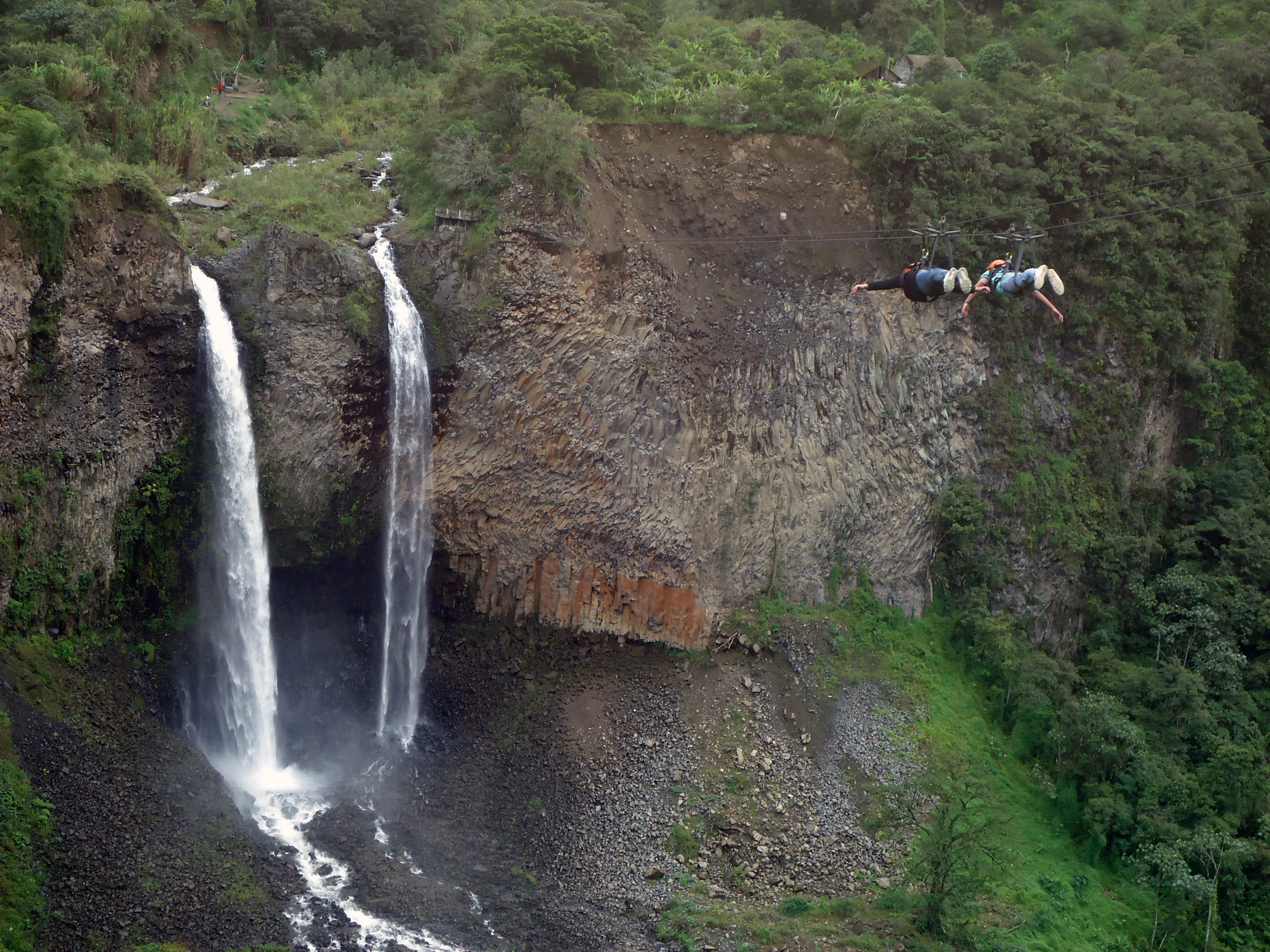
Manto de la Novia
Experience this stunning 40-meter “bride’s veil” waterfall. Highlights: exhilarating tarabita rides and scenic suspension bridges. Price: $1–$3 for the cable car; hiking is free. Pro tip: Wear a waterproof jacket; the mist will definitely soak you! Check availability and explore popular experiences.
Volcan Tungurahua
Conquer the Throat of Fire for epic Andean views. Highlights: Crater rim hike and steaming fumaroles. Price: ~$295 (2-day guided climb). Pro tip: Visit the Casa del Arbol swing for a killer volcano backdrop without the intense trek. Check availability and explore popular experiences.

Machay Waterfall
Escape the crowds at this lush jungle gem. Highlights: a stunning double cascade and refreshing swimming pools. Price: Free. Pro tip: Wear sturdy shoes for the steep 20-minute hike down—it can get slippery! Check availability and explore popular experiences.

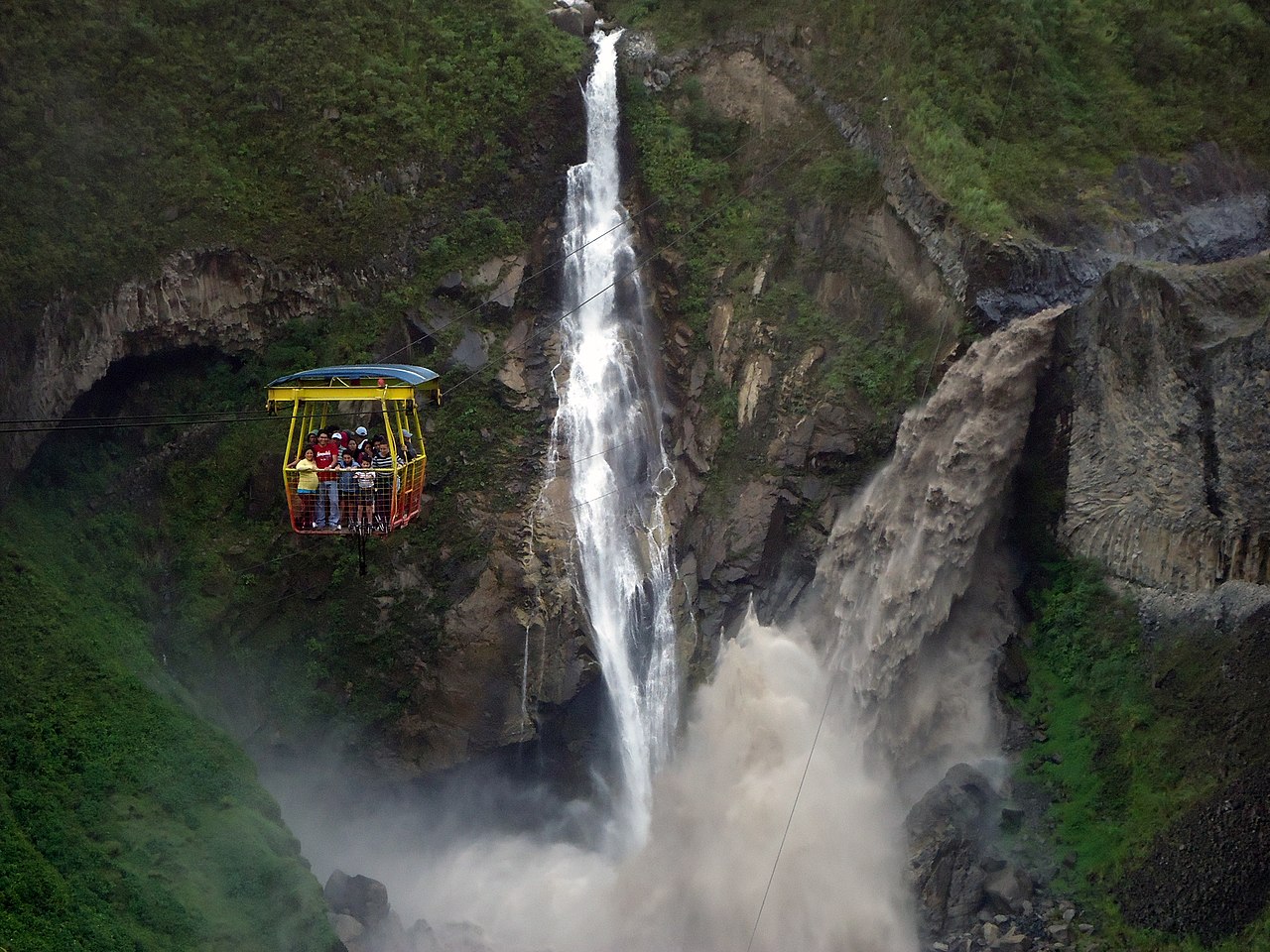
Tarabita de Agoyan
Soar across the Pastaza River in a “flying basket” for heart-pumping canyon views. Highlights: epic Agoyán waterfall vistas and open-air thrills. Price: ~$2. Pro tip: Combine with the canopy zipline for a double dose of adrenaline. Check availability and explore popular experiences.
Mirador de la Virgen
Climb 600+ stairs to this iconic statue for the ultimate birds-eye view of Baños. Highlights: sweeping valley panoramas and Volcán Tungurahua vistas. Price: Free. Pro tip: Go for sunrise to catch the city waking up in golden light. Check availability and explore popular experiences.

Must-Do Activities in Baños
To really get the most out of your trip, I recommend checking out these experiences:
What Part of Baños is Best for Tourists?
Stay in the downtown area. Everything will be within a 10-minute walk. If you want something a bit more local but still close, the Rio Verde district is lovely—it offers a quieter, nature-focused vibe near the thundering Pailón del Diablo waterfall.
What to Know Before Going to Baños
- Stick to Bottled: Tap water in Baños is generally not considered safe for drinking; stick to bottled or filtered water.
- Basic English: English is common in tourist areas, but learning basic Spanish phrases is highly recommended for smoother interactions.
- The Adventure Pass: While no single official city card exists, various multi-activity adventure passes offer great value for thrill-seekers.
- Sundays are Busy: Unlike many cities, Sundays are peak tourist days in Baños with most shops and attractions remaining open.
- Tipping Etiquette: A 10% tip is standard in restaurants; rounding up taxi fares or tipping guides a few dollars is appreciated.
How Many Days Do I Need in Baños?
3 days is perfect for adventure seekers to experience the thundering waterfalls and volcanic landscapes of this Andean gateway.
- Day 1: Pailon del Diablo, Ruta de las Cascadas, Manto de la Novia, Tarabita de Agoyan, Machay Waterfall.
- Day 2: Casa del Arbol, Mirador de la Virgen, Basilica de Nuestra Señora de Agua Santa, Termas de la Virgen, local artisan markets.
- Day 3: Embark on a guided trek toward the crater of Volcan Tungurahua for breathtaking Andean views.
Suggested daily budget – 75-95 EUR / 80-100 USD (Note: This covers mid-range 3-star hotels or private guesthouses, a mix of set lunches and nicer dinners, and organized adventure tours like rafting or canyoning. You can go cheaper if you eat $3 almuerzos at the local market, stay in hostel dorms, or explore the Waterfall Route by renting a bicycle).
MONEY SAVING TIPS
- Master the Almuerzo: Head to the Mercado Central for a 3-course Almuerzo (lunch set) priced between $2.50 and $3.50, or grab a $3 plate of Llapingachos for a filling local meal.
- Tip-Based Trekking: Join a Free Walking Tour meeting at local agency offices like ExplorSierra on Luis A. Martínez to see the Basilica and Tagua workshops with a local guide on a pay-what-you-wish basis.
- Pedal for Pennies: Rent a bike from one of the many tour agencies in the town center for $5 to $8 a day to explore the Ruta de las Cascadas independently rather than booking an expensive private tour.
- Sunset at the Mirador: Skip the pricey bars and hike the stairs past the hospital to the Mirador de la Virgen for a panoramic view of the town where you can enjoy a store-bought beer or snack for free.
What’s the Best Month to Visit Baños?
September and October are the sweet spots for visiting Baños. These months offer pleasant weather and fewer crowds, ideal for exploring waterfalls and hiking Andean trails. However, December is a magical alternative, as the city comes alive with festive holiday celebrations and a vibrant, cozy atmosphere perfect for enjoying the local hot springs.
How to Get to Baños
Most international travelers fly into Mariscal Sucre International Airport (UIO) in Quito. It serves as the primary hub with direct connections from Miami, Houston, Madrid, and Panama City.
- From the airport: A private transfer to Baños takes about 3.5 hours and costs $100–$150. Alternatively, take a bus to Quitumbe Terminal ($2, 1 hour), then a direct bus to Baños ($5–$10, 3.5–4 hours).
- Regional: Baños is a mainland city accessible only by road; there are no train services. Direct buses run frequently from Quito, Guayaquil, and Cuenca.
How to Get Around Baños
Walk and rent a bike—it is the best way to experience this adventure hub.
- Car Rental: Not recommended for the town itself; use DiscoverCars only if planning long-distance Andean road trips.
- Walking: Perfect for the compact center; most hotels, markets, and thermal baths are within a 15-minute stroll.
- Uber/Bolt: Uber is available in nearby Ambato and Quito but not reliably within Baños; use local yellow taxis instead.
- Tours: Excellent for the Waterfall Route, rafting, or reaching high-altitude viewpoints like Casa del Arbol.
Tips for first-timers: Avoid wearing cotton or non-waterproof gear—Baños is famously misty and you will likely get soaked at the waterfalls. Wear quick-dry layers and a sturdy rain jacket to stay comfortable during your adventures!
Baños is the kind of place that steals your heart. It is a breathtaking sanctuary where thundering waterfalls, lush Andean cloud forests, and the raw, volcanic energy of the earth converge in perfect harmony. As you leave its mist-covered peaks and thermal waters, it leaves you with a renewed sense of wonder and adventure.
Note: This article contains affiliate links. If you purchase something I’ve recommended, I’ll earn a small commission at no extra cost to you. I really appreciate your support and I hope this guide helps you ♡