


Get Inspired

Itineraries

Travel Guides

About Me

Top
  >  Canada   >  Best Places to Visit in Quebec City
best places to visit in quebec city

Quebec City is the only walled city north of Mexico and the historic heart of French North America. Founded by Samuel de Champlain in 1608, its UNESCO-listed Old Quebec district still feels like a European capital dropped onto a cliff above the St. Lawrence River. Cobblestone streets, copper-roofed châteaux, and active fortifications sit side by side with lively cafés and river views that change with every hour of the day.

Why Visit Quebec City?

Whether you come for colonial history, cliff-top views, or French-Canadian food, Quebec City delivers concrete experiences that are hard to match elsewhere in North America:

  • Château Frontenac: The most photographed hotel in the world, a copper-roofed château perched on the edge of the cliff with panoramic terraces over the river.
  • Old Quebec & Fortifications: North America’s only intact city walls north of Mexico, enclosing 17th- and 18th-century stone streets that reward slow walking.
  • Dufferin Terrace: A wide wooden boardwalk running beside the Château with free, unobstructed views of the Lower Town, the river, and the distant Laurentian hills.
  • Petit-Champlain & Place Royale: The oldest commercial street in North America and the exact site where Champlain built his first habitation in 1608.
  • Montmorency Falls: An 83-meter waterfall—30 meters higher than Niagara—just 15 minutes from the old city, complete with a suspension bridge and seasonal ice climbing.

Quebec City rewards early mornings and evening light. Most major sights sit within a 20-minute walk of one another, so you can cover a lot without ever needing a car inside the walls.

QUEBEC CITY KEY INFO

Everything you need to hit the ground running.

WHEN TO VISIT

June to September for outdoor festivals, long daylight, and open terraces; December to February for Christmas markets, the toboggan run on Dufferin Terrace, and the Winter Carnival.

HOW TO GET THERE

Fly into Québec City Jean Lesage International Airport (YQB). A taxi or Uber reaches Old Quebec in 20–25 minutes. Direct flights connect from major Canadian cities; most U.S. and European travelers connect through Montreal or Toronto.

HOW TO GET AROUND

Walk. The historic core is compact and almost entirely pedestrian-friendly. For Montmorency Falls or the outskirts, use the RTC bus system or a short Uber ride.

IDEAL TRIP LENGTH

3 full days cover the main sights inside the walls plus one half-day trip to the falls. Add a fourth day if you want to explore Île d’Orléans or the Wendake Indigenous site.

What is Quebec City Mainly Known For?

Quebec City is known as the cradle of French civilization in North America and the only remaining fortified city on the continent north of Mexico. Its UNESCO World Heritage status, the Château Frontenac, and the 1759 Battle of the Plains of Abraham make it a living history classroom. It is also famous for its winter Carnival, maple products, and some of the best French-Canadian cuisine in the country.

Is Quebec City a Walkable City?

Yes—inside the walls. Old Quebec’s Upper and Lower Towns are connected by steep streets, staircases, and a funicular. Sidewalks are continuous, distances are short, and traffic is restricted in the historic core. Outside the walls the city becomes more car-oriented.

Is it safe to walk in Quebec City at night? The tourist zones around the Château, Petit-Champlain, and Place Royale remain well-lit and busy until late. Standard big-city caution applies in quieter residential streets after midnight.

What Is the Best Area to Walk Around?

Start in the Upper Town around the Château Frontenac and Dufferin Terrace, then descend the Breakneck Steps or take the funicular into the Lower Town’s Petit-Champlain and Place Royale. These two adjacent districts contain nearly every major landmark within a one-kilometer radius.

What Are the Best Things to Do in Quebec City? (For Your First Visit)

I walked the city without a rigid itinerary, letting the fortifications and river light set the pace. These are the places that consistently deliver.

Château Frontenac

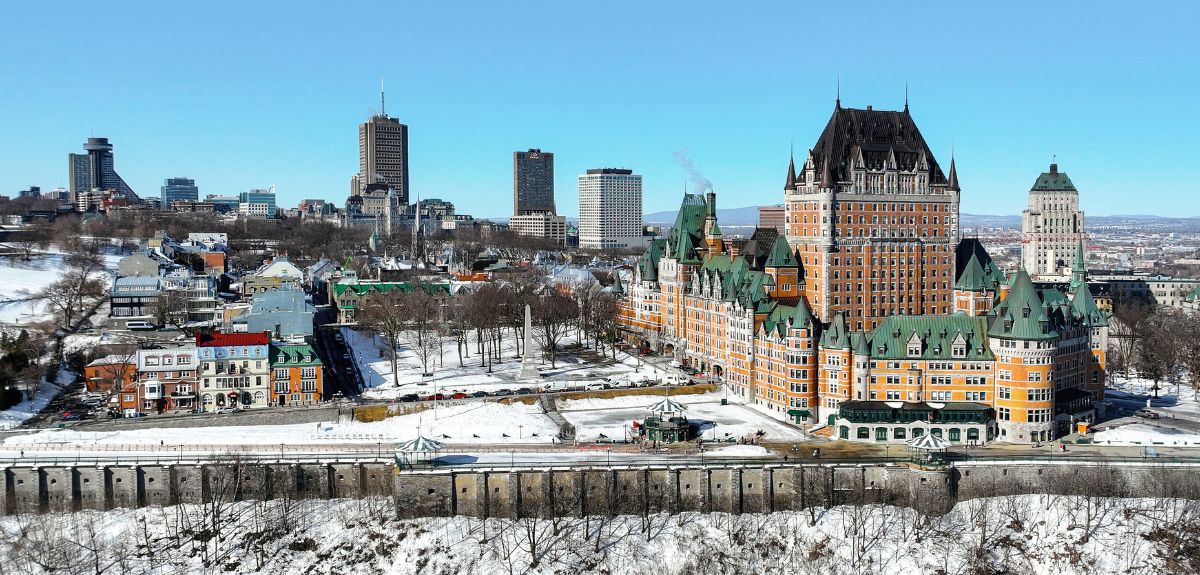
This 1893 château-style hotel, designed by Bruce Price for the Canadian Pacific Railway, sits on the edge of Cap Diamant and remains the defining silhouette of the city skyline. Public terraces and the lobby are free to enter; guided tours and afternoon tea are available for a fee. The copper roofs, turrets, and cliff-edge location make it the single most photographed building in Canada. Price: Free to view the exterior and public areas. Pro tip: Visit at dusk when the lights come on and the St. Lawrence turns silver—this is when the classic postcard shot is easiest to capture. Check availability and explore popular experiences.

Château Frontenac Quebec City
Credit: Wikimedia Commons

Old Quebec Streets & Fortifications

The ramparts that still encircle the Upper Town date mainly from the British period after 1759 and form the only complete set of city walls remaining in North America north of Mexico. Walking the walls gives elevated views over the Lower Town, the river, and the distant hills. Most sections are free to access. Price: Free. Pro tip: Enter at Porte Saint-Louis and walk clockwise; the light is better and the photo angles improve as you move toward the Citadelle. Check availability and explore popular experiences.

Streets of Old Quebec City
Credit: Wikimedia Commons

Dufferin Terrace

This long wooden boardwalk runs along the cliff edge beside the Château Frontenac and offers the city’s best free viewpoint. Benches, street musicians, and unobstructed river views make it a natural place to pause. In winter a wooden toboggan run operates at the far end. Price: Free. Pro tip: Come just before sunset for the changing light on the Lower Town roofs and stay for the first evening lights on the Château. Check availability and explore popular experiences.

Dufferin Terrace

Credit: Wikimedia Commons

Petit-Champlain & Place Royale

Descend into the Lower Town to the narrowest commercial street in North America and the reconstructed 17th-century square where Champlain established his first settlement in 1608. Stone houses, artisan shops, and Notre-Dame-des-Victoires church fill the area. Price: Free. Pro tip: Visit early morning before the cruise-ship crowds arrive; the light on the stone façades is softest then and the streets are quiet enough for photos without people. Check availability and explore popular experiences.

Petit Champlain Quebec City
Credit: Wikimedia Commons

Citadelle of Quebec

The star-shaped fortress still houses the Royal 22nd Regiment and serves as an official residence of the Governor General. Guided tours cover the ramparts, museum, and the daily Changing of the Guard ceremony in summer. Price: Approximately CAD 20 for adults. Pro tip: Book the first morning tour to avoid midday heat on the open parade ground and to catch the guard ceremony when it is least crowded. Check availability and explore popular experiences.
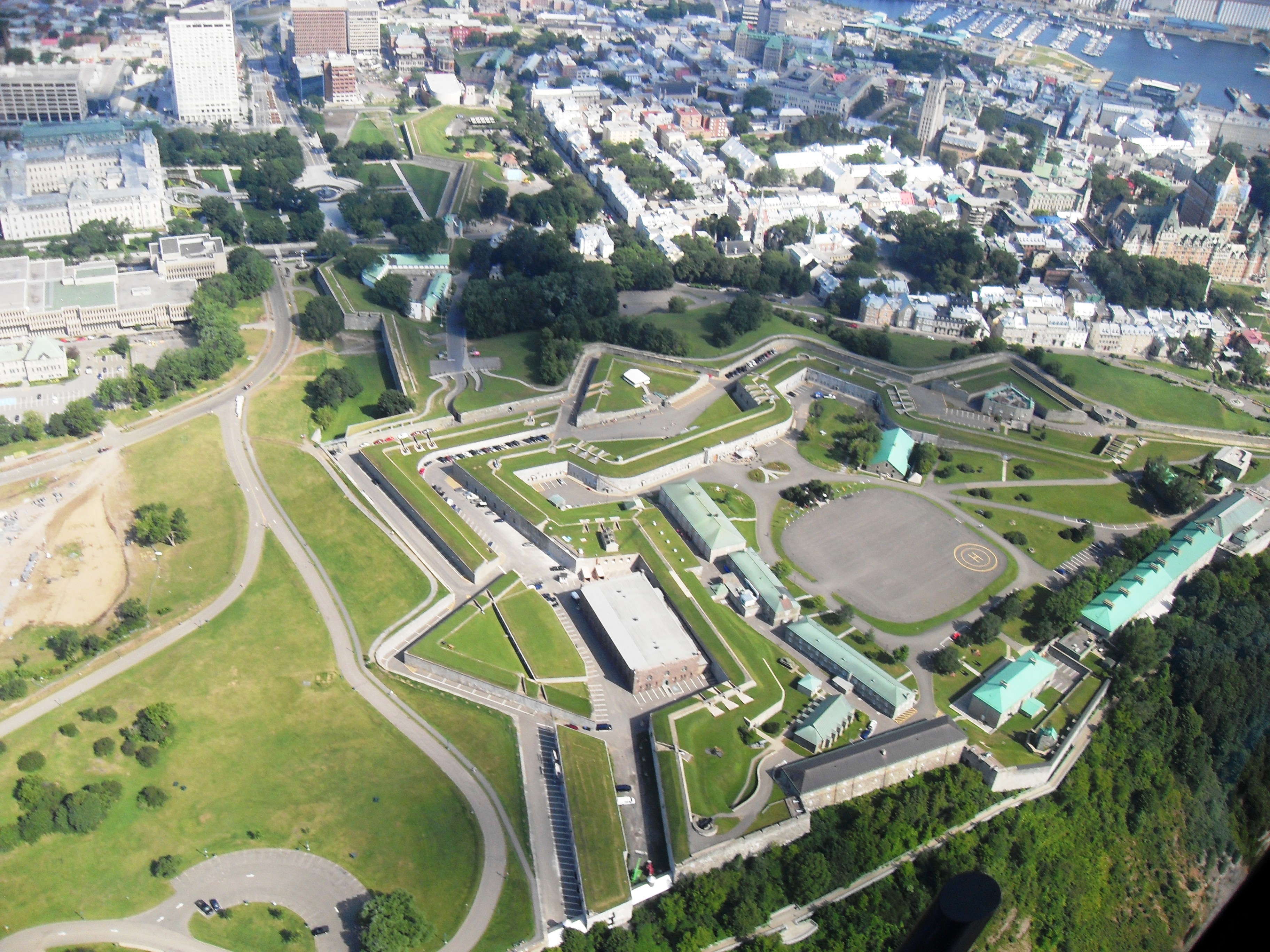
Citadelle of Quebec

Credit: Wikimedia Commons

Montmorency Falls

A short bus or Uber ride east of the city brings you to an 83-meter cascade—30 meters higher than Niagara. Walk the suspension bridge above the falls, climb the 487 steps, or ride the cable car. In winter the frozen spray forms a massive “sugar loaf” popular with ice climbers. Price: Park entry around CAD 10–15. Pro tip: Combine with a stop at nearby Île d’Orléans for farm stands and cider; the falls are especially dramatic after rain or in early spring snowmelt. Check availability and explore popular experiences.

Montmorency Falls Quebec
Credit: Wikimedia Commons

Plains of Abraham

The historic battlefield of 1759 is now a large urban park with walking paths, museums, and open space for picnics. Free to enter; museum admission is extra. Price: Free for the park. Pro tip: Walk the edge of the cliffs rather than staying on the main paths; the views over the river are better and fewer people bother to find them. Check availability and explore popular experiences.

Plains of Abraham Quebec City
Credit: Wikimedia Commons

Basilica-Cathedral of Notre-Dame de Québec

The oldest parish church in North America (founded 1647, current structure largely 18th–19th century) contains the tombs of bishops and governors of New France. Free entry; modest dress is expected. Price: Free. Pro tip: Look for the Holy Door, opened only in jubilee years, and step inside during a quiet mid-morning hour when the light through the stained glass is strongest. Check availability and explore popular experiences.

Basilica-Cathedral of Notre-Dame de Québec

Credit: Wikimedia Commons

Musée de la Civilisation

Located in the Lower Town, this modern museum covers Quebec’s Indigenous, French, and contemporary history with strong permanent and temporary exhibitions. Price: Approximately CAD 25. Pro tip: The permanent exhibition on First Nations cultures is particularly well done and less crowded than the temporary shows; allow at least two hours. Check availability and explore popular experiences.
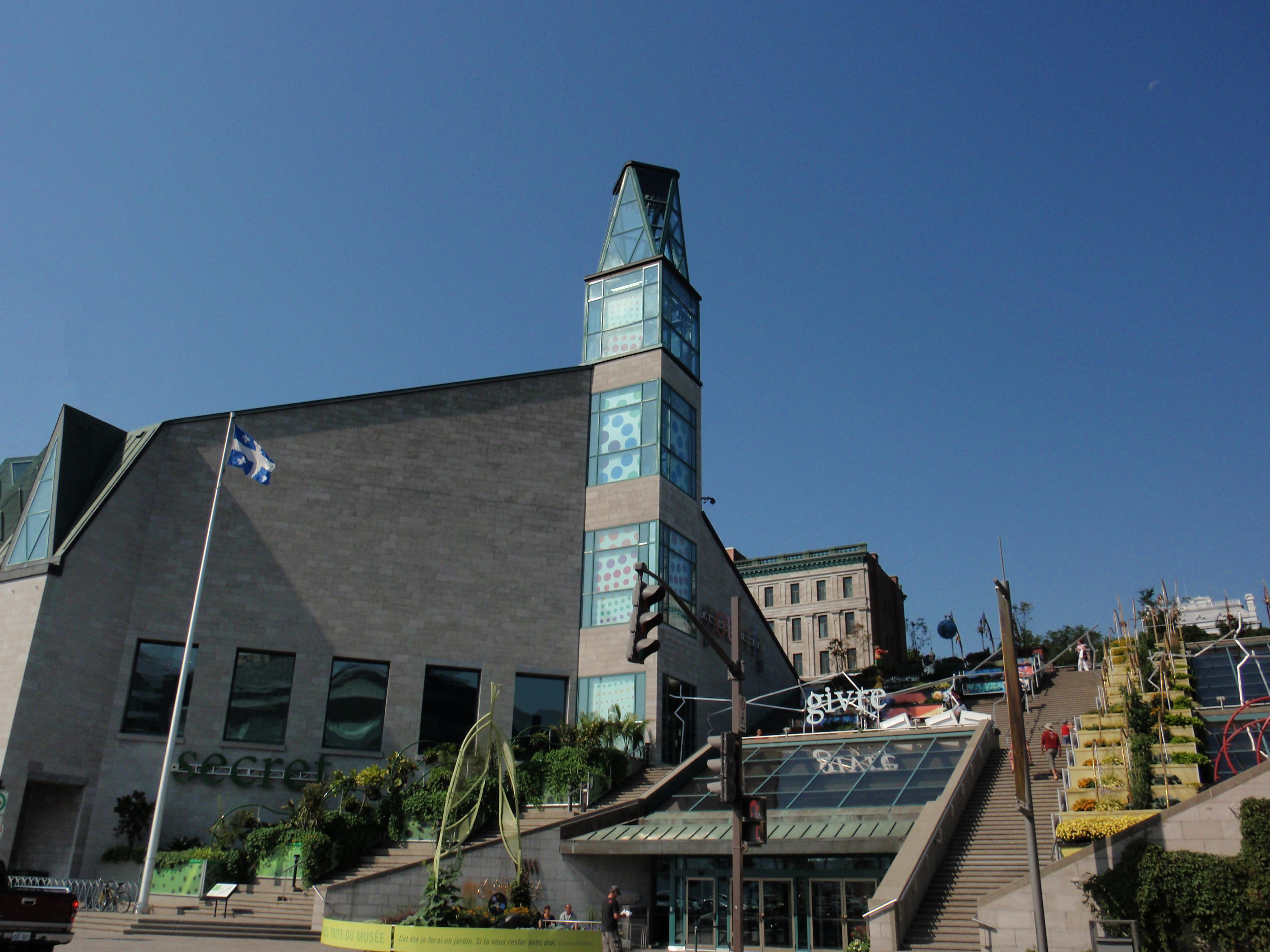
Musée de la Civilisation Québec

Credit: Wikimedia Commons

Parliament Building

The neo-French Renaissance seat of the National Assembly offers free guided tours of the chambers and grounds. The Tourny Fountain in front is a popular photo stop at night. Price: Free with reservation. Pro tip: Evening illumination makes the façade especially striking; combine with a walk along Grande Allée afterward for restaurants and people-watching. Check availability and explore popular experiences.

Parliament Building Québec

Credit: Wikimedia Commons

Must-Do Activities in Quebec City

To really get the most out of your trip, I recommend checking out these experiences:

No products were found!

What Part of Quebec City is Best for Tourists?

Stay inside or immediately adjacent to the walls—Upper Town near the Château or Lower Town around Petit-Champlain. Everything is walkable, restaurants stay open late, and you avoid daily transit time. Saint-Roch, a short bus ride away, offers a more local, less touristy dining scene if you want a change of pace.

What to Know Before Going to Quebec City

  • French First: Official language is French. Most tourism staff speak English, but a few basic phrases go a long way.
  • Winter Clothing: Temperatures regularly drop below –15 °C in January and February. Layer, and bring proper boots for ice.
  • Cruise Crowds: Summer mornings can be packed when ships dock. Hit popular streets early or after 4 p.m.
  • Cashless Friendly: Credit cards and contactless payments are widely accepted; keep a little cash for small markets.
  • Tipping: 15 % is standard in restaurants; some places add it automatically for larger groups.

How Many Days Do I Need in Quebec City?

Three full days is ideal for first-time visitors.

  • Day 1: Upper Town—Château Frontenac, Dufferin Terrace, Citadelle, fortifications walk, Basilica-Cathedral.
  • Day 2: Lower Town—Petit-Champlain, Place Royale, Musée de la Civilisation, funicular or Breakneck Steps.
  • Day 3: Montmorency Falls in the morning, Plains of Abraham and Parliament Building in the afternoon.

Suggested daily budget – 90–140 CAD / 65–100 USD (mid-range hotel in Old Quebec, mix of restaurant and casual meals, local transport and attraction entries). You can go lower by staying outside the walls and eating at bakeries or food courts.

MONEY SAVING TIPS

  1. Walk Everywhere Possible: The historic core needs no taxis or buses once you are inside the walls.
  2. Free Viewpoints: Dufferin Terrace, the fortifications, and the cliff paths deliver the best photos at zero cost.
  3. Lunch Specials: Many restaurants offer affordable table-d’hôte menus at midday; save finer dining for one evening.
  4. City Pass Alternatives: Skip multi-attraction passes if you only plan two or three paid sites; individual tickets are often cheaper.

What’s the Best Month to Visit Quebec City?

September and early October bring comfortable temperatures, fall colors on the surrounding hills, and thinner crowds after the summer rush. June–August is lively with festivals but busier. December–February transforms the city into a winter postcard with Christmas markets and the Carnival, provided you are prepared for cold.

How to Get to Quebec City

Most visitors arrive at Jean Lesage International Airport (YQB). Direct flights serve Toronto, Montreal, Ottawa, and several U.S. hubs. From Montreal, the train takes about three hours and drops you at the Gare du Palais near Old Quebec.

  • From the airport: Taxi or Uber costs roughly CAD 35–45. Public bus 78 connects to the city center in about 45 minutes.
  • By train or bus: Via Rail and intercity coaches arrive at stations within walking distance or a short taxi ride of the walls.

How to Get Around Quebec City

Walking is the default mode inside the historic district.

  • Funicular: Links Upper and Lower Town in one minute for a small fee; stairs are free but steep.
  • RTC Buses: Reliable for Montmorency Falls or outlying neighborhoods; exact change or a contactless card works.
  • Uber / Taxi: Readily available and reasonably priced for short hops outside the core.
  • Car Rental: Unnecessary unless you plan day trips to Charlevoix or the Saguenay.

Tips for first-timers: Download the offline map of Old Quebec before you arrive. The streets are short but the hills are real—comfortable shoes matter more than fashion.

Quebec City leaves a clear impression: stone walls against a wide river, the constant presence of French language and history, and a scale that lets you cover the essentials on foot. Whether you come for the Château’s silhouette at sunset or the roar of Montmorency Falls, the city rewards those who slow down and look closely.

Note: This article contains affiliate links. If you purchase something I’ve recommended, I’ll earn a small commission at no extra cost to you. I really appreciate your support and I hope this guide helps you

post a comment