


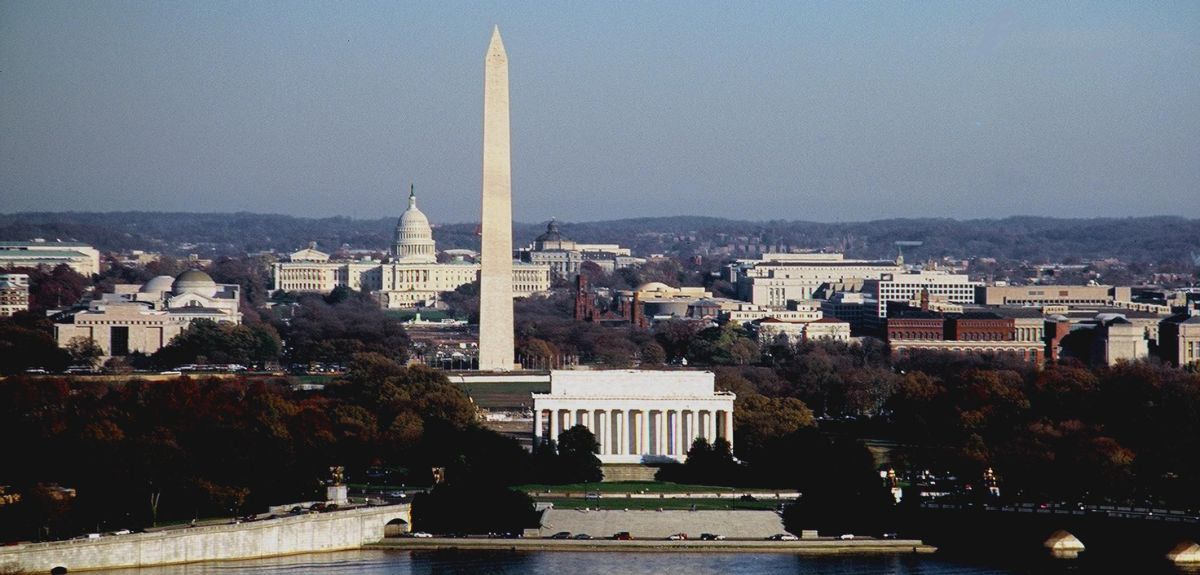
Washington, D.C. is a city built around a two-mile stretch of green space, and nearly everything worth seeing sits along or near it. The National Mall puts the Capitol, the White House, and a run of world-class Smithsonian museums within walking distance of each other, all of it free to enter. Add marble memorials that turn genuinely moving at night and a handful of distinct neighborhoods just beyond the monuments, and you get a capital that rewards both a quick weekend and a much longer stay.
Why Visit Washington, D.C.?
Whether you’ve come for the history, the free world-class museums, or simply to see the seat of American government in person, D.C. delivers an unusually dense concentration of significant sites:
- Lincoln Memorial: Stand before Daniel Chester French’s monumental seated statue of Abraham Lincoln, inscribed with two of his most famous speeches.
- United States Capitol: See the seat of Congress up close, its cast-iron dome visible from across much of the city.
- National Air and Space Museum: Walk beneath the Spirit of St. Louis and the Apollo 11 command module in one of the most-visited museums on earth.
- National Museum of African American History and Culture: Explore a striking bronze-toned building holding one of the country’s most comprehensive collections on Black American history and culture.
- Georgetown: Wander cobblestone streets along the Potomac, lined with 18th- and 19th-century rowhouses, boutiques, and waterfront restaurants.
D.C. rewards travelers who pace themselves rather than trying to see everything in a single sweep. Between the free Smithsonian museums and the memorials that change character entirely after dark, it’s a city where slowing down actually gets you more, not less.
WASHINGTON, D.C. KEY INFO
Everything you need to hit the ground running.
WHEN TO VISIT
March to May for cherry blossoms and mild weather; September to November for fewer crowds and comfortable fall temperatures
HOW TO GET THERE
Fly into Ronald Reagan Washington National Airport (DCA), Washington Dulles International (IAD), or Baltimore/Washington International (BWI). DCA connects directly to downtown via Metro in about 15-20 minutes.
HOW TO GET AROUND
The Metro subway system covers the city efficiently, and the National Mall itself is entirely walkable once you’re there. A SmarTrip card works across Metro, buses, and the Circulator.
IDEAL TRIP LENGTH
3-4 days for the National Mall and its major museums, but 5-6 days if you want to add neighborhoods like Georgetown and Capitol Hill without rushing.
What is Washington, D.C. Mainly Known For?
Washington, D.C. is known as the capital of the United States, home to the White House, the U.S. Capitol, and the Supreme Court, all within a short distance of each other. It’s also known for the Smithsonian Institution, whose museums along the National Mall, including Air and Space, Natural History, and African American History and Culture, are free to the public and among the most-visited museums in the world. Beyond the government buildings, D.C. is known for its cherry blossoms each spring, a gift from Japan in 1912 that now draws crowds to the Tidal Basin every March and April.
Is Washington, D.C. a Walkable City?
Yes, particularly around the National Mall, where the major monuments and Smithsonian museums are all within comfortable walking distance of each other. Neighborhoods further out, like Georgetown or Capitol Hill, are individually walkable but require the Metro or a bus to connect between them.
Is it safe to walk in Washington, D.C.? Yes, generally, especially around the Mall, Capitol Hill, and Georgetown, including in the evening when many memorials are illuminated. As in any major city, stay aware of your surroundings in less-trafficked areas after dark.
What Is the Best Neighborhood to Walk Around?
The National Mall itself is the obvious answer, a two-mile stretch connecting the Capitol to the Lincoln Memorial, lined with monuments and museums the entire way. For a different pace, Georgetown offers cobblestone streets, waterfront views, and a dense cluster of shops and restaurants well outside the monument core.
What Are the Best Things to Do in Washington, D.C.? (For Your First Visit)
I organized my days around the Mall’s geography rather than trying to see every museum in one exhausting sweep, saving Georgetown and the memorials-at-night for separate, unhurried outings. Here’s what stood out:
Lincoln Memorial
Daniel Chester French’s 19-foot marble statue of a seated Abraham Lincoln anchors the western end of the National Mall, flanked by inscriptions of the Gettysburg Address and his second inaugural address. The steps here were also the site of Martin Luther King Jr.’s “I Have a Dream” speech in 1963. Price: Free. Pro tip: Visit at night, when the memorial is lit from within and the crowds thin out considerably compared to daytime. Check availability and explore popular experiences.

United States Capitol
Home to Congress since 1800, the Capitol’s cast-iron dome, added in the 1860s, remains one of the most recognizable government buildings in the world. Free guided tours cover the Rotunda, National Statuary Hall, and the Crypt beneath the dome. Price: Free, but timed tour tickets should be reserved in advance through your representative’s office or the Capitol Visitor Center. Pro tip: Book tickets weeks ahead during peak season, since same-day tours are limited and often unavailable. Check availability and explore popular experiences.

The White House
The official residence and workplace of the President since 1800, the White House can be viewed from Pennsylvania Avenue and the surrounding parks even without a tour. Interior tours are available but require advance requests through a member of Congress, often weeks or months ahead. Price: Free to view from outside; interior tours require advance booking. Pro tip: If an interior tour isn’t in the cards, the White House Visitor Center a few blocks away offers exhibits and historical context at no cost. Check availability and explore popular experiences.
Washington Monument
This 555-foot marble obelisk, completed in 1884 in honor of George Washington, remains the tallest structure in the city thanks to a longstanding building height limit. An elevator ride to the observation deck offers sweeping views over the Mall in every direction. Price: Free, timed tickets required and available same-day or reserved online in advance. Pro tip: Reserve tickets online a few days ahead during peak season, since walk-up tickets can run out early in the day. Check availability and explore popular experiences.

Thomas Jefferson Memorial
Set on the southern edge of the Tidal Basin, this domed, colonnaded memorial holds a 19-foot bronze statue of Jefferson surrounded by passages from the Declaration of Independence and his other writings. It’s especially striking during cherry blossom season, when trees along the basin frame the memorial in pink. Price: Free. Pro tip: Walk or bike the full loop around the Tidal Basin to see the Jefferson Memorial alongside the FDR and MLK Jr. memorials on the same visit. Check availability and explore popular experiences.

National Air and Space Museum
One of the most-visited museums in the world, this Smithsonian institution holds the Wright Flyer, the Spirit of St. Louis, and the Apollo 11 command module, among thousands of other artifacts covering the history of flight and space exploration. The flagship building on the Mall reopened several renovated galleries in recent years, with more still being phased in. Price: Free; a same-day timed entry pass is currently required and available online or at the door. Pro tip: Reserve your free timed pass online the moment they become available for your date, since the museum’s popularity means slots can fill quickly, especially on weekends. Check availability and explore popular experiences.
National Gallery of Art
Spanning two connected buildings on the Mall, this museum holds one of the finest art collections in the country, including the only Leonardo da Vinci painting on display in the Americas. The Neoclassical West Building and the modern East Building offer distinctly different architectural experiences within the same museum. Price: Free. Pro tip: Don’t skip the underground concourse connecting the two buildings, which includes a moving walkway and a small cafe, a good rest stop between wings. Check availability and explore popular experiences.
National Museum of African American History and Culture
Opened in 2016, this Smithsonian museum’s striking bronze-toned exterior, designed by architect David Adjaye and inspired by Yoruban art, stands out against the marble and limestone of its Mall neighbors. Inside, exhibits trace the full arc of African American history from the transatlantic slave trade through the civil rights movement to the present. Price: Free; a timed entry pass is required and can be reserved online in advance or claimed same-day depending on availability. Pro tip: Start on the below-ground history galleries first, since the museum’s design intentionally moves visitors upward chronologically from slavery toward the present-day culture floors. Check availability and explore popular experiences.

Georgetown
D.C.’s oldest neighborhood predates the founding of the capital itself, with brick rowhouses, cobblestone side streets, and a bustling commercial strip along M Street and Wisconsin Avenue. The Georgetown Waterfront Park along the Potomac offers a scenic break from the shopping crowds, with views of the Kennedy Center and Key Bridge. Price: Free to walk. Pro tip: Walk the C&O Canal towpath, which runs right through the neighborhood, for a quieter, tree-lined alternative to the busy retail streets. Check availability and explore popular experiences.

Must-Do Activities in Washington, D.C.
To really get the most out of your trip, I recommend checking out these experiences:
No products were found!
What Part of Washington, D.C. is Best for Tourists?
Stay near the National Mall, Penn Quarter, or Capitol Hill for easy walking access to the monuments and Smithsonian museums. Travelers who prefer a livelier neighborhood base with more restaurants and nightlife sometimes choose Dupont Circle or Georgetown instead, both a short Metro ride or walk from the Mall.
What to Know Before Going to Washington, D.C.
- Tap Water is Safe: D.C.’s tap water is clean and safe to drink straight from the tap.
- Smithsonian Museums are Free: All Smithsonian museums on the Mall, along with the National Zoo, charge no admission, though some special exhibits and the Air and Space and African American History museums currently require a free timed entry pass.
- Security Screening is Standard: Expect bag checks and metal detectors at the Capitol, White House area, and most major museums; arrive a little early to account for lines.
- Summers are Hot and Humid: D.C. summers get genuinely muggy; plan outdoor monument visits for morning or evening if traveling in July or August.
- Tipping is Standard: Tipping 18-20% at restaurants and for services is expected, in line with the rest of the U.S.
How Many Days Do I Need in Washington, D.C.?
3 to 4 days covers the National Mall’s core sights comfortably, with extra time well spent on surrounding neighborhoods.
- Day 1: U.S. Capitol tour in the morning, National Gallery of Art in the afternoon, Lincoln Memorial at night.
- Day 2: National Air and Space Museum, National Museum of African American History and Culture.
- Day 3: Washington Monument, Thomas Jefferson Memorial and a walk around the Tidal Basin, White House viewing from Pennsylvania Avenue.
- Day 4 (optional): Georgetown for shopping, the waterfront, and a walk along the C&O Canal.
Suggested daily budget – 130-190 USD (Note: This covers a mid-range hotel, a mix of restaurant and casual meals, and Metro fares. Museum admission costs nothing thanks to the Smithsonian’s free-entry policy, which helps offset D.C.’s otherwise high hotel prices).
MONEY SAVING TIPS
- Take Advantage of Free Museums: The Smithsonian museums along the Mall, along with the National Zoo, cost nothing to enter, making D.C. one of the best-value major cities for sightseeing.
- Use the Metro Over Rideshares: The Metro covers most tourist areas efficiently and costs a fraction of Uber or taxi fares.
- Eat at Food Halls: Union Market and other food hall venues offer a wide range of affordable, high-quality food compared to sit-down restaurants downtown.
- Book Free Timed Passes Early: Reserving free entry passes for popular sites like the Washington Monument or National Museum of African American History and Culture as soon as they’re released avoids same-day scrambling or missing out entirely.
What’s the Best Month to Visit Washington, D.C.?
Late March through April brings the famous cherry blossoms around the Tidal Basin, along with mild, pleasant weather, making it the most popular (and crowded) time to visit. September through November offers similarly comfortable temperatures with noticeably thinner crowds and fall foliage in the city’s parks. Summer months, particularly July and August, bring high heat and humidity that make midday monument-hopping considerably less pleasant.
How to Get to Washington, D.C.
Three airports serve the region: Ronald Reagan Washington National Airport (DCA), the closest to downtown; Washington Dulles International Airport (IAD), further out but with more international connections; and Baltimore/Washington International Airport (BWI), about an hour north. Amtrak trains also connect D.C.’s Union Station directly to New York, Philadelphia, and other East Coast cities.
- From DCA: The Metro’s Blue and Yellow lines connect directly to downtown in about 15-20 minutes.
- From IAD or BWI: Both require a longer transfer, typically 45-60 minutes, via a combination of shuttle bus and Metro or a direct rideshare.
How to Get Around Washington, D.C.
The Metro and walking cover nearly everything a first-time visitor needs.
- Metro: D.C.’s subway system is clean, extensive, and reaches most major sights and surrounding neighborhoods; a SmarTrip card covers fares.
- Walking: The National Mall and its surrounding monuments and museums are entirely walkable, if spread out enough to make comfortable shoes worthwhile.
- DC Circulator: A low-cost bus service connecting popular neighborhoods like Georgetown, Union Station, and the Mall.
- Bike Share: Capital Bikeshare stations are widespread and a practical way to cover longer distances, especially along the Mall and the Potomac waterfront.
Tips for first-timers: Book any required timed passes for popular Smithsonian museums as early as your schedule allows. Wear comfortable shoes; distances between sights on the Mall are longer than they first appear on a map.
Washington, D.C. offers something increasingly rare among major capitals: world-class museums and monuments that cost nothing to see, all within walking distance of each other. Between the marble memorials lit up at night and the free Smithsonian collections that could fill a week on their own, it’s a city that rewards exactly as much time as you’re willing to give it.
Note: This article contains affiliate links. If you purchase something I’ve recommended, I’ll earn a small commission at no extra cost to you. I really appreciate your support and I hope this guide helps you ♡