



Get Inspired

Itineraries

Travel Guides

About Me

Top
  >  Egypt   >  Best Places to Visit in Aswan
best places to visit in aswan

Aswan moves at a slower pace than Cairo or even Luxor, and that’s exactly its appeal. Egypt’s southernmost major city sits where the Nile narrows and turns rocky, its granite quarries having supplied the stone for obelisks and colossi found across the ancient world. This is also the heart of Nubian Egypt, a distinct culture with its own language, music, and brightly painted riverside villages that predates the pharaohs and outlasted them.

Why Visit Aswan?

Whether you’ve come for the temples, the Nile itself, or the chance to experience Nubian culture firsthand, Aswan offers a different, calmer side of ancient Egypt:

  • Philae Temple: Sail out to an island temple dedicated to the goddess Isis, rescued stone by stone and reassembled after the Aswan High Dam threatened to submerge it.
  • Abu Simbel: Take a day trip to Ramesses II’s monumental rock-cut temple, its four colossal facade statues rescued in one of the 20th century’s most ambitious engineering feats.
  • Nubian Villages: Wander streets of hand-painted blue, yellow, and orange homes on Elephantine Island or the west bank, where Nubian families welcome visitors into their communities.
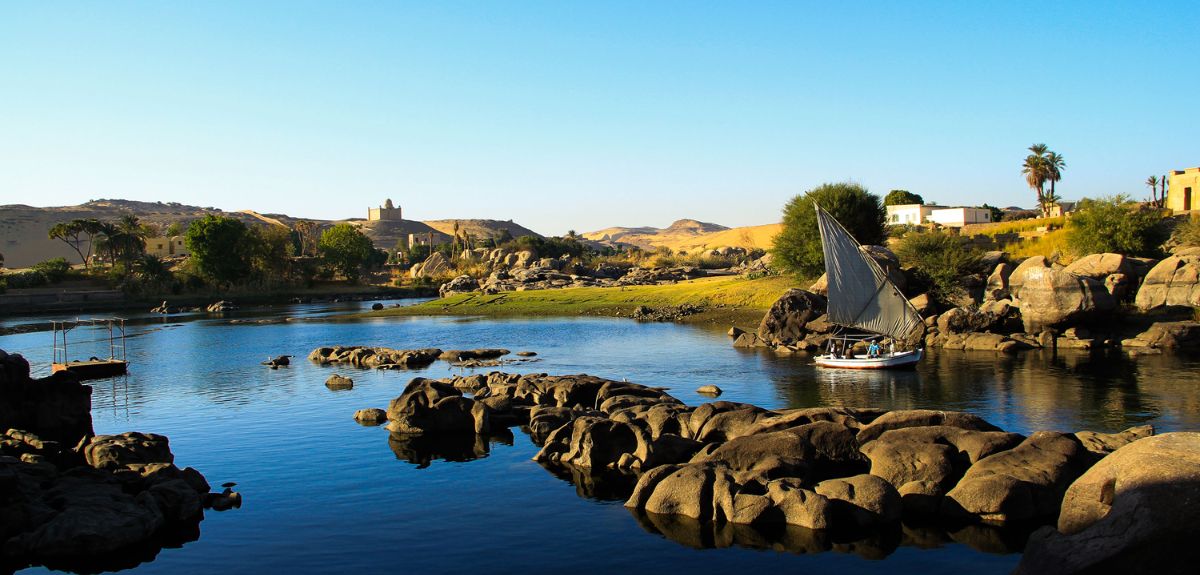
  • Felucca Sailing: Drift across the Nile under a traditional lateen sail as the sun sets behind the desert hills, one of the most peaceful experiences Egypt offers.
  • Unfinished Obelisk: See a 3,500-year-old obelisk still attached to bedrock in an ancient granite quarry, abandoned mid-carving after a crack appeared in the stone.

Aswan rewards travelers who slow down and let the Nile set the pace. Between the temples, the desert light, and the warmth of Nubian hospitality, it’s a fitting, quieter final stop on any journey up the river.

ASWAN KEY INFO

Everything you need to hit the ground running.

WHEN TO VISIT

October to April for comfortable temperatures; avoid June through August, when daytime highs frequently exceed 104°F (40°C) in this desert city

HOW TO GET THERE

Fly into Aswan International Airport (ASW), or take an overnight sleeper train or Nile cruise from Cairo or Luxor. It’s a 20-25 minute taxi ride from the airport to central Aswan.

HOW TO GET AROUND

Motorboats and feluccas are the main way to reach island sites like Philae Temple, Elephantine Island, and the Nubian villages. Taxis and calèches handle trips within the city itself.

IDEAL TRIP LENGTH

2-3 days for Aswan’s own sites, plus a full extra day if you want to add the round-trip excursion to Abu Simbel.

What is Aswan Mainly Known For?

Aswan is known as ancient Egypt’s southern frontier and the source of the pink and gray granite used to build monuments across the country, including many of the obelisks found in Luxor and Cairo. It’s also known as the center of Nubian culture in Egypt, home to communities displaced from their original riverside towns when the Aswan High Dam created Lake Nasser in the 1960s. Beyond its history, Aswan is famous simply for its setting: a wide, calm stretch of the Nile framed by granite boulders, palm-covered islands, and the Sahara’s edge.

Is Aswan a Walkable City?

The central Corniche and souk area are walkable and pleasant, especially along the riverfront promenade. Many of Aswan’s best sites, however, sit on islands or the west bank and require a boat rather than a walk to reach.

Is it safe to walk in Aswan? Yes, generally, and Aswan has a noticeably relaxed, welcoming atmosphere compared to Cairo. As anywhere, agree on prices with boat captains and vendors before starting, and use common sense after dark.

What Is the Best Area to Walk Around?

The Corniche el-Nil is the clear choice, a riverside promenade lined with cafes, restaurants, and views across to Elephantine Island. For a more local experience, the Aswan souk running parallel to the Corniche offers spice stalls, textiles, and a noticeably calmer bargaining atmosphere than Cairo’s bazaars.

What Are the Best Things to Do in Aswan? (For Your First Visit)

I built my days around the Nile rather than a checklist, moving by boat between temples and villages and letting the felucca captains set some of the pace. Here’s what stood out:

Philae Temple

Dedicated to the goddess Isis, this temple complex was moved piece by piece from its original island to nearby Agilkia Island in the 1960s and 70s to save it from rising waters after the Aswan High Dam was built. Reaching it requires a short motorboat ride, which only adds to the sense of arrival. Price: ~450 EGP admission, plus a shared boat fare of roughly 100-150 EGP round trip. Pro tip: Book the evening sound and light show if your schedule allows; the temple takes on a completely different atmosphere after dark. Check availability and explore popular experiences.

Philae Temple Aswan
Credit: Wikimedia Commons

Abu Simbel

Roughly three hours south of Aswan near the Sudanese border, this pair of rock-cut temples was carved for Ramesses II and his queen Nefertari around 1264 BC. Four 65-foot statues of the pharaoh guard the entrance to the Great Temple, all of it relocated to higher ground in the 1960s to escape the rising waters of Lake Nasser. Price: ~740 EGP admission, plus transport (roughly 500-900 EGP per person for a shared van, more for a private car or flight). Pro tip: Most tours leave before dawn to reach the site by mid-morning; a short flight from Aswan is available if you’d rather skip the long drive. Check availability and explore popular experiences.

Abu Simbel temple
Credit: Wikimedia Commons

Nubian Village

The Nubian villages of Gharb Soheil on the west bank and the communities on Elephantine Island are known for hand-painted houses in bright blues, yellows, and pinks, often decorated with images of crocodiles, palm trees, and Horus. Most visits include tea in a family’s home and a walk through narrow lanes lined with these vivid facades. Price: ~200-400 EGP for a guided village visit, often combined with a felucca ride. Pro tip: Buy handicrafts directly from village artisans rather than tourist shops in central Aswan; the money goes further and the pieces are often more distinctive. Check availability and explore popular experiences.

Colorful Nubian village houses Aswan
Credit: Wikimedia Commons

Felucca Ride on the Nile

No visit to Aswan is complete without time on the water in one of these traditional wooden sailboats, powered only by wind and a captain’s skill with the rudder. Routes typically loop past Elephantine Island, Kitchener’s Island, and the Nubian villages. Price: ~150-300 EGP per person for a shared 1-2 hour sail, more for a private boat. Pro tip: Time your ride for late afternoon, when the light turns gold and the wind is usually most reliable. Check availability and explore popular experiences.

Felucca sailing on the Nile in Aswan
Credit: Wikimedia Commons

Unfinished Obelisk

Still lying in the granite quarry where ancient workers began carving it roughly 3,500 years ago, this obelisk would have been the largest ever erected in Egypt at over 130 feet tall, had a crack not appeared partway through the work. You can walk right up to it and see the tool marks and channels cut to free it from the bedrock. Price: ~180 EGP. Pro tip: Visit in the morning before the quarry’s exposed stone surfaces heat up under direct sun. Check availability and explore popular experiences.

Unfinished Obelisk Aswan
Credit: Wikimedia Commons

Aswan High Dam

Completed in 1970, this massive embankment dam controls the Nile’s flooding, generates a significant share of Egypt’s electricity, and created Lake Nasser, one of the largest man-made lakes in the world. There isn’t much to see up close beyond the dam itself and the surrounding views, but it’s a quick, worthwhile stop for understanding modern Aswan. Price: ~140 EGP. Pro tip: Combine this stop with Philae Temple and the Unfinished Obelisk, since all three sit within a short drive of each other. Check availability and explore popular experiences.

Aswan High Dam
Credit: Wikimedia Commons

Nubian Museum

This well-organized museum traces Nubian history and culture from prehistoric times through the population’s displacement during the High Dam’s construction. Exhibits include monumental statues, jewelry, and reconstructed traditional house interiors. Price: ~340 EGP. Pro tip: Visit in the early afternoon as a cool, air-conditioned break between outdoor sites. Check availability and explore popular experiences.

Nubian Museum Aswan entrance
Credit: Wikimedia Commons

Must-Do Activities in Aswan

To really get the most out of your trip, I recommend checking out these experiences:

No products were found!

What Part of Aswan is Best for Tourists?

Stay along the Corniche el-Nil, within walking distance of restaurants, the souk, and felucca docks, with sweeping views across the river to Elephantine Island. Travelers looking for a quieter, more immersive stay sometimes book a guesthouse directly in one of the Nubian villages instead, trading city convenience for riverside calm and closer contact with Nubian daily life.

What to Know Before Going to Aswan

  • Stick to Bottled Water: Tap water isn’t recommended for visitors; stick to sealed bottled water throughout your stay.
  • It’s Genuinely Hot and Dry: Aswan is one of the driest, hottest cities in Egypt; pace outdoor activities around early morning and late afternoon for much of the year.
  • Negotiate Boat Fares: Motorboats, feluccas, and calèches rarely have fixed prices; agree on the total cost, including the return trip, before departing.
  • Bring Cash: Small boat captains, village visits, and market vendors are cash-only; keep small Egyptian pound notes on hand.
  • Respect Nubian Communities: Ask before photographing people in the villages, and consider buying directly from local artisans as a respectful way to support the community.

How Many Days Do I Need in Aswan?

2 to 3 days covers Aswan’s own sites comfortably, with a potential extra day for Abu Simbel.

  • Day 1: Philae Temple in the morning, Unfinished Obelisk and Aswan High Dam in the afternoon.
  • Day 2: Nubian Museum in the morning, felucca ride and a Nubian village visit in the afternoon and evening.
  • Day 3 (optional): Full-day round-trip excursion to Abu Simbel.

Suggested daily budget – 45-70 EUR / 50-80 USD (Note: This covers a mid-range hotel, boat fares, a mix of local and touristy restaurants, and site admissions. The Abu Simbel day trip adds a meaningful cost on top of a standard daily budget).

MONEY SAVING TIPS

  1. Share a Boat: Motorboats to Philae Temple and around the Nile are cheaper per person when split with other travelers rather than booked privately.
  2. Join a Shared Abu Simbel Convoy: A shared minivan to Abu Simbel costs a fraction of a private car or short flight and still gets you there in time for the morning light.
  3. Eat Along the Corniche’s Side Streets: Restaurants directly on the riverfront charge a premium; a block or two back offers similar food for less.
  4. Buy Nubian Crafts Directly: Purchasing handwoven baskets, textiles, or jewelry straight from village artisans is both cheaper and more meaningful than souvenir shops downtown.

What’s the Best Month to Visit Aswan?

December and January bring the most comfortable temperatures for a city that sits at the edge of the Sahara, with cool mornings and manageable afternoon heat. November, February, and March are close behind. Summer months, from May through September, turn Aswan into one of the hottest cities in Egypt, so plan around early mornings and late afternoons if traveling then.

How to Get to Aswan

Most travelers reach Aswan by air via Aswan International Airport (ASW), with regular domestic connections from Cairo and Luxor. An overnight sleeper train from Cairo or a multi-day Nile cruise from Luxor are popular alternatives that turn the journey itself into part of the trip.

  • From the airport: Central Aswan is roughly a 20-25 minute taxi ride away, costing approximately 150-250 EGP.
  • Regional connections: Aswan sits at the southern end of the classic Nile Valley route, making it a natural final stop after Cairo, Giza, and Luxor.

How to Get Around Aswan

Water transport handles most sightseeing, while taxis and calèches cover the city itself.

  • Motorboats and Feluccas: The standard way to reach Philae Temple, Elephantine Island, Kitchener’s Island, and the Nubian villages.
  • Taxis: Widely available for trips within the city and to sites like the Unfinished Obelisk and the High Dam; agree on fares before departing.
  • Calèche: Horse-drawn carriages are common along the Corniche for short, scenic rides through central Aswan.
  • Organized Tours: The most practical option for the long round-trip to Abu Simbel, handling transport, timing, and ticketing in one booking.

Tips for first-timers: Bring sun protection and more water than you think you’ll need; Aswan’s dry heat is deceptive and dehydration sets in quickly. If you’re set on seeing Abu Simbel, book your transport a day or two ahead, since shared convoys depart at a fixed early hour.

Aswan closes out a journey up the Nile the way it should: quietly, with island temples reflected in still water and a culture that has held onto its color and character for thousands of years. It’s the kind of place that makes you want to slow your own pace to match the river’s.

Note: This article contains affiliate links. If you purchase something I’ve recommended, I’ll earn a small commission at no extra cost to you. I really appreciate your support and I hope this guide helps you

post a comment