


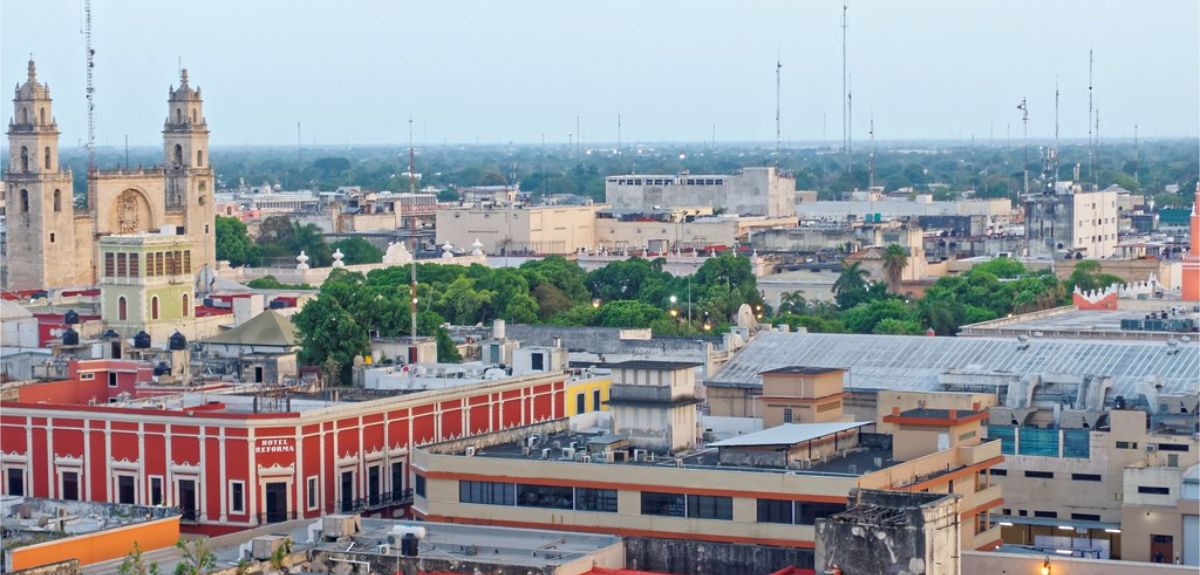
Mérida sits at the center of the Yucatán Peninsula, a colonial capital surrounded by the region’s real headline acts: Maya pyramids, flooded limestone sinkholes, and pink-flamingo wetlands, all within a few hours’ drive. The city itself, nicknamed “La Ciudad Blanca” for its white limestone buildings, is one of the safest and most walkable in Mexico, with a genuine Maya-Spanish cultural mix still visible in its markets, architecture, and daily life.
Why Visit Mérida?
Whether you’ve come for the city itself or as a base for exploring the wider Yucatán, Mérida delivers colonial charm alongside some of Mexico’s most extraordinary natural and archaeological sites:
- Chichén Itzá: Take a day trip to one of the New Seven Wonders of the World, the towering El Castillo pyramid built by the Maya over a thousand years ago.
- Uxmal: Visit a quieter, equally impressive Maya city, home to the striking oval-based Pyramid of the Magician.
- Cenotes de Cuzamá: Ride a horse-drawn cart through the jungle to a trio of crystal-clear cenotes, natural swimming holes formed in collapsed limestone caves.
- Celestún: Take a boat through a mangrove estuary to see thousands of wild American flamingos feeding in the shallows.
- Izamal: Wander Mexico’s “Yellow City,” a town painted uniformly gold, built around a 16th-century convent set atop a Maya pyramid.
Mérida rewards travelers willing to base themselves centrally and take day trips outward, since the city’s greatest asset might be its location at the crossroads of everything worth seeing on the peninsula.
MÉRIDA KEY INFO
Everything you need to hit the ground running.
WHEN TO VISIT
November to February for the coolest, driest weather; avoid May and June, when heat and humidity peak before the rainy season arrives
HOW TO GET THERE
Fly into Mérida International Airport (MID). It’s a 15-20 minute taxi ride to the historic center (~MXN 150-250).
HOW TO GET AROUND
Walk within the historic center, and use colectivos, rental cars, or organized tours for day trips to Chichén Itzá, Uxmal, Celestún, and the cenote villages.
IDEAL TRIP LENGTH
5-6 days to cover the city and at least two or three major day trips, or 7+ days to add the full range of nearby archaeological sites and cenotes without rushing.
What is Mérida Mainly Known For?
Mérida is known as the cultural and colonial capital of the Yucatán Peninsula, with a historic center built largely from local limestone that gives the city its “White City” nickname. It’s also known as the most practical base for exploring the region’s Maya archaeological sites, including Chichén Itzá and Uxmal, both UNESCO World Heritage sites within day-trip distance. Beyond the ruins, Mérida has built a reputation as one of the safest major cities in Mexico, with a strong emphasis on preserving Yucatec Maya culture and language alongside its Spanish colonial heritage.
Is Mérida a Walkable City?
Yes, the historic center around the Plaza Grande is compact, flat, and pleasant to walk, especially in the early morning or evening when temperatures are more manageable. Reaching the region’s major attractions, however, requires a car, colectivo, or organized tour, since most sit well outside city limits.
Is it safe to walk in Mérida? Yes, generally, and Mérida is consistently ranked among the safest cities in Mexico, including for walking at night in the historic center. As anywhere, use standard travel common sense.
What Is the Best Neighborhood to Walk Around?
The historic center around the Plaza Grande is the obvious choice, with the cathedral, Casa de Montejo, and the main market all within easy reach. For a different pace, Paseo de Montejo offers a wide, tree-lined boulevard lined with early 20th-century mansions built during Mérida’s henequen boom.
What Are the Best Things to Do in Mérida? (For Your First Visit)
I treated Mérida as a base camp, spending city days in the historic center and giving full days to each major outlying site rather than trying to combine too much at once. Here’s what stood out:
Chichén Itzá
Roughly a two-hour drive from Mérida, this is the most visited archaeological site in Mexico and one of the New Seven Wonders of the World. El Castillo, the stepped pyramid dedicated to the feathered serpent god Kukulcán, dominates the site, with 365 steps total across its four staircases, one for each day of the year. Price: ~MXN 614 combined federal and state admission. Pro tip: Arrive right at opening to beat both the heat and the tour buses arriving from Cancún and the Riviera Maya. Check availability and explore popular experiences.

Uxmal
About an hour south of Mérida, Uxmal sees a fraction of Chichén Itzá’s crowds despite being equally significant, home to the Pyramid of the Magician, one of the few Maya pyramids built with a rounded, oval base rather than a rectangular one. The site’s Puuc-style architecture, with its intricate stone latticework, is considered among the finest in the Maya world. Price: ~MXN 486 combined admission. Pro tip: Visit in the late afternoon for softer light and noticeably smaller crowds than a morning visit. Check availability and explore popular experiences.

Cenotes de Cuzamá
About 45 minutes from Mérida, the village of Cuzamá offers access to three connected cenotes, reached via a bumpy, genuinely fun ride on a horse-drawn cart along old henequen railway tracks through the jungle. Each cenote has its own character, from a wide open pool to a narrower cave-like chamber. Price: ~MXN 250-350 for the cart ride and cenote access combined. Pro tip: Bring water shoes and biodegradable sunscreen; the limestone can be slippery and some cenotes restrict regular sunscreen to protect the water. Check availability and explore popular experiences.

Celestún
This fishing village about 90 minutes west of Mérida sits at the edge of a biosphere reserve where thousands of American flamingos feed in the shallow, mineral-rich waters of a mangrove estuary. Boat tours glide close enough for excellent views and photos without disturbing the birds. Price: ~MXN 1,200-1,800 per boat, split among passengers. Pro tip: Visit between December and March for the largest concentrations of flamingos, though smaller numbers are present through much of the year. Check availability and explore popular experiences.
%20taking%20off%20-%20Celestun%20Biosphere%20Reserve.jpg)
Izamal
Known as “the Yellow City” for the uniform golden-yellow paint covering nearly every building, Izamal sits about an hour east of Mérida and centers on the Convent of San Antonio de Padua, built in 1549 atop a former Maya pyramid platform. Its atrium is the second-largest in the world after St. Peter’s Square in Vatican City. Price: Free to enter the convent grounds; a small fee applies for some interior areas. Pro tip: Take a horse-drawn calèche ride around town; Izamal’s flat, uniformly painted streets make for one of the most photogenic slow rides in the region. Check availability and explore popular experiences.
Mérida Cathedral
Completed in 1598, this is the oldest cathedral on the American mainland, built partly from stones taken from a demolished Maya pyramid that once stood on the same site. Its plain, fortress-like facade contrasts with a more ornate interior centered on a large statue of Christ. Price: Free to enter. Pro tip: Visit in the early morning when the cathedral’s white limestone facade glows in the low sunlight and the plaza outside is at its quietest. Check availability and explore popular experiences.

Casa de Montejo
Built between 1542 and 1549 on the south side of the Plaza Grande, this former family mansion of the city’s Spanish founder now houses a bank and a small free museum. Its Plateresque facade, showing conquistadors standing over defeated figures, is one of the oldest and most significant examples of colonial stone carving in the Americas. Price: Free. Pro tip: Step past the museum’s entrance into the central courtyard, which is often overlooked by visitors focused only on the facade. Check availability and explore popular experiences.

Paseo de Montejo
Modeled after the Champs-Élysées and built starting in 1888, this wide, tree-lined boulevard is lined with the mansions of wealthy families who made their fortunes during Yucatán’s henequen (sisal fiber) boom. The Palacio Cantón, now housing the Regional Museum of Anthropology, is one of its most striking buildings. Price: Free to walk. Pro tip: Come on a Sunday morning when the avenue closes to car traffic for Mérida’s “Bici Ruta,” turning the boulevard over to cyclists and pedestrians. Check availability and explore popular experiences.

Gran Museo del Mundo Maya
This modern museum on the northern edge of the city, its architecture inspired by the branching shape of a ceiba tree sacred to the Maya, houses an extensive collection of artifacts spanning the full history of Maya civilization in Yucatán. It’s an excellent primer before or after visiting Chichén Itzá or Uxmal in person. Price: ~MXN 150. Pro tip: Check the schedule for the evening light-and-sound show projected onto the museum’s exterior facade. Check availability and explore popular experiences.

Must-Do Activities in Mérida
To really get the most out of your trip, I recommend checking out these experiences:
No products were found!
What Part of Mérida is Best for Tourists?
Stay in the historic center near the Plaza Grande for easy walking access to the cathedral, Casa de Montejo, and the main market. Travelers who prefer a more residential, upscale feel sometimes base themselves along Paseo de Montejo instead, trading a few minutes of extra walking for wider streets and a quieter atmosphere.
What to Know Before Going to Mérida
- Stick to Bottled Water: Tap water isn’t recommended for visitors; stick to bottled water throughout your stay.
- Heat and Humidity are Serious: Yucatán’s climate is hot and humid most of the year; plan outdoor sightseeing for early morning and pace day trips accordingly.
- Book Day Trips in Advance: Chichén Itzá, Uxmal, and Celestún tours fill up, especially in peak season; booking a day or two ahead avoids disappointment.
- Bring Cash for Cenotes and Small Villages: Cuzamá, Izamal, and similar stops are largely cash-based; carry small pesos.
- Tipping is Expected: Tipping 10-15% at restaurants and for guided tours is standard and appreciated.
How Many Days Do I Need in Mérida?
5 to 6 days covers the city and its major day trips at a reasonable pace.
- Day 1: Plaza Grande, Mérida Cathedral, and Casa de Montejo, with an afternoon walk down Paseo de Montejo.
- Day 2: Full-day trip to Chichén Itzá, ideally combined with a stop at a nearby cenote on the return drive.
- Day 3: Uxmal in the morning, Gran Museo del Mundo Maya in the afternoon back in Mérida.
- Day 4: Full-day trip to Celestún for the flamingo boat tour and beach time.
- Day 5: Cenotes de Cuzamá in the morning, Izamal in the afternoon (both on the same general route east of the city).
Suggested daily budget – 50-85 EUR / 55-95 USD (Note: This covers a mid-range hotel, a mix of local and touristy restaurants, and shared tours or colectivos for day trips. Private drivers and guided tours for Chichén Itzá and Celestún add meaningfully to the cost).
MONEY SAVING TIPS
- Use Colectivos for Day Trips: Shared vans to Uxmal, Izamal, and the cenote villages cost a fraction of private tours or taxis.
- Visit Uxmal Instead of (or Alongside) Chichén Itzá: Uxmal’s admission and transport costs are lower, and it draws far smaller crowds for a similarly impressive site.
- Eat at the Mercado Lucas de Gálvez: Mérida’s main market offers excellent, inexpensive Yucatecan food compared to restaurants in the historic center.
- Combine Nearby Sites: Cuzamá’s cenotes and Izamal sit along a similar route east of the city, making a single combined day trip more efficient than two separate ones.
What’s the Best Month to Visit Mérida?
November through February offer the most comfortable temperatures and lower humidity, making them the best months for both city walking and day trips. March and October are reasonable shoulder-season alternatives. Late spring through summer, particularly May and June, bring intense heat before the rainy season sets in from June through October, when afternoon showers are common but usually brief.
How to Get to Mérida
Most travelers fly into Mérida International Airport (MID), with regular domestic connections from Mexico City and a growing number of direct international flights. Overland buses from Cancún, Playa del Carmen, and Mexico City are also common, comfortable options.
- From the airport: The historic center is roughly a 15-20 minute taxi ride away, costing approximately MXN 150-250.
- Regional connections: Mérida sits at the center of the Yucatán Peninsula, making it a natural hub for reaching Chichén Itzá, Uxmal, Celestún, and the Caribbean coast around Cancún and Tulum.
How to Get Around Mérida
Walking covers the historic center, while colectivos, rental cars, and tours handle everything further out.
- Walking: The best way to see the historic center itself, especially in the cooler morning and evening hours.
- Colectivos: Shared vans departing from set points in the city are the cheapest way to reach Uxmal, Izamal, and the cenote villages.
- Rental Car: Offers the most flexibility for combining multiple sites in a single day, particularly useful for the Uxmal and Puuc route.
- Organized Tours: The most practical option for Chichén Itzá and Celestún, both of which involve longer drives and benefit from a guide’s context.
Tips for first-timers: Start day trips as early as possible to beat both the heat and the crowds at major sites like Chichén Itzá. Pack reef-safe sunscreen and water shoes if cenotes are on your itinerary, since some sites restrict regular sunscreen to protect the water.
Mérida works best as a launchpad rather than a single destination: a comfortable, walkable colonial city that puts pyramids, pink lakes, and jungle cenotes all within a day’s reach. Few bases in Mexico offer this much variety within such a manageable radius.
Note: This article contains affiliate links. If you purchase something I’ve recommended, I’ll earn a small commission at no extra cost to you. I really appreciate your support and I hope this guide helps you ♡