

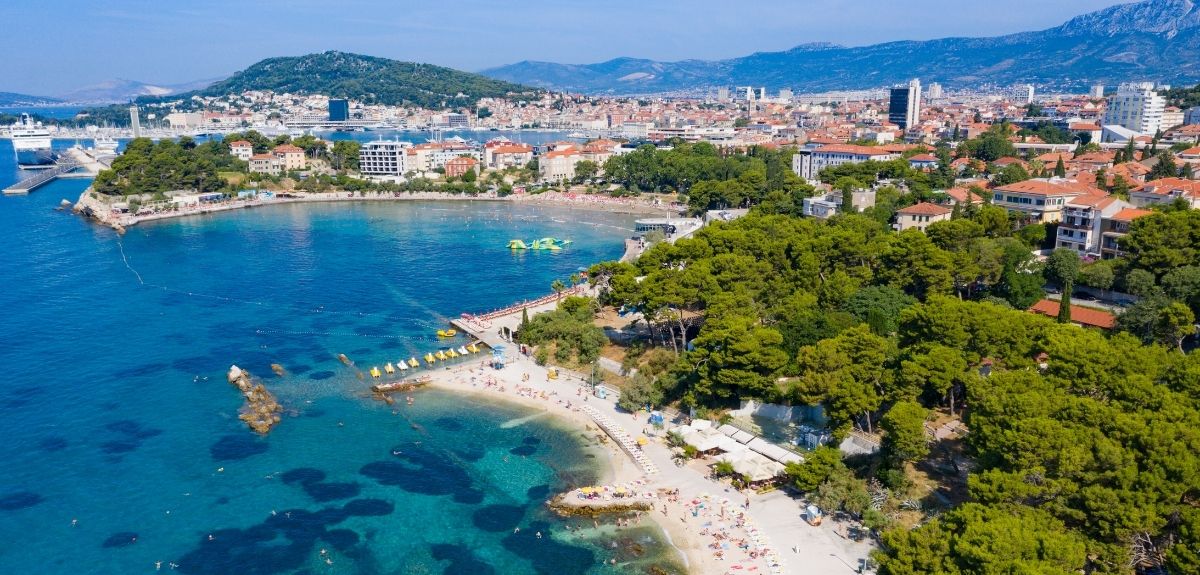
Washed by the shimmering turquoise of the Adriatic Sea, Split is a sun-drenched masterpiece where ancient Roman history effortlessly meets modern Mediterranean glamour. To wander through its ivory-colored streets is to step into a living museum, where the scent of salt air mingles with the aroma of fresh espresso and the echoes of centuries past. It is a city that doesn’t just show you its history; it invites you to live within it, amongst the towering columns and hidden courtyards that have stood the test of time.
Why Visit Split?
Croatia is a jewel of the Mediterranean, offering an intoxicating blend of rugged natural beauty, crystal-clear waters, and a cultural heritage that feels both grand and intimately welcoming.
- Diocletian’s Palace is the ancient heart of the city, a sprawling fortress of Roman ruins that now pulses with vibrant shops, restaurants, and local life.
- Riva Promenade serves as the city’s glamorous front porch, a palm-lined walkway perfect for seeing and being seen against a backdrop of luxury yachts.
- Marjan Hill offers a lush, emerald escape from the urban energy, providing panoramic views of the terracotta rooftops and the endless blue horizon.
- Cathedral of St. Domnius stands as a testament to Split’s layered history, where an ancient mausoleum was transformed into one of the world’s most unique Christian sites.
- Klis Fortress provides a dramatic, mountain-top experience that feels like stepping onto a film set, overlooking the valleys that lead to the sea.
Whether you are chasing the golden light of a Dalmatian sunset or getting lost in the labyrinth of the Old Town, Split is a destination that captures your heart and soul.
SPLIT KEY INFO
Everything you need to hit the ground running.
WHEN TO VISIT
May to June for mild weather and sightseeing; September to October for warm seas and fewer crowds.
HOW TO GET THERE
Fly into Split Airport (SPU). It’s a taxi or shuttle bus to the city center (~30-40 min).
HOW TO GET AROUND
Walk! The UNESCO old town is entirely pedestrian and best seen on foot. For longer trips, use the Promet Split bus network or a local Uber.
IDEAL TRIP LENGTH
2-3 days for the city itself, but 5 days if you want to include day trips to Hvar Island or Krka National Park.
What is Split Mainly Known For?
Split is famous for Diocletian’s Palace, a living Roman ruin where ancient walls now house bustling shops and cafes. It’s also known for the Riva Promenade, a sun-drenched waterfront perfect for people-watching. Beyond the sights, it’s known as a vibrant Mediterranean hub where history seamlessly blends with a laid-back Dalmatian spirit.
Is Split a Walkable City?
100% yes. Split is incredibly walkable, especially within the car-free Old Town and Diocletian’s Palace. Its compact limestone streets allow you to soak in the Mediterranean charm without the noise of traffic.
Is it safe to walk in Split at night? Absolutely. Split is very safe for travelers, and I felt completely at ease exploring the illuminated alleys after dark. Just use standard common sense.
What Is the Best Neighborhood to Walk Around?
The Old Town and Diocletian’s Palace is the winner. Situated along the turquoise harbor beneath the lush Marjan Hill, it offers a labyrinth of gleaming white limestone, ancient Roman arches, and vibrant plazas. For something completely different, walk over to Varoš, a soulful neighborhood of steep stone alleys and traditional peasant houses that exudes a rustic, bohemian charm.
What Are the Best Things to Do in Split? (For Your First Visit)
I visited Split without a strict day-by-day plan. I just wanted to take my time and enjoy the sun-drenched Mediterranean charm and see where the streets took me. I wrote down a few highlights and hit the ground running. Here are the spots I definitely recommend checking out:
Diocletian’s Palace
Step into a living Roman dream where ancient ruins meet chic cafes. Explore the Peristyle and subterranean cellars. Price: Free to wander; ~€15 for sites. Pro tip: Visit the cellars at sunset for a golden, atmospheric glow. Check availability and explore popular experiences.

Riva Promenade
Split’s sun-drenched living room. Stroll past palm trees and chic cafes with epic harbor views. Highlights: People-watching and the Palace facade. Price: Free. Pro tip: Grab an espresso and embrace “fjaka”—the Dalmatian art of doing nothing. Check availability and explore popular experiences.

Marjan Hill
Split’s “green lungs” offer a pine-scented escape with panoramic Adriatic views. Hike to Telegrin peak or explore hidden medieval chapels and rocky beaches. Price: Free. Pro tip: Catch the sunset from Vidilica terrace for the city’s best golden hour. Check availability and explore popular experiences.

Cathedral of St. Domnius
Step into the world’s oldest cathedral, a Roman mausoleum turned sacred masterpiece. Highlights include the iconic bell tower and carved wooden doors. Price: ~€10. Pro tip: Climb the tower at sunset for epic 360° views of Split. Check availability and explore popular experiences.

Old Town
Wander a limestone labyrinth where Roman ruins meet vibrant Mediterranean life. Highlights: narrow alleys, Fruit Square, and hidden courtyards. Price: Free. Pro tip: Get lost in the backstreets at dawn for the best photos without the crowds. Check availability and explore popular experiences.

Klis Fortress
Perched above Split, this legendary fortress offers gritty, ancient vibes and epic Adriatic panoramas. Explore stone ramparts and Game of Thrones filming spots. Price: €12. Pro tip: Visit at sunset for a golden hour that hits different. Check availability and explore popular experiences.

Bacvice Beach
Split’s iconic sandy playground where city life meets the sea. Catch locals playing picigin in the shallows. Price: Free. Pro tip: Grab a cold beer at a beach bar and join the game; it’s a Split rite of passage. Check availability and explore popular experiences.

Ivan Mestrovic Gallery
Wander this seaside villa where marble masterpieces meet Mediterranean vibes. Highlights include powerful bronze sculptures and lush gardens. Price: ~€15. Pro tip: Your ticket includes the nearby Kaštilac fortress for incredible wood-carved reliefs. Check availability and explore popular experiences.

Gregory of Nin Statue
Rub this towering bronze giant for a shot of luck. This 28-foot masterpiece honors a rebellious bishop. Highlights: The iconic, shiny big toe. Price: Free. Pro tip: Make a wish while rubbing the toe to ensure your return. Check availability and explore popular experiences.

Republic Square
Split’s elegant Mediterranean stage. This red, Venetian-style plaza is perfect for sunsets and cultural vibes. Highlights: neo-Renaissance arches and harbor views. Price: Free. Pro tip: Grab a coffee and embrace “fjaka”—the local art of doing nothing. Check availability and explore popular experiences.

Must-Do Activities in Split
To really get the most out of your trip, I recommend checking out these experiences:
No products were found!
What Part of Split is Best for Tourists?
Stay in the Old Town. Everything will be within a 10-minute walk. If you want something a bit more local but still close, the Varoš neighborhood is lovely—it features narrow stone alleys and a relaxed, authentic atmosphere.
What to Know Before Going to Split
- The Tap Water is Gold: Tap water in Split is safe, high-quality, and sourced from the nearby Jadro Spring.
- English is Everywhere: Most locals, especially the younger generation and those in tourism, speak excellent English.
- The Split City Pass: This digital voucher offers flexible discounts for attractions and dining, providing great value for visitors.
- Sunday Shop Closures: Most supermarkets and shops are closed on Sundays due to laws limiting work to 16 Sundays annually.
- Tipping is Appreciated: Leaving 10% in cash for good service at restaurants is standard and highly valued by staff.
How Many Days Do I Need in Split?
3 days is perfect for first-timers to soak in the ancient Roman history and vibrant coastal energy of the Dalmatian coast.
- Day 1: Diocletian’s Palace, Peristyle, Cathedral of St. Domnius, Old Town, Riva Promenade.
- Day 2: Marjan Hill, Ivan Mestrovic Gallery, Gregory of Nin Statue, Republic Square, Bacvice Beach.
- Day 3: Take a legendary day trip to Klis Fortress or explore the nearby islands of Hvar and Brač.
Suggested daily budget – 80-130 EUR / 85-138 USD (Note: This covers a 3-star hotel or private apartment, restaurant meals, and a mix of local transport and site entry fees. You can go cheaper if you eat local street food and explore the compact old town on foot.)
MONEY SAVING TIPS
- Master the Marenda: Skip the dinner menus and look for “Marenda” (traditional Dalmatian lunch specials) at local spots for a hearty, authentic meal at a fraction of the evening price.
- Join the Free Walk: Head to the “Split” sign near the Riva bus stop or Strossmayer Park to join a Free Walking Tour, where you can explore Diocletian’s Palace for just the cost of a tip.
- Ride with Nextbike: Download the Nextbike app to use the city’s bike-share system for as little as €0.66 per 30 minutes, or grab a weekly subscription for €13.27 to get around the coast easily.
- Picnic at Vidilica: Grab a local Ožujsko beer from a grocery store and head up to the Vidilica terrace on Marjan Hill for a sunset drink with the best panoramic view of the city without the bar prices.
What’s the Best Month to Visit Split?
May and June are the sweet spots for visiting Split. These months offer pleasant weather and warm seas perfect for exploring Diocletian’s Palace and island hopping while avoiding the intense summer heat and peak tourist crowds. However, December is a wonderful alternative, offering a festive atmosphere with charming Christmas markets and a cozy, local winter vibe.
How to Get to Split
Most international travelers fly into Split Airport (SPU). Key direct connection hubs include London, Paris, Amsterdam, Frankfurt, and Rome; travelers from the US typically connect through these European cities.
- From the airport: A shuttle bus to the city center takes 30-40 minutes and costs approximately 8-10 EUR. Taxis and private transfers are faster but cost around 40-55 EUR.
- By Train: Direct trains connect Split to Zagreb in about 6 hours, providing access to the wider European rail network.
How to Get Around Split
Explore on foot—Split’s historic heart is a pedestrian-only limestone dream.
- Car Rental: Not recommended for the city due to limited parking and pedestrian zones, but use DiscoverCars if exploring the Dalmatian Coast.
- Walking: Ideal. The Old Town and Riva are compact and best seen on foot.
- Uber/Bolt: Both are widely available and efficient for reaching further beaches or the airport.
- Tours: Excellent for non-drivers; many boat tours and walking guides cover the islands and Roman history.
Tips for first-timers: Avoid driving in the Old Town—The ancient limestone streets are a pedestrian-only maze where cars are banned and parking is non-existent. Explore the compact center on foot or use local taxis instead!
Split is the kind of place that steals your heart. Its essence is a timeless dance between ancient Roman grandeur and the sun-soaked pulse of the Adriatic. From the weathered stones of the palace to the salt-kissed Riva, its spirited atmosphere is both rugged and elegant. Ultimately, departing this coastal gem leaves you with a renewed sense of wonder.
Note: This article contains affiliate links. If you purchase something I’ve recommended, I’ll earn a small commission at no extra cost to you. I really appreciate your support and I hope this guide helps you ♡