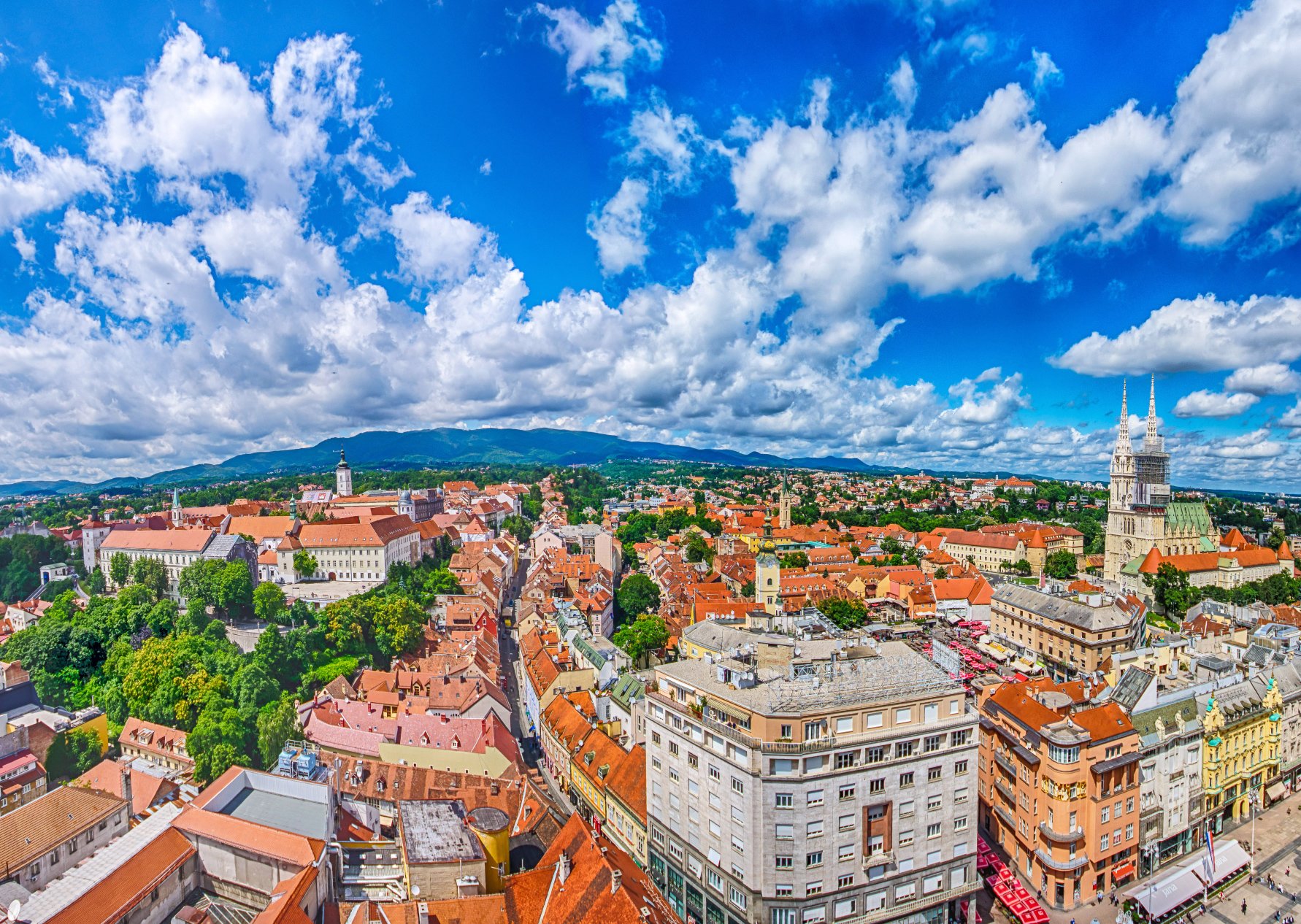


Basking in the sophisticated glow of Central Europe, Zagreb reveals itself as a city of dualities, where Austro-Hungarian grandeur meets a quirky, contemporary soul. To wander through the Upper Town at twilight is to step into a living fairytale, where gas lanterns flicker against ancient stone and the air hums with the elegant chime of church bells.
Why Visit Zagreb?
Beyond the famous turquoise waters of the coast, Zagreb serves as the nation’s intellectual and cultural heartbeat, a place where coffee culture is a fine art and every cobblestone alley tells a story of elegance and resilience.
- St. Mark’s Church serves as the city’s most colorful crown jewel, featuring an iconic tiled roof that sparkles like a medieval mosaic under the sun.
- The Museum of Broken Relationships offers a glamorous yet poignant journey through the human heart, housed within a beautiful baroque palace in the historic district.
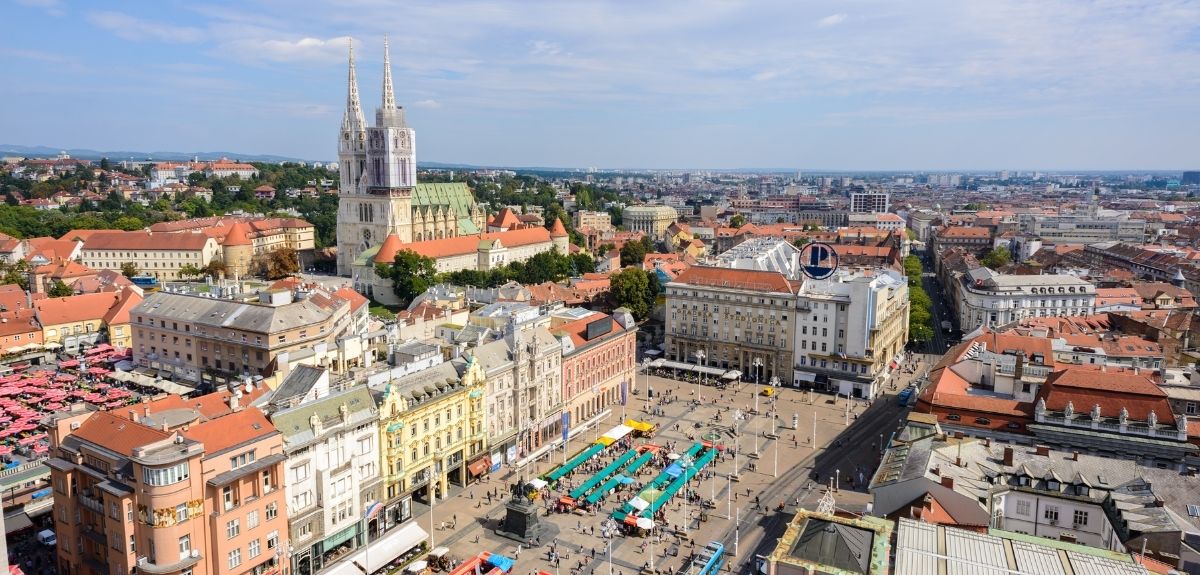
- Dolac Market, known as the “Belly of Zagreb,” is a vibrant sea of red umbrellas where local flavors and artisanal treasures create a sensory masterpiece.
- Zagreb Cathedral stands as a towering gothic marvel, its twin spires defining the skyline and providing a dramatic backdrop to the city’s urban elegance.
- Tkalčićeva Street is the pinnacle of Zagreb’s social scene, a winding promenade of chic cafes and boutiques where the city’s effortless style is on full display.
With its seamless blend of historic charm and modern allure, Zagreb is not merely a gateway but a destination that captures the imagination and leaves an indelible mark on the soul.
ZAGREB KEY INFO
Everything you need to hit the ground running.
WHEN TO VISIT
April to June for mild weather and sightseeing; December for magical Christmas markets and festive atmosphere.
HOW TO GET THERE
Fly into Franjo Tuđman Airport (ZAG). It’s taxi or shuttle bus to the city center (~30-40 min).
HOW TO GET AROUND
Walk! The city center is compact and pedestrian-friendly. For longer distances, hop on the iconic blue ZET trams or use the MojVelebit app for routes.
IDEAL TRIP LENGTH
2-3 days for the city itself, but 4-5 days if you want to include day trips to Plitvice Lakes or Samobor.
What is Zagreb Mainly Known For?
Zagreb is famous for the Grič Cannon, which has thundered from Lotrščak Tower every noon since 1877 to mark the time. It’s also known for St. Mark’s Church, featuring a vibrant, tiled coat-of-arms roof. Beyond the myths, it’s known as a city with a “European pulse” defined by its quirky museums and lush, green parks.
Is Zagreb a Walkable City?
100% yes. Zagreb is exceptionally walkable with a compact center and extensive pedestrian zones like the Upper Town and Tkalčićeva Street. I loved exploring the historic charm and green parks without the constant hum of traffic.
Is it safe to walk in Zagreb at night? Absolutely. It is ranked among the safest cities in Europe. I felt completely at ease wandering after dark, though standard common sense remains wise.
What Is the Best Neighborhood to Walk Around?
Gornji Grad is the winner. Perched on a hill above the city center, this medieval nucleus features winding cobblestone streets, colorful tiled roofs, and historic stone architecture. Its elevated position offers panoramic views of the red rooftops below. For something completely different, walk over to Trešnjevka, a gritty, gentrified district known for its socialist traditions, vibrant outdoor markets, and a local, bohemian edge.
What Are the Best Things to Do in Zagreb? (For Your First Visit)
I visited Zagreb without a strict day-by-day plan. I just wanted to take my time and enjoy the city’s blend of historic charm and buzzing energy and see where the streets took me. I wrote down a few highlights and hit the ground running. Here are the spots I definitely recommend checking out:
St. Mark’s Church
Zagreb’s most photogenic spot, this church features a vibrant, tiled coat-of-arms roof. Highlights include the Gothic portal and intricate interior. Price: Free. Pro tip: Visit at noon to see the Changing of the Guard ceremony nearby. Check availability and explore popular experiences.

Zagreb Cathedral
Zagreb’s neo-Gothic icon features twin spires that dominate the skyline. Highlights: stunning stained glass and the 1880 earthquake clock. Price: Free. Pro tip: Visit at dusk when the facade glows and the crowds thin out. Check availability and explore popular experiences.

Ban Jelačić Square
Zagreb’s beating heart, where historic architecture meets a buzzing tram-filled pulse. Highlights: the iconic Jelačić statue and Manduševac fountain. Price: Free. Pro tip: Meet “under the clock”—it’s the city’s ultimate local gathering spot for people-watching. Check availability and explore popular experiences.

Dolac Market
Known as the “belly of Zagreb,” this iconic open-air market buzzes under red umbrellas. Highlights: fresh local cheese and vibrant flower stalls. Price: Free. Pro tip: Arrive by 1 PM to snag the best seasonal fruit and fresh cornbread. Check availability and explore popular experiences.
Museum of Broken Relationships
Zagreb’s offbeat gem displays mementos from failed loves paired with raw, relatable stories. Highlights: the “ex-axe” and personal mementos. Vibe: emotional, quirky, and surprisingly uplifting. Price: ~$7. Pro tip: Read the guestbook for a dose of shared human experience. Check availability and explore popular experiences.

Credit: Wikimedia Commons
Lotrščak Tower
Climb this 13th-century guardian for 360-degree views of Zagreb’s red rooftops. Highlights: the Grič cannon and medieval stone walls. Price: ~€3. Pro tip: Arrive exactly at noon to witness the thunderous daily cannon blast. Check availability and explore popular experiences.

Stone Gate
Zagreb’s mystical medieval gateway and candlelit shrine. Highlights: the miraculous Virgin Mary painting and thousands of thanks plaques. Vibe: peaceful and spiritual. Price: Free. Pro tip: Walk through silently to respect the locals in prayer. Check availability and explore popular experiences.

Tkalčićeva Street
Tkalčićeva is a vibrant, lantern-lit pedestrian lane brimming with historic charm and social energy. Highlights: colorful cafes and craft beer bars. Price: Free. Pro tip: Visit at twilight for the best people-watching and local vibes. Check availability and explore popular experiences.

Mirogoj Cemetery
Mirogoj is a leafy Gothic masterpiece and open-air gallery. Wander the ivy-clad arcades and copper domes for ultimate moody vibes. Highlights: Bollé’s architecture and celebrity tombs. Price: Free. Pro tip: Take bus 106 from the Cathedral. Check availability and explore popular experiences.

Zrinjevac Park
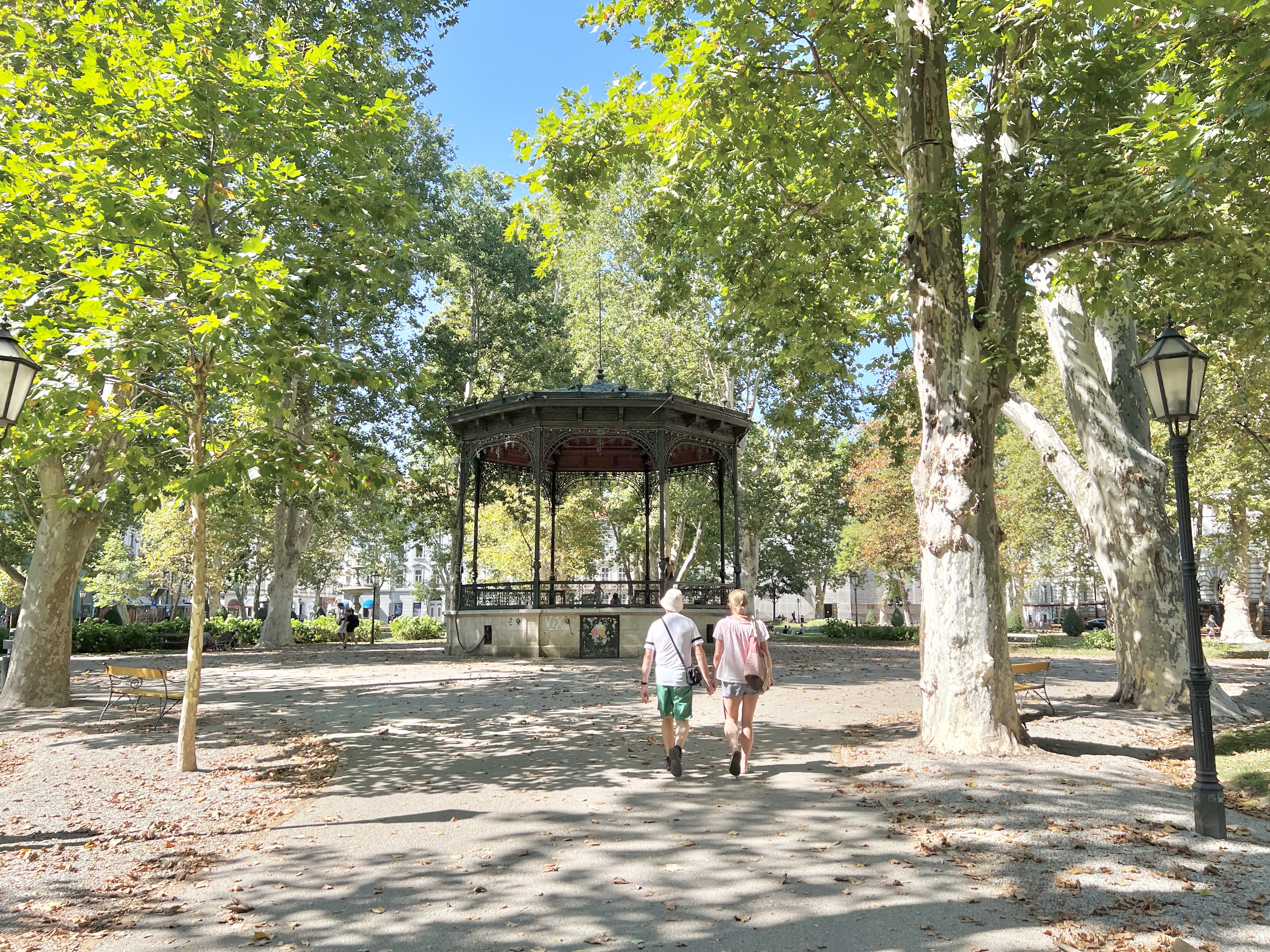
Zagreb’s leafy “Green Heart” is a classic social hub of plane trees and fountains. Highlights: the vintage music pavilion and Bollé’s “Mushroom” fountain. Price: Free. Pro tip: Visit during Advent for the city’s most magical Christmas market lights. Check availability and explore popular experiences.
Must-Do Activities in Zagreb
To really get the most out of your trip, I recommend checking out these experiences:
No products were found!
What Part of Zagreb is Best for Tourists?
Stay in the Lower Town. Everything will be within a 15-minute walk. If you want something a bit more local but still close, the Maksimir neighborhood is lovely—it features a vast park and a relaxed, residential vibe perfect for afternoon strolls.
What to Know Before Going to Zagreb
- The Tap Water is Gold: Zagreb’s tap water is high quality and safe to drink throughout the city; refill your bottle anywhere.
- English is Everywhere: Most locals, especially younger generations and those in tourism, speak excellent English, making communication a breeze.
- The Zagreb Card: This pass offers free transport and museum entry; it’s excellent value for a packed 24 or 72-hour itinerary.
- Sunday Closures: Most shops and supermarkets are closed on Sundays due to national laws; plan your shopping for other days.
- Tipping Etiquette: Rounding up is standard for coffee, while a 10% cash tip is appreciated for good restaurant service.
How Many Days Do I Need in Zagreb?
3 days is perfect for first-timers to explore the city’s blend of Austro-Hungarian architecture and vibrant street life.
- Day 1: Ban Jelačić Square, St. Mark’s Church, Zagreb Cathedral, Lotrščak Tower, Stone Gate.
- Day 2: Dolac Market, Zrinjevac Park, Museum of Broken Relationships, Mirogoj Cemetery, Tkalčićeva Street.
- Day 3: Take a scenic day trip to Plitvice Lakes National Park or explore the nearby Samobor village.
Suggested daily budget – 70-110 EUR / 75-120 USD (Note: This covers a mid-range hotel or guesthouse, sit-down restaurant meals, and a mix of public transport and museum entries. You can go cheaper if you eat at the Dolac Market and explore the city on foot.)
MONEY SAVING TIPS
- Look for the Gablec: Skip expensive dinner menus and join the locals for a “Gablec” (traditional mid-day meal) at spots like Vallis Aurea or Ficlek, where you can find hearty, authentic dishes for less than €10.
- Join the Free Walk: Meet at the horseman statue in Ban Jelačić Square at 11:00 AM for a Free Walking Tour of the Old Town; it’s the best way to see the main sights like the Stone Gate and St. Mark’s Church for just the cost of a tip.
- Grab a Zagreb Card: For the best value, pick up a 24 or 72-hour Zagreb Card at a Visitor Center for around €15–€25 to get unlimited use of all ZET trams and buses, plus free entry to the Museum of Broken Relationships.
- Sunset at the Stross: Skip the pricey rooftop bars and grab a local Ožujsko beer from a Konzum grocery store to enjoy at the Strossmayer Promenade, where you’ll get the city’s best views of the red rooftops and Cathedral for free.
What’s the Best Month to Visit Zagreb?
May and June are the sweet spots for visiting Zagreb. These months offer pleasant temperatures perfect for enjoying the city’s vibrant outdoor cafe culture and parks while avoiding the mid-summer heat. However, December is a fantastic alternative, as the city transforms into a winter wonderland with its award-winning Christmas markets and festive lights.
How to Get to Zagreb
Most international travelers fly into Zagreb Franjo Tuđman Airport (ZAG). Key direct connection hubs include Frankfurt, Amsterdam, London, and Vienna; travelers from the US typically connect through these European cities.
- From the airport: A taxi to the city center takes about 30 minutes and costs approximately €33. A shuttle bus is available for €4, taking 40 minutes.
- By Train: Zagreb Glavni Kolodvor offers direct international connections to Ljubljana, Vienna, Budapest, Munich, and Zurich. Domestic lines connect to Split and Rijeka.
How to Get Around Zagreb
Explore on foot and use the iconic blue trams—it is the absolute best way to experience Zagreb. Car Rental: Not recommended for the city center due to limited parking; use DiscoverCars for day trips to Plitvice. Walking: Ideal. The Lower and Upper Towns are compact and pedestrian-friendly. Uber/Bolt: Both are widely available, reliable, and affordable for longer cross-town trips. Tours: Great for first-timers; many guided walking tours cover the main historical landmarks efficiently.
Tips for first-timers: Avoid driving in the Upper Town—The ancient, narrow streets are often restricted and parking is nonexistent. Use the charming funicular or walk to explore the historic core and enjoy the atmospheric cobblestone alleys on foot instead!
Zagreb is the kind of place that steals your heart. Its essence lies in the harmonious blend of Austro-Hungarian grandeur and a spirited, modern pulse. From the flickering candles of the Stone Gate to the lively chatter of Tkalčićeva Street, its soulful charm and quirky history invite deep reflection. Ultimately, exploring this city leaves you with a renewed sense of wonder.
Note: This article contains affiliate links. If you purchase something I’ve recommended, I’ll earn a small commission at no extra cost to you. I really appreciate your support and I hope this guide helps you ♡